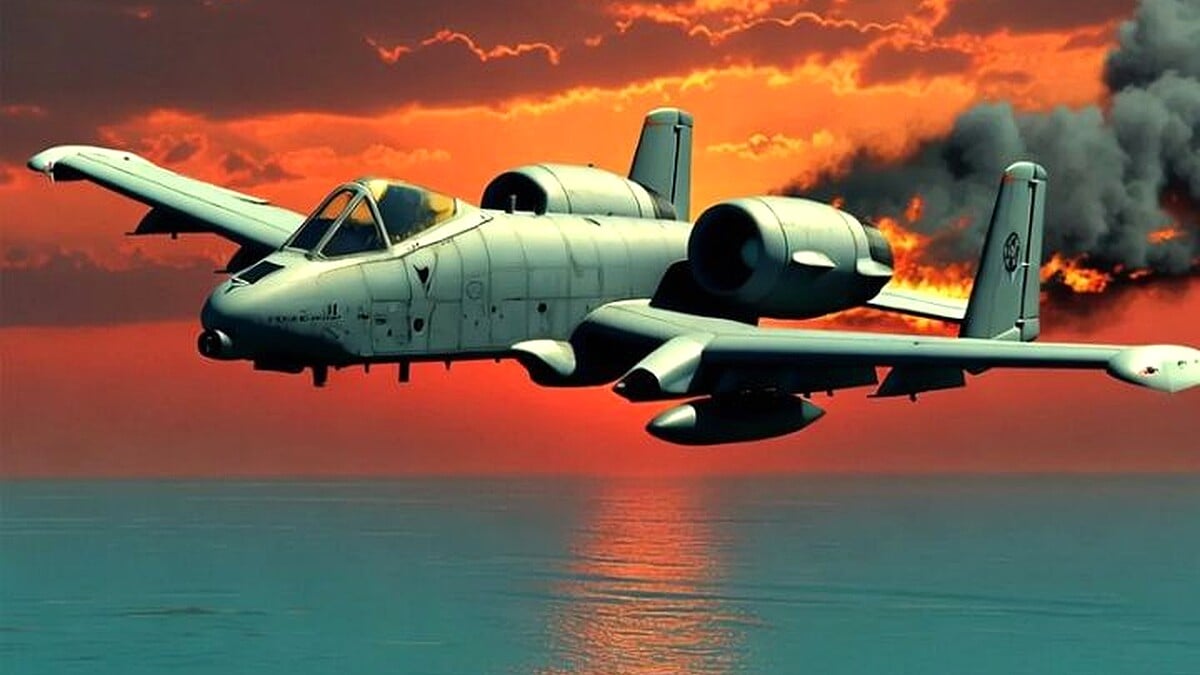




ISLAMABAD: A second United States Air Force combat aircraft has crashed in the Persian Gulf region with its lone pilot safely rescued according to The New York Times.
The incident involving an A-10 Thunderbolt II Warthog occurred near the Strait of Hormuz on Friday officials confirmed anonymously to the newspaper.
This marks the latest setback for American air operations amid the escalating conflict with Iran. Iran has claimed to shoot down the military jet over strait of Hormuz.
The A-10 went down at roughly the same time an F-15E Strike Eagle was shot down over Iranian territory.
Search and rescue teams recovered the A-10 pilot in stable condition without delay.
United States Central Command has not disclosed the precise cause of the crash.
Officials stressed the event was not linked to enemy fire unlike the F-15E incident.
The A-10 fleet currently numbers around 162 aircraft with full retirement planned by the end of fiscal year 2026.
Congress has moved to block accelerated divestments requiring at least 93 primary mission aircraft to remain through September 2026.
Pentagon sources revealed last week that 18 additional A-10s are deploying to join roughly a dozen already operating in the Middle East.
This deployment effectively doubles the Warthog presence to support ground forces and maritime interdiction.
A-10s have conducted repeated strikes on Iranian fast-attack boats and Iran-backed militias in the Strait of Hormuz and Iraq.
The aircraft renowned for its GAU-8 Avenger cannon fires 3 900 rounds per minute of 30-millimetre depleted uranium ammunition.
Its titanium armoured cockpit and redundant systems allow survival after heavy battle damage.
The Strait of Hormuz handles nearly one fifth of global seaborne oil trade daily.
Iran has effectively closed parts of the waterway heightening risks for all naval and air assets.
United States commanders have used the slow low-flying A-10s precisely for their long loiter time over contested waters.
Footage of strafing runs against Iranian vessels has circulated widely on social media in recent weeks.
Joint Chiefs Chairman General Dan Caine confirmed the Warthogs are actively hunting fast-attack craft in the southern flank.
This crash comes as the Air Force accelerates modernisation shifting resources from legacy platforms to advanced fighters.
Yet lawmakers argue the A-10 remains unmatched for close air support in asymmetric threats like Iranian swarms.
Regional analysts note the timing coincides with intensified Operation Epic Fury strikes exceeding 11 000 sorties overall.
The Persian Gulf has seen limited prior United States combat aircraft losses in modern history.
One notable 1988 incident involved the downing of Iran Air Flight 655 by USS Vincennes killing 290 civilians.
Current operations however reflect direct confrontation following Iranian closure of key oil routes.
Pakistan maintains vital economic stakes in Gulf stability with millions of expatriates and energy imports routed through the area.
The safe pilot rescue underscores robust American search and rescue capabilities even in high-threat zones.
Nevertheless the dual incidents within hours raise questions about operational tempo and aircraft strain.
Pentagon briefings indicate A-10s could support potential ground seizures near Kharg Island or Hormuz chokepoints.
The Warthog first entered service in 1977 and has proven durability in conflicts from Desert Storm to ongoing Middle East missions.
Defence analysts project the fleet retirement will free billions for next-generation collaborative combat aircraft.
For now the doubled deployment signals Washington’s commitment to sustained pressure on Iranian naval forces.
United States officials provided scant additional details on the A-10 crash location beyond the Persian Gulf vicinity.
The event has not disrupted broader air campaign momentum according to available assessments.
International observers monitor closely as oil prices fluctuate with each reported incident in the vital waterway.
This latest development highlights the persistent dangers facing American aviators in the Iran theatre.