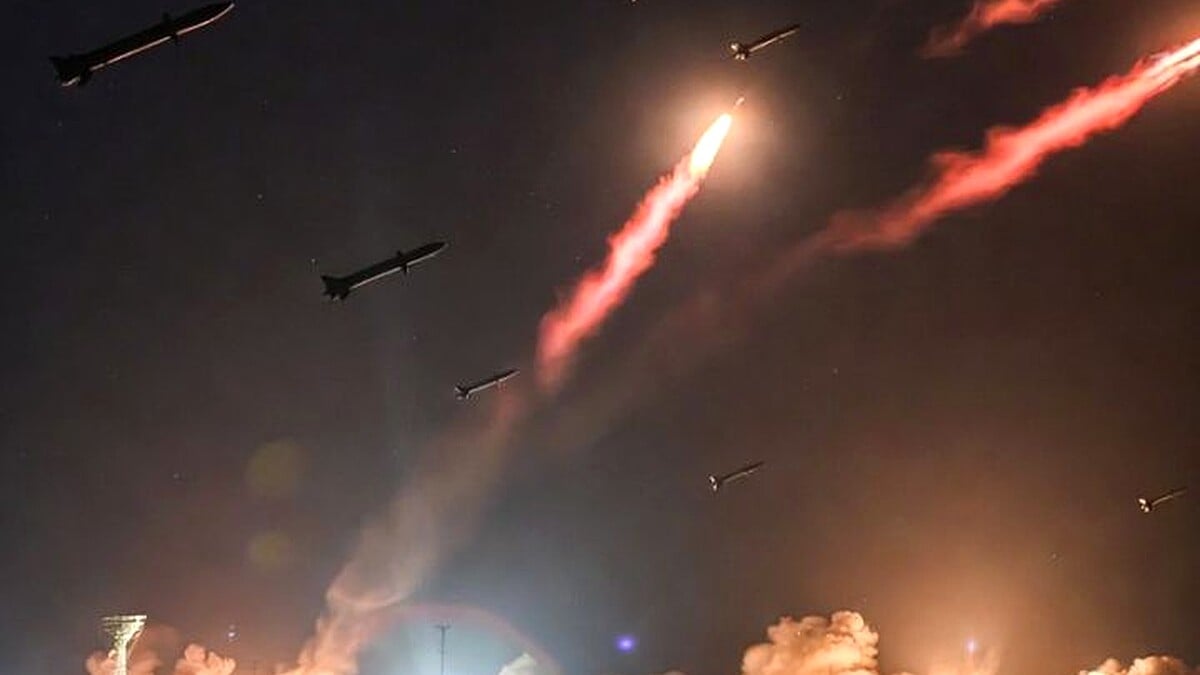




ISLAMABAD: In a dramatic show of force, Iran fired hundreds of ballistic missiles and swarms of drones targeting Israeli cities and military sites while simultaneously striking US-affiliated installations in Iraq, the United Arab Emirates and Saudi Arabia, according to regional security reports and Iranian state media claims.
The coordinated assault marks one of the most extensive retaliatory operations by Tehran since the conflict erupted last month, with Iranian officials vowing to punish what they describe as aggression against their sovereignty and leadership.
Multiple barrages hit central and southern Israel, including areas near the Dimona nuclear research centre and residential zones in Arad, causing damage to buildings and triggering widespread alerts.
Israeli defence systems intercepted a significant portion of incoming projectiles, yet reports confirm impacts in populated districts, with debris sparking fires and leading to injuries across several locations.
Iranian Revolutionary Guard Corps statements claimed successful strikes on military targets, while independent monitoring groups recorded over 90 attempted Iranian attacks on Israel in the early phases of escalation, resulting in civilian casualties and infrastructure strain.
In parallel, pro-Iranian actors or Iranian forces launched around 20 drones toward the US embassy compound in Baghdad’s Green Zone, with security officials reporting interceptions but heightened alerts persisting for American diplomatic staff.
The embassy faced repeated threats, prompting urgent security warnings for US citizens to leave Iraq amid risks of further missile and drone activity in Iraqi airspace.
Further south, two oil tankers in the Gulf of Oman near Fujairah in the United Arab Emirates came under attack, with one incident causing minor structural damage and temporary suspension of oil loading operations at the key bunkering hub.
Fujairah, handling substantial volumes of global oil trade outside the Strait of Hormuz, saw fires erupt at energy facilities following drone strikes, disrupting maritime traffic and raising concerns over energy security.
Saudi Arabia reported intercepting two drones aimed at its territory, while Iranian sources claimed a major strike on Prince Sultan Air Base in Al Kharj, wounding at least 12 to 15 US service members, two seriously, and damaging a high-value E-3 Sentry AWACS aircraft valued at approximately 270 million dollars.
The base serves as a critical hub for US air operations, with reports indicating hits on refuelling tankers and personnel quarters.
These developments come amid broader regional fallout, where Iran has targeted US-linked sites in Bahrain, Jordan, Kuwait and Qatar through missile and drone campaigns.
Analysts note that Tehran has deployed a mix of Emad, Ghadr and possibly Kheybar Shekan ballistic missiles alongside thousands of drones, seeking to overwhelm defences and impose economic costs.
Global oil markets have reacted sharply to disruptions in the Persian Gulf, with the Strait of Hormuz — through which nearly 20 percent of world oil passes — facing heightened risks and reported Iranian toll collection attempts in alternative currencies.
Casualty figures from the wider conflict remain fluid, with Iranian sources reporting thousands affected domestically, while Israeli tallies indicate dozens of injuries and some fatalities from the latest barrages.
US and Israeli officials have described the Iranian response as anticipated yet managed, though the scale of simultaneous multi-front attacks has stretched regional air defences.
The escalation follows initial US-Israeli operations that targeted Iranian nuclear and missile infrastructure, resulting in significant leadership losses and military setbacks for Tehran.
Regional governments in the Gulf have expressed alarm over the spillover, with some suspending operations at strategic ports and urging de-escalation.
Defence experts highlight that Iran’s ability to sustain such barrages raises questions about its remaining stockpiles after weeks of intense exchanges.
International monitoring groups like ACLED have documented extensive strike patterns across the Middle East since late February, underscoring the conflict’s rapid expansion beyond bilateral confrontation.
As tensions mount, calls for diplomatic intervention grow louder, though immediate prospects appear dim given the intensity of retaliatory cycles.
The situation continues to evolve rapidly, with potential for further strikes on energy routes and military assets that could reshape security dynamics across West Asia for years to come.