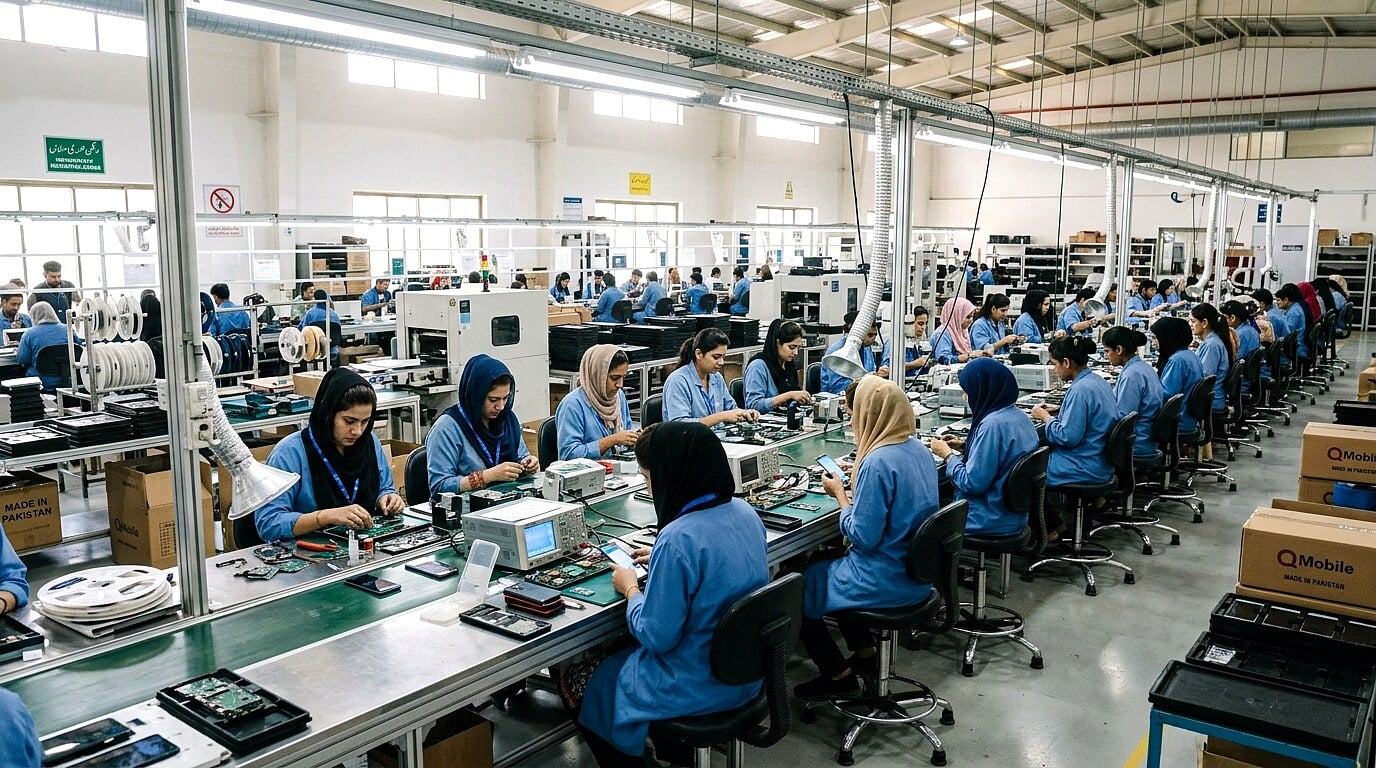




ISLAMABAD: Pakistan’s local mobile manufacturing sector has achieved a remarkable milestone, producing 23.03 million mobile handsets between January and October 2026. This impressive figure not only highlights a substantial increase in domestic production but also underscores a strategic shift towards reducing reliance on imports, particularly as the country focuses on advancing its technological capabilities.
The production data reveals a stark contrast to the 3.85 million mobile units imported during the same period, indicating that local manufacturers are now meeting a significant portion of the country’s mobile phone demand. This shift reflects a growing confidence in Pakistan’s manufacturing capabilities and a commitment to enhancing local industry.
In October 2026 alone, local assembly plants contributed 2.95 million mobile phones to the market, while commercial imports dwindled to approximately one million units. This trend showcases the increasing efficiency and capacity of local manufacturers, who are now producing nearly three times the number of handsets compared to those entering the country through imports.
A closer look at the types of devices being produced reveals that approximately 9.62 million of the 23.03 million handsets assembled were smartphones, while around 13 million were traditional 2G mobile phones. This data highlights a dual market presence, where both advanced smartphones and basic mobile devices coexist, catering to diverse consumer needs.
Interestingly, the composition of locally assembled devices does not entirely align with the usage patterns observed in Pakistan. According to the Pakistan Telecommunication Authority (PTA), smartphones currently represent 71% of all active mobile devices on local networks, while 2G handsets make up the remaining 29%. This discrepancy suggests that while there is a strong demand for smartphones, the market for basic mobile phones remains robust, providing local manufacturers with ample opportunities.
As the domestic manufacturing landscape evolves, there is also a noticeable shift towards embracing newer technologies. In 2025, local plants produced 553,079 5G-enabled handsets, and the trend appears to be gaining momentum. In September 2026, manufacturers assembled 78,463 5G devices, reflecting a growing interest in next-generation mobile technology among local consumers and producers alike.
This transition towards 5G-enabled devices is significant as it positions Pakistan to compete in the global market for advanced telecommunications technology. The increasing production of 5G handsets indicates that local manufacturers are not only responding to current consumer demands but are also preparing for future technological advancements.
The implications of this surge in mobile phone production are far-reaching. It signifies a shift in Pakistan’s economic landscape, as the country moves towards self-sufficiency in technology manufacturing. This transition could lead to job creation and economic growth, further solidifying Pakistan’s position in the global technology market.
Source: Business Recorder