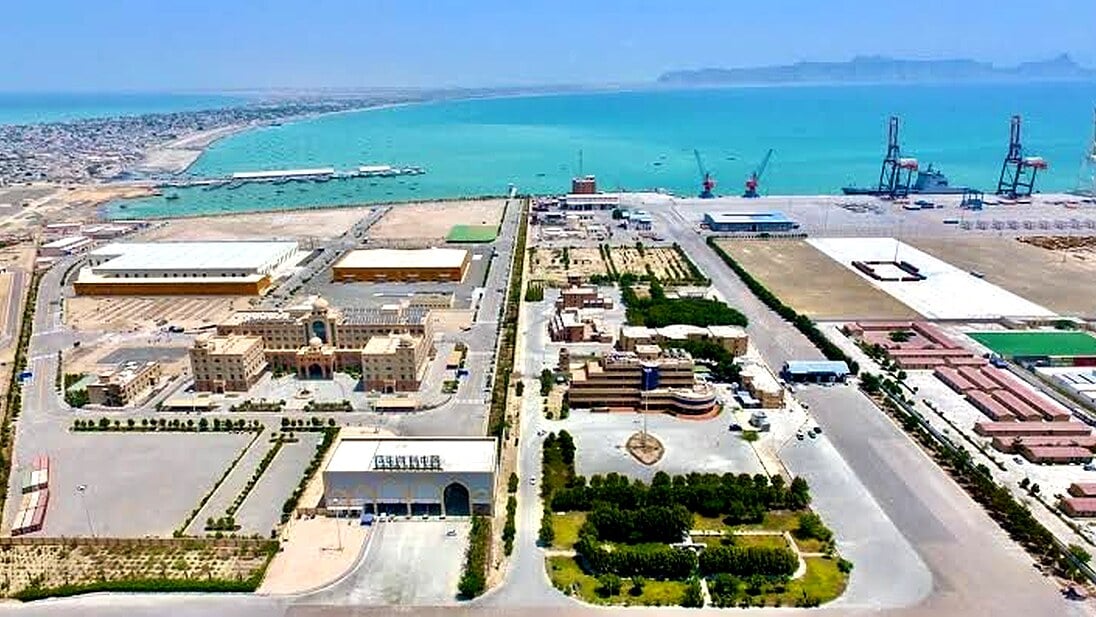




ISLAMABAD: The commencement of Gwadar Free Zone Phase 2 marks a significant development in Pakistan’s economic landscape.
Spread over 2,200 acres, this zone aims to transform Gwadar into a commercial hub.
Saudi Arabia and Kuwait are showing interest in establishing petroleum reserves here.
The construction of various facilities is underway, including container yards and bonded warehouses.
Temperature-controlled storage and designated areas for fisheries underscore the zone’s versatility.
Edible oil processing plants and halal food manufacturing units will be integral to the phase.
Plans also include light manufacturing and auto assembly operations.
Notably, Chinese auto companies are already in discussions for setting up assembly plants.
The project is projected to cost $2 billion, funded under the China-Pakistan Economic Corridor (CPEC).
Investors are offered a 23-year tax holiday, enhancing the zone’s attractiveness.
Additionally, there’s a 100% exemption on duty for imported machinery.
Infrastructure developments include a desalination plant providing 1.2 million gallons per day.
Electricity will be drawn from the national grid to meet the zone’s power needs.
A vocational institute has been completed to train local skilled workers.
These facilities align with the strategic interests of Middle Eastern stakeholders.
The involvement of Saudi Arabia and Kuwait could redefine regional economic alliances.
Their investment in petroleum reserves indicates confidence in Gwadar’s potential.
This interest may also reflect geopolitical dynamics amid regional tensions.
Gwadar’s strategic location offers significant advantages for global trade.
Its development could position Pakistan as a central player in regional logistics and trade.
The involvement of Chinese automakers hints at diverse industrial growth.
This phase will likely serve as a blueprint for future free zone developments.
However, questions regarding geopolitical stability persist.
The ongoing Middle Eastern conflicts cast uncertainty over long-term investments.
Increasing federal control might influence the direction of development initiatives.
This is a developing story, and future developments could reshape regional economic ties.