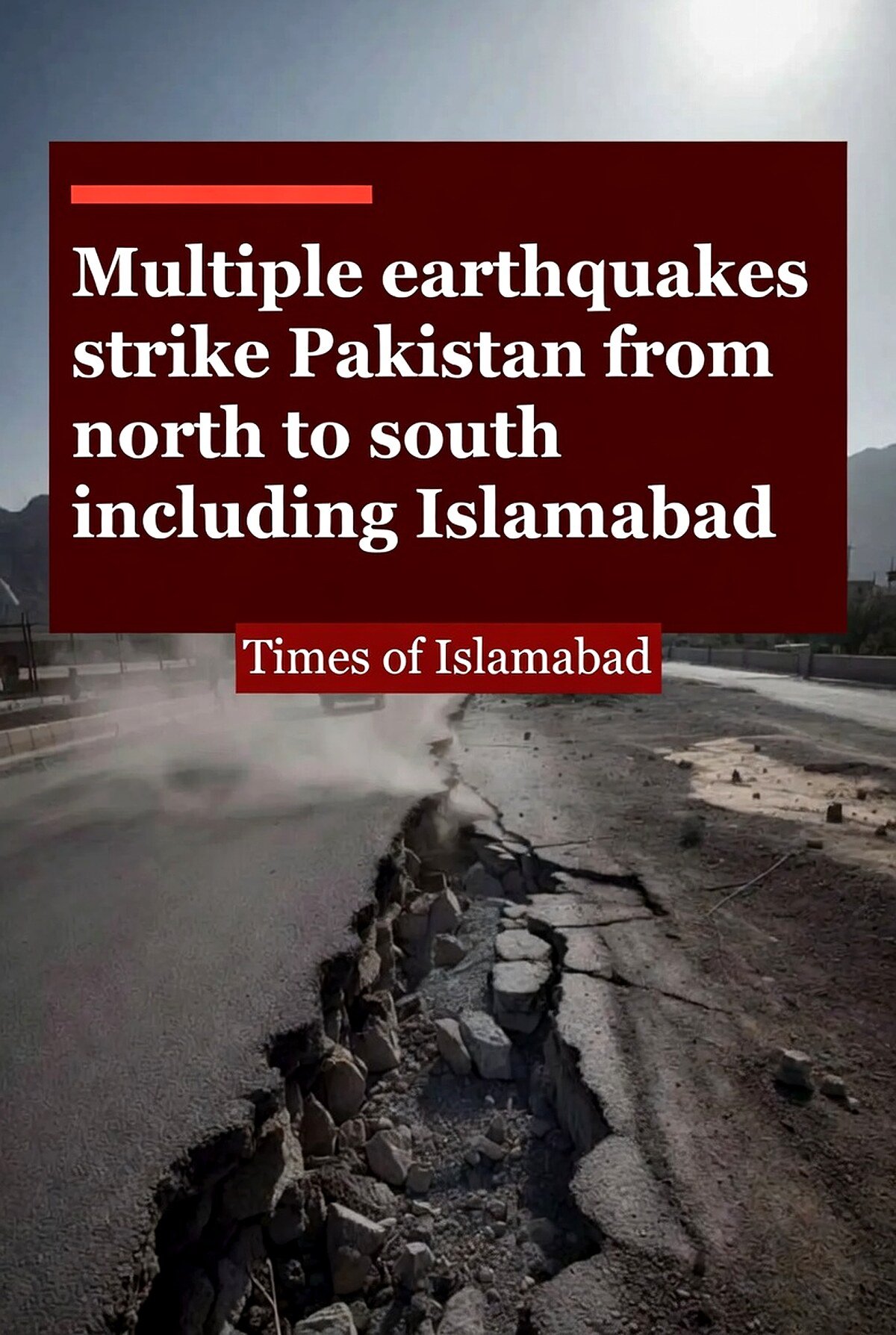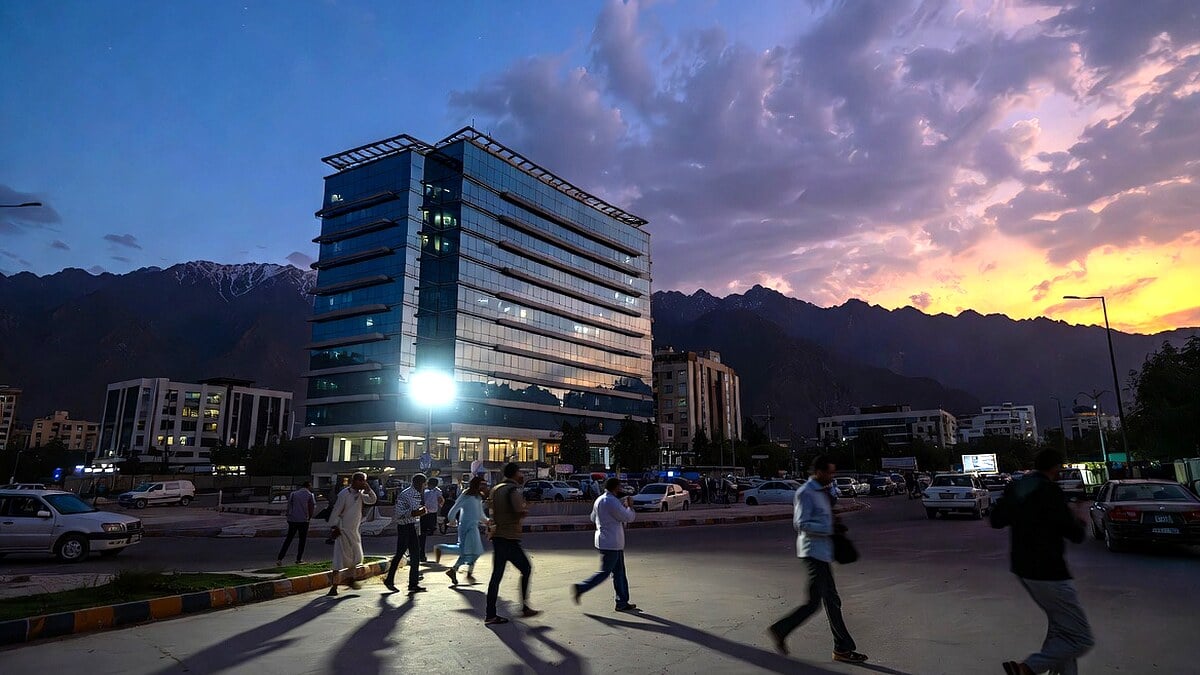




ISLAMABAD: Panic gripped homes and streets across Pakistan as strong earthquake tremors rattled the country from the northern mountains to southern coastal areas on Saturday.
Residents in major cities rushed outdoors reciting the Kalima Tayyaba, their faces etched with fear as the ground shook beneath them.
The tremors, though causing no immediate casualties or significant structural damage, highlighted the nation's vulnerability in one of the world's most seismically active zones.
Pakistan Meteorological Department's National Seismic Monitoring Centre recorded a 5.5 magnitude quake felt strongly in Rawalpindi and Islamabad. In Khyber Pakhtunkhwa, the intensity registered at 5.4 on the Richter scale.
The epicenter lay in the Koh Hindu Kush region, a notorious seismic hotspot, at a depth of approximately 199 kilometers. This deep focus explains why the shaking spread so widely without causing widespread destruction on the surface.
Tremors reached Peshawar, Mardan, Upper Dir, Lower Dir, Abbottabad, Mansehra, Balakot, Kaghan, and Haripur. Reports also poured in from Swabi, Nowshera, Charsadda, Shangla, Chitral, Bajaur, Kurram, Parachinar, Karak, and Dera Ismail Khan.
In Malakand, Swat, Saidu Sharif, Brikot, Kalam, Sakhakot, and Dirgai, residents described the jolts as sudden and alarming. Many buildings swayed slightly, prompting swift evacuations to open spaces.
But that’s not the full story. While the northern quake dominated headlines, southern Pakistan experienced its own unsettling movements on the same day.
In Pasni, Balochistan, a separate 4.5 magnitude tremor struck with a shallow depth of just 13 kilometers. Its epicenter sat only 48 kilometers southwest of the coastal town, making the shaking feel more intense locally.
Residents there reported noticeable jolts that lasted several seconds. No injuries or property losses emerged from initial assessments, yet the proximity to the surface raised eyebrows among local observers.
What’s more concerning is how these events unfolded almost simultaneously in different tectonic settings. The Hindu Kush quake stemmed from deep intra-plate activity linked to the ongoing collision between the Indian and Eurasian plates. The Pasni event, by contrast, reflected shallower crustal stresses near the Arabian Sea margin.
Hours later, mild tremors of 3.4 magnitude hit Karachi’s Malir area and its surroundings. The Pakistan Meteorological Department noted a 10-kilometer depth, with the event recorded precisely at 1:13 pm.
People in densely populated neighborhoods stepped outside, some whispering prayers as they waited for the shaking to subside. Karachi’s vast urban sprawl means even minor quakes can create widespread anxiety among millions.
This multi-region seismic activity in a single day is unusual but not unprecedented in Pakistan’s complex geology. The country sits at the junction of major tectonic plates, where the northward push of the Indian plate continues to build immense underground pressure.
Historical data reveals the Hindu Kush region frequently generates moderate to strong earthquakes. Many originate at depths exceeding 100 kilometers, which often limits surface damage but allows tremors to travel hundreds of kilometers.
For instance, past events in this zone have been felt from Kabul to Delhi and across northern Pakistan. Yet deeper quakes like Saturday’s tend to produce less destruction compared to shallow ones, such as the devastating 2005 Kashmir earthquake that claimed over 80,000 lives.
However, a deeper issue is emerging. Pakistan’s rapid urbanization has placed millions in structures that may not meet modern seismic standards. Older buildings in hilly KP districts and informal settlements in Karachi and Balochistan remain particularly at risk if a shallower or stronger event strikes.
This is where things get interesting. The Pakistan Armed Forces and provincial disaster management authorities maintain high readiness for natural calamities. Their swift response mechanisms, honed through years of experience in flood and earthquake relief, ensure rapid assessment and support where needed.
NDMA and local administrations immediately began coordinating ground reports. Teams verified that no major infrastructure suffered harm, a testament to improved monitoring and public awareness in recent years.
And this raises an important question: how prepared are communities for repeated seismic events? Saturday’s quakes, though mild in impact, served as a timely reminder that the earth beneath Pakistan never truly rests.
Experts note that the Koh Hindu Kush area has produced several magnitude 5+ events in recent memory. These deep quakes often serve as stress relievers in the tectonic system, potentially reducing the chance of an immediate mega-event.
Yet scientists caution against complacency. The plate boundary remains active, and smaller tremors can sometimes precede larger ones, though no clear pattern guarantees safety.
In Balochistan, the shallower Pasni quake aligns with the region’s coastal seismic profile. The Arabian plate’s interaction here creates different dynamics, occasionally generating events that feel sharper locally despite lower magnitudes.
Karachi’s 3.4 tremor, while minor, affected a population exceeding 20 million. Even light shaking in high-rise buildings or crowded markets can trigger panic, underscoring the need for public education on earthquake safety.
What happens when multiple quakes strike different parts of the country in quick succession? Saturday offered a rare real-world test of national coordination.
Fortunately, Pakistan’s seismic monitoring network, upgraded over the years, provided timely data. The National Seismic Monitoring Centre issued updates promptly, helping calm nerves through official channels.
Residents across affected areas displayed remarkable composure after the initial scare. Many returned to their routines once assurances came that no serious damage occurred.
Still, social media buzzed with videos of swaying fans and trembling furniture. In rural KP villages, families gathered outside, sharing stories of past jolts while keeping an eye on the horizon.
This collective resilience reflects the spirit of a nation accustomed to facing natural challenges head-on. From devastating floods to seismic events, Pakistanis have repeatedly shown strength and unity in recovery efforts.
However, experts emphasize proactive measures. Retrofitting vulnerable buildings, enforcing building codes in new constructions, and expanding early warning systems could further minimize future risks.
The Pakistan Meteorological Department continues round-the-clock monitoring. Its network of stations across the country feeds real-time data to authorities, enabling faster public alerts.
In the Hindu Kush, the 199-kilometer depth of Saturday’s main quake meant energy dissipated over a wide area. Had it been shallower, like the Pasni event, impacts might have differed significantly.
This contrast illustrates Pakistan’s diverse seismic landscape — from deep mantle activity in the north to shallower crustal movements in the south.
And this raises an important question for the future: will climate change or other factors influence seismic patterns? While earthquakes themselves stem from tectonic forces, secondary effects like landslides in northern mountains remain a concern during monsoon seasons.
Pakistan’s disaster management framework has evolved considerably. The armed forces’ engineering wings and medical teams stand ready to deploy at short notice, ensuring that any future event receives immediate professional response.
Saturday’s events ended without tragedy, allowing the nation to breathe a sigh of relief. Yet they also served as a wake-up call to remain vigilant.
As night fell, many families discussed safety drills and emergency kits. Schools and offices may soon revisit their preparedness plans in light of the day’s reminders.
The tremors have subsided, but the underlying geological forces continue their slow, relentless work. Pakistan lies in a dynamic part of the world where the earth’s crust constantly adjusts.
What the coming weeks or months hold remains uncertain. Aftershocks, though usually smaller, could follow the Hindu Kush event.
Residents in affected regions are advised to stay informed through official channels and prepare simple safety steps: secure heavy furniture, identify safe spots indoors, and know evacuation routes.
Pakistan’s journey with earthquakes is long and ongoing. Each event, no matter how minor, adds to collective knowledge and strengthens national resolve.
As monitoring continues, one thing stands clear — the country’s institutions and people remain committed to facing these natural challenges together, ensuring safety and stability for generations ahead.
What unfolds next in this seismically lively region will test that resolve once more.