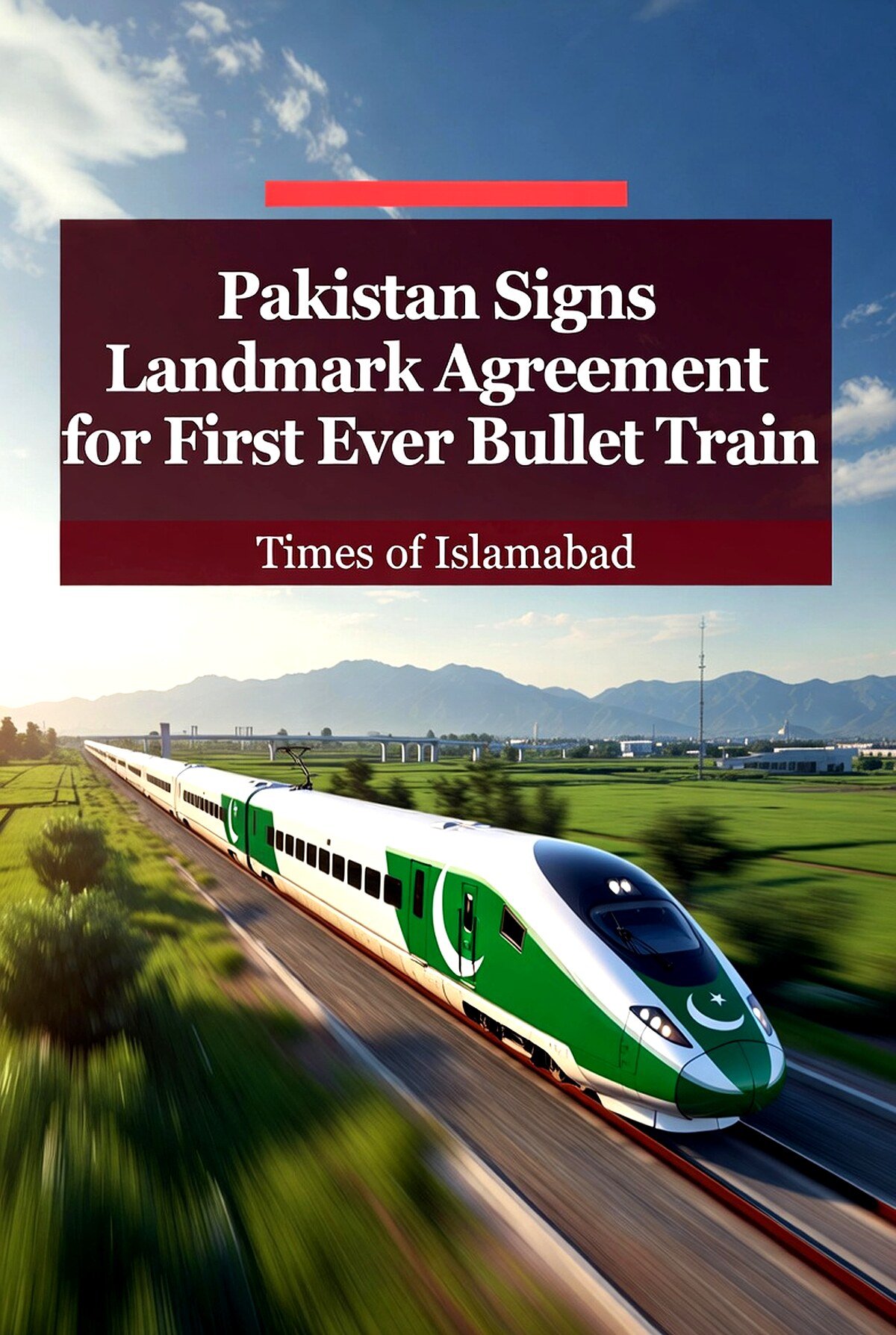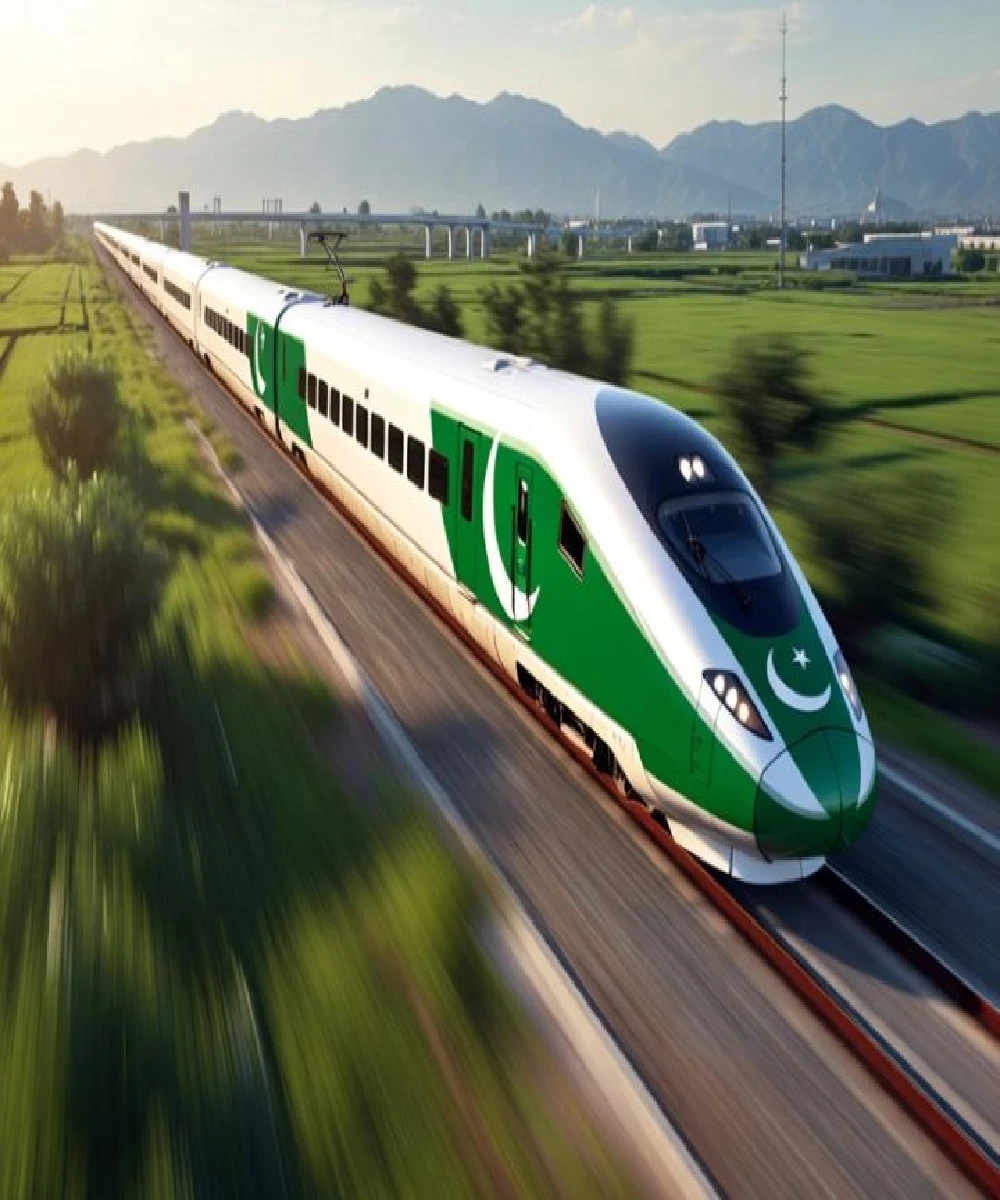




ISLAMABAD: Pakistan has taken a decisive step toward revolutionizing inter-city connectivity with the formal agreement that propels the nation's first bullet train project between Lahore and Rawalpindi into active implementation phase.
The landmark memorandum of understanding approved by the Punjab cabinet marks a historic milestone in the country's transport infrastructure development.
Chief Minister Maryam Nawaz Sharif personally championed the initiative which aims to slash travel time dramatically between the two key urban centers.
Current road and rail journeys between Lahore and Rawalpindi typically consume four to five hours amid heavy traffic congestion on the Grand Trunk Road.
The new high-speed service will reduce this duration to approximately two hours offering unprecedented efficiency for commuters and businesses alike.
Project planners have identified the existing rail corridor spanning roughly 280 kilometers as the primary alignment for upgrades.
Experts estimate the full high-speed infrastructure including dedicated tracks rolling stock and stations will require an investment exceeding 10 billion US dollars.
Per-kilometer costs for such advanced rail systems range between 40 and 50 million dollars according to engineering assessments.
The Punjab government has formed a dedicated working group in collaboration with federal authorities to finalize feasibility studies and detailed engineering designs.
Senior Minister Marriyum Aurangzeb coordinates closely with Pakistan Railways Minister Hanif Abbasi ensuring seamless integration between provincial and national rail networks.
Public-private partnership models remain under active consideration to accelerate funding and execution timelines.
This bullet train project stands as Pakistan's inaugural dedicated high-speed rail endeavor setting a benchmark for future provincial expansions.
Once operational the service will operate at speeds capable of transforming daily mobility patterns across Punjab's economic heartland.
Daily passenger volumes could reach thousands fostering greater economic integration between Lahore the provincial capital and Rawalpindi the gateway to the federal capital region.
Reduced travel times will stimulate trade activities boost tourism and enhance business opportunities along the entire corridor.
Commuters will benefit from modern comfortable trains equipped with state-of-the-art safety features and passenger amenities.
The initiative aligns perfectly with broader national goals of modernizing Pakistan's aging railway network which has long suffered from capacity constraints.
Pakistan Railways has undertaken parallel modernization efforts including digitization and automation to support such ambitious high-speed projects.
Fuel savings represent another critical advantage as thousands of private vehicles shift to reliable rail services daily.
Annual reductions in road fuel consumption could amount to billions of rupees contributing directly to foreign exchange reserves.
Lower carbon emissions from decreased highway usage will support Pakistan's environmental sustainability targets in the transport sector.
Job creation stands out as a major economic multiplier with thousands of direct and indirect positions expected during construction and operational phases.
Skilled engineers technicians and support staff will find new opportunities while local industries supply materials and services to the project.
The Punjab cabinet's November 2025 approval of the MoU specifically targeted preliminary designs engineering assessments and corridor upgrade concepts.
Tendering for detailed feasibility studies is scheduled in the coming months paving the way for precise cost timelines and funding mechanisms.
Regional media outlets have hailed the development as a game-changing advancement for Punjab's development agenda.
The project will ease chronic traffic congestion on major highways linking the twin cities and surrounding districts.
Business travelers executives and students will gain valuable time savings that translate into higher productivity across sectors.
Tourism along the route including historical sites and urban attractions will receive a significant boost from improved accessibility.
Integration with existing Orange Line Metro and future extensions will create seamless multi-modal transport networks in major cities.
Pakistan's commitment to high-speed rail reflects its determination to join the league of nations with advanced transportation systems.
The formal agreement underscores strong governmental resolve to deliver tangible infrastructure benefits to citizens.
Coordination between provincial and federal entities demonstrates effective governance in executing large-scale public projects.
Preliminary studies indicate the upgraded corridor will require significant bridge reinforcements and curve realignments for safe high-speed operations.
Advanced signaling systems and automated safety protocols will form integral components of the new infrastructure.
Rolling stock procurement will prioritize energy-efficient designs capable of maintaining consistent speeds throughout the journey.
Passenger capacity per train set could accommodate hundreds ensuring affordability and high-frequency services.
Ticket pricing strategies will balance accessibility with operational sustainability targeting middle-income commuters and business users alike.
The bullet train will complement rather than compete with existing conventional rail services on parallel routes.
Economic impact assessments project substantial contributions to Punjab's gross domestic product through enhanced connectivity.
Regional trade volumes between industrial hubs in Lahore and commercial centers in Rawalpindi will surge with faster goods movement.
Small and medium enterprises along the corridor will gain competitive advantages through reduced logistics costs.
The project also promises improved road safety by diverting passenger traffic away from accident-prone highway sections.
Pakistan's rail modernization drive under this initiative reflects long-term vision for sustainable national development.
International observers note the project's potential to serve as a model for similar high-speed links in other provinces.
Stakeholder consultations with local communities ensure minimal displacement and maximum local benefits during implementation.
Environmental impact studies will incorporate green technologies to minimize ecological footprint along the alignment.
The formal agreement signing has generated widespread optimism among transport experts and economic analysts nationwide.
Punjab's proactive approach positions the province as a leader in Pakistan's infrastructure transformation journey.
Future expansions may include additional high-speed routes connecting other major cities under the same visionary framework.
This bullet train project symbolizes Pakistan's steady progress toward becoming a modern efficient and economically vibrant nation.
Citizens eagerly anticipate the day when high-speed travel becomes a reality enhancing quality of life across the region.
Ongoing coordination ensures the project remains on track for timely completion and operational excellence.
Pakistan Railways' technical expertise combined with provincial administrative support creates a robust foundation for success.
The initiative will undoubtedly strengthen national unity through improved physical and economic linkages between key regions.
With the formal agreement now in place the bullet train dream edges closer to becoming a transformative reality for millions of Pakistanis.