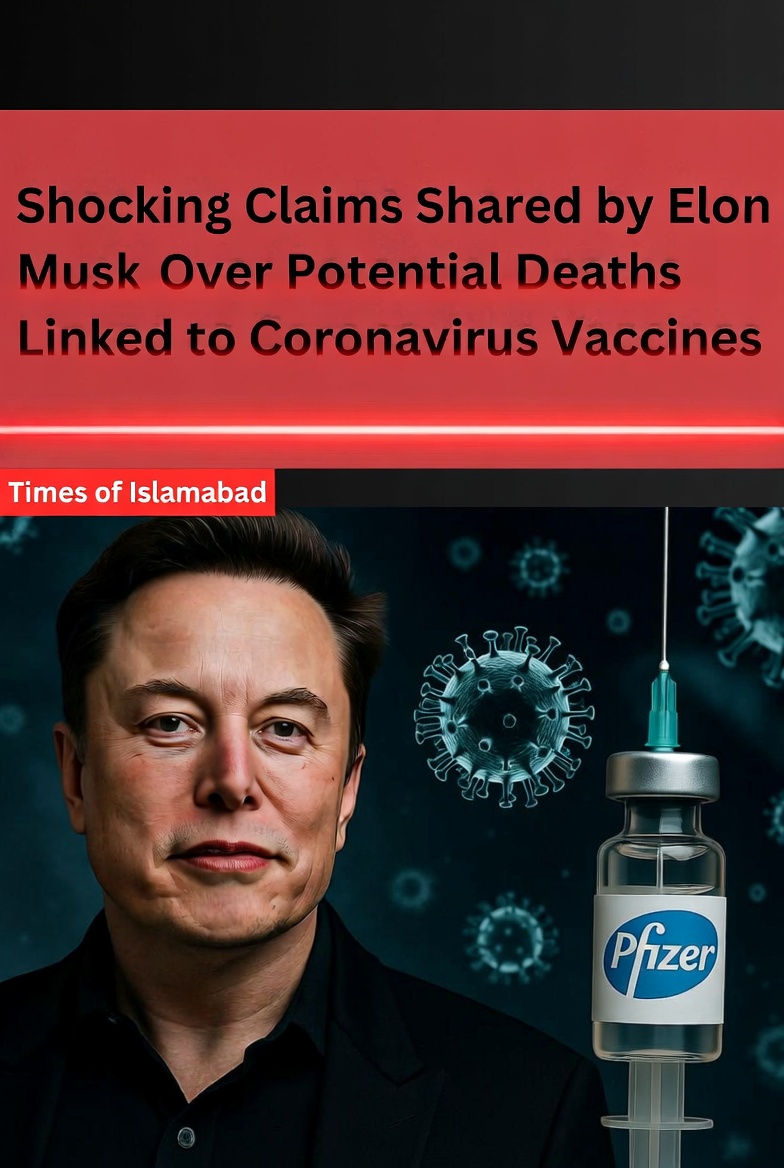




ISLAMABAD: Elon Musk has once again thrust the contentious issue of COVID-19 mRNA vaccine safety into the global spotlight.
The world-renowned technology leader shared a video of a former senior German toxicologist raising serious concerns over rushed approvals and potential deaths linked to the vaccines.
His post, which quickly amassed over 49 million views on X, included his own account of feeling like he was dying after the second vaccine dose.
Musk contrasted this with his experience of contracting the original Wuhan strain of the virus, describing it as similar to a bad cold or flu that was unpleasant but not severe.
Regional media reports highlight the testimony of Dr Helmut Sterz, a former chief toxicologist with experience at Pfizer Europe, who appeared before a German parliamentary enquiry commission on March 19, 2026.
Dr Sterz claimed that essential safety tests for carcinogenicity and reproductive toxicity were skipped in the approval process for Pfizer-BioNTech's Comirnaty vaccine.
He referenced data from Germany's Paul Ehrlich Institute, noting over 2,133 reported deaths associated with COVID-19 vaccinations up to 2023.
Applying an underreporting factor commonly used in pharmacovigilance, he estimated actual vaccine-linked fatalities in Germany could range between 20,000 and 60,000.
Dr Sterz argued that mRNA vaccines should never have received approval, comparing the rushed process unfavorably even to protocols for highly lethal diseases like Ebola.
His background includes high-level European positions, and he had previously been summoned before German parliamentary commissions on related matters.
Musk echoed these concerns by stating the vaccine dosage was obviously too high and administered too many times.
He detailed that while the initial infection felt manageable, the second shot caused extreme reactions that nearly required hospitalization.
This personal revelation has fueled fresh discussions on social media platforms about vaccine side effects, dosing protocols, and the role of global health institutions.
On the other side, German health authorities and experts have firmly rejected such claims.
Former Health Minister Karl Lauterbach and other medical professionals maintain that COVID-19 vaccines underwent extensive clinical trials involving thousands of participants before approval.
They emphasize that every reported adverse event undergoes rigorous scientific review, and correlation does not prove causation.
Official data from large-scale studies, including a recent nationwide cohort analysis in Italy covering 22.7 million vaccinated individuals, showed vaccinated people had a 25 percent lower all-cause mortality risk and 74 percent lower risk of death from severe COVID-19 over nearly four years of follow-up.
German pharmacovigilance reports have recorded thousands of adverse events, yet authorities insist these represent temporal associations rather than confirmed vaccine causation in most cases.
International coverage of Dr Sterz's specific March 2026 testimony remains limited in major Western outlets, with regional and alternative media outlets amplifying the claims for public scrutiny.
Musk's intervention comes amid ongoing global conversations about excess mortality patterns observed in several countries during and after the pandemic years.
Some analyses have noted correlations in certain regions between higher vaccination rates and shifts in excess death trends in later pandemic phases, though causation remains heavily debated among scientists.
Critics of the vaccines point to underreporting in official systems, while proponents highlight billions of doses administered worldwide with overall benefits in reducing severe illness and hospitalizations.
The debate has intensified calls for greater transparency in vaccine development, approval processes, and long-term safety monitoring.
Musk, known for his influence across technology and public discourse, has previously voiced skepticism on repeated booster campaigns.
His latest comments have sparked polarized reactions, with some users demanding independent reviews of mRNA technology and others defending the vaccines as life-saving tools validated by extensive real-world data.
As discussions continue, stakeholders urge reliance on peer-reviewed evidence while acknowledging the need for open scientific inquiry.
The episode underscores persistent questions about balancing rapid innovation in public health emergencies with comprehensive safety assurances.