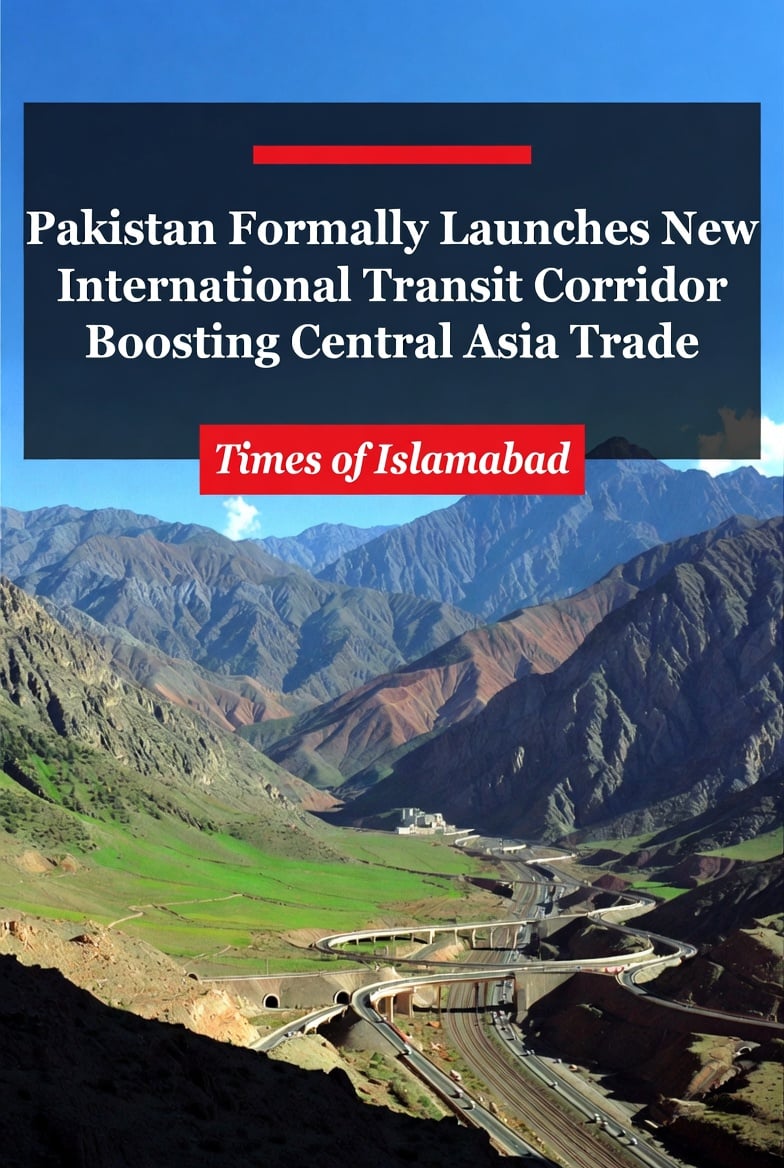




ISLAMABAD: Pakistan on Sunday formally launched the Pakistan-Iran transit corridor marking a significant step towards enhancing regional trade connectivity.
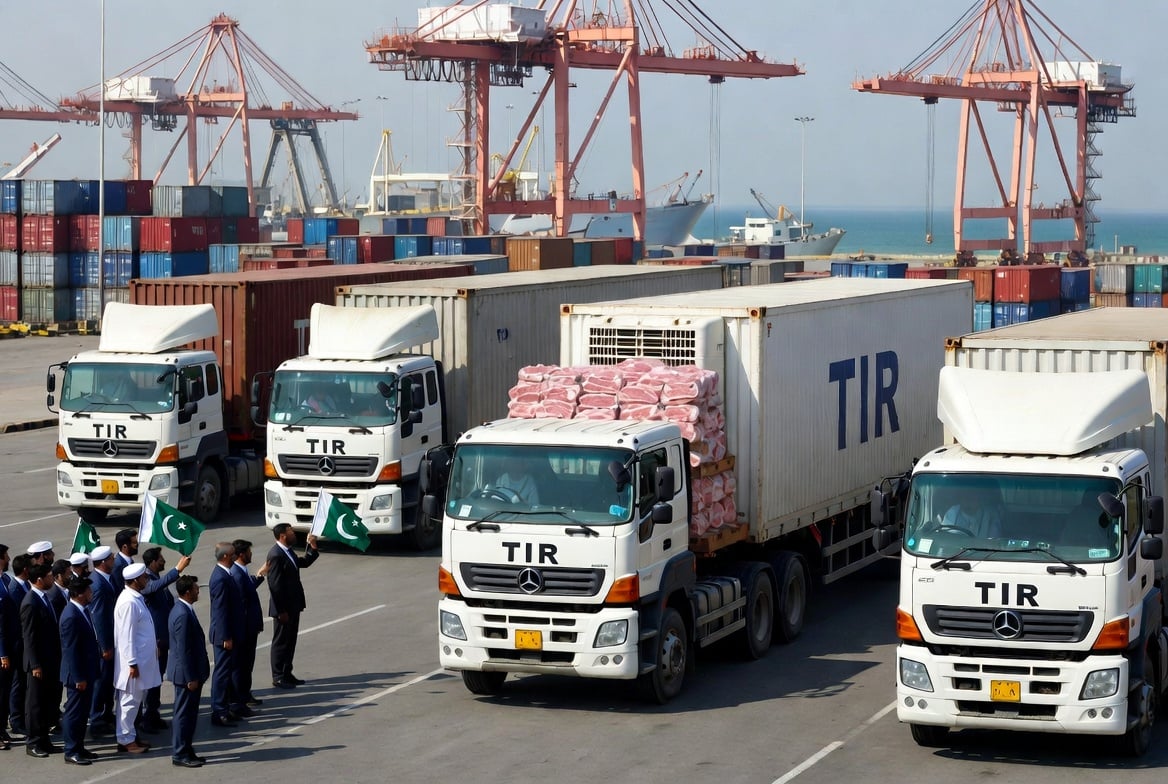
The first export consignment was dispatched from Karachi to Tashkent as the inaugural shipment under the new route.
According to regional media including 24NewsHD and The Express Tribune the shipment consisted of frozen meat transported in refrigerated trucks.
An opening ceremony took place at a TIR-enabled terminal in Karachi attended by senior customs officials and logistics company representatives.
Director Transit Trade Customs Sanaullah Abro and other officials flagged off the consignment describing it as a historic milestone.
Goods will now move through Iran using TIR trucks under the international Transports Internationaux Routiers convention.
This system ensures sealed no-touch transit across borders eliminating repeated customs inspections and associated delays.
Officials highlighted that the corridor offers exporters a faster and more cost-effective land-based alternative to traditional routes.
The new path crosses the Gabd-Rimdan border between Pakistan and Iran before proceeding towards Uzbekistan and other Central Asian states.
Pakistan has pursued this route as a reliable option amid repeated disruptions on the Afghanistan transit corridor due to security and political issues.
Regional reports confirm that Afghan border closures have previously forced exporters to incur heavy losses in time and insurance costs.
The Iran corridor is expected to shorten transit times substantially while lowering overall logistics expenses by significant margins.
Experts note that the route provides direct access for Central Asian importers to Pakistan’s ports of Karachi and Gwadar.
This development opens new markets for Pakistani goods particularly high-value perishables like frozen meat and processed food items.
Pakistan’s Directorate General of Transit Trade stated that the corridor strengthens connectivity linking South Asia with Central Asia via Iran.
The initiative aligns with earlier government measures to ease banking rules for exports to Iran and Central Asian republics announced in March.
Such steps have already removed barriers for items including rice and pharmaceuticals facilitating smoother trade flows.
Trade analysts project that reliable transit could boost Pakistan’s exports to Central Asia by unlocking billions in untapped potential.
Central Asia’s growing economies demand efficient supply chains and this corridor positions Pakistan as a key regional transit hub.
The TIR framework guarantees customs duties and taxes through an international chain reducing risks for all stakeholders involved.
Logistics operators at the ceremony expressed optimism about scaling operations with multiple consignments planned in the coming weeks.
This launch comes at a time when global supply chains seek diversified routes amid geopolitical uncertainties in traditional paths.
Pakistan’s strategic geography between the Arabian Sea and landlocked Central Asia has long been underutilized for overland trade.
With the corridor now operational exporters gain a competitive edge in delivering time-sensitive cargo to Tashkent and beyond.
Regional media outlets have widely covered the event underscoring its importance for economic integration in the region.
The move is seen as a practical response to demands from the business community for stable and predictable transit options.
Future expansions could integrate rail and multimodal links further enhancing the corridor’s capacity and reach.
Pakistan’s customs authorities have assured full facilitation for TIR consignments ensuring seamless clearance at all border points.
This milestone not only benefits immediate trade but also lays the foundation for broader regional economic cooperation.
The successful dispatch of the first shipment signals Pakistan’s commitment to becoming a vital connector in Eurasian trade networks.