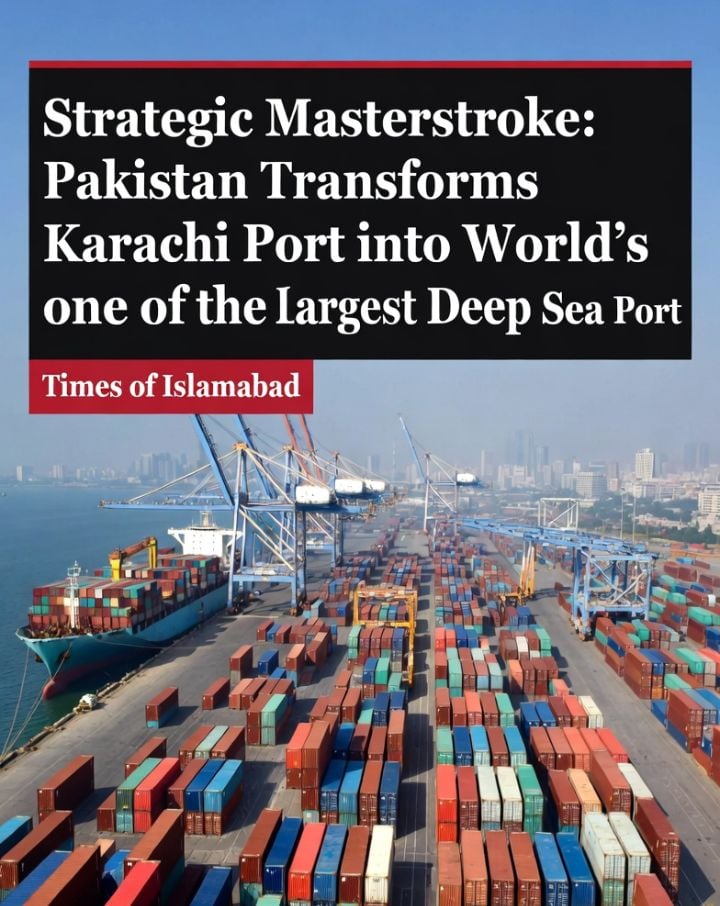




ISLAMABAD: In a strategic masterstroke amid escalating global maritime chaos, Pakistan has launched the conversion of Karachi Port into a full-fledged deep sea facility, positioning the country as a vital alternative trade hub.
The move comes as ongoing conflicts in the Middle East, including Houthi disruptions and tensions around the Strait of Hormuz, have severely hampered operations at Dubai’s Jebel Ali port, forcing shipping lines to reroute cargo.
Regional media reports, including those from Dawn and local port authorities, confirm the project’s acceleration, with work already underway to capitalize on the crisis.
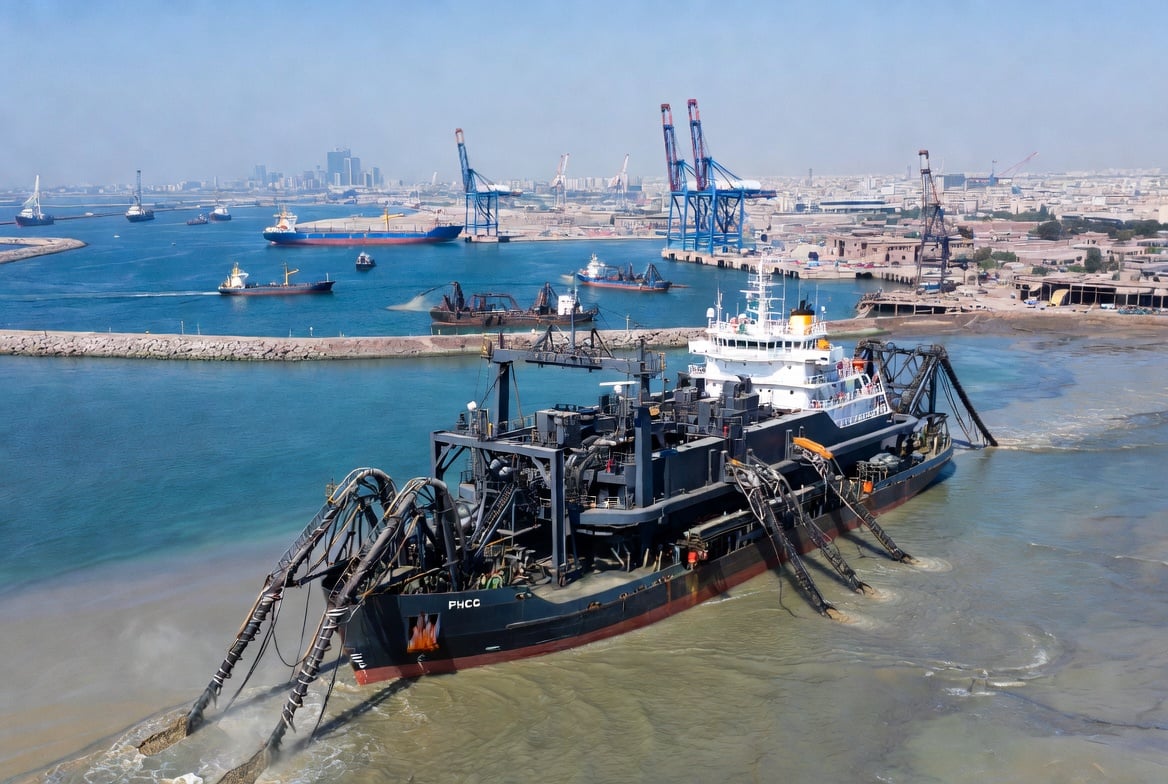
Karachi Port Trust welcomed the arrival of the specialized Dutch trailing suction hopper dredger Rotterdam from Van Oord on March 14, 2026, marking a historic milestone.
For the first time in Karachi’s history, four major dredgers — Rotterdam, Athena, Abul, and Indus Dolphin — are operating simultaneously under National Dredging and Marine Services.
The intensive four-month program targets deepening the upper and lower harbour channels to 14 metres while raising 14 berths to 15.5 metres.
Upon completion, the port will accommodate vessels up to 350 metres in length with a gross registered tonnage of 100,000, aligning closely with demands for larger Panamax and Post-Panamax ships.
This upgrade directly addresses previous limitations where maximum berth depths stood at around 11.3 metres, restricting cargo handling efficiency.
Official data reveals Karachi Port handled a record 54 million tons of cargo in fiscal year 2025, reflecting a 4.45 per cent growth and 2.65 million TEUs in containers.
Transshipment volumes have surged dramatically, with 8,860 containers processed in just 24 days of March 2026 compared to the entire previous year’s 8,300.
The $285 million investment led by Karachi Gateway Terminal Limited underscores the government’s commitment to modernising infrastructure.
Maritime Affairs Minister Muhammad Junaid Anwar Chaudhry described the initiative as a major upgrade to meet rising international shipping demand.
By enabling safer navigation and faster vessel turnaround, the project is expected to slash logistics costs and boost Pakistan’s overall trade competitiveness.
Karachi currently manages nearly 60 per cent of the nation’s sea cargo, but the deep sea conversion could unlock billions in additional annual revenue.
Analysts project the enhanced capacity will attract more transshipment business diverted from congested Gulf routes, potentially elevating Pakistan’s role in regional supply chains.
The timing could not be more opportune, as global shipping lines seek secure alternatives outside vulnerable chokepoints.
With the project on track for early completion, authorities anticipate a significant reduction in port congestion and improved handling of bulk and containerised cargo.
This development not only strengthens Pakistan’s economy but also signals a shift in South Asian maritime dynamics, drawing investment and traffic away from disrupted hubs.
Experts highlight that the Dutch dredging expertise ensures world-class standards, setting a benchmark for future port expansions in the region.
As four dredgers work round the clock, the transformation is visibly reshaping Karachi’s waterfront, promising brighter prospects for national trade and employment.
The initiative aligns with broader government efforts to position Pakistan as a premier transit and transshipment hub for Central Asia and beyond.
Sustained growth in cargo volumes, already at historic highs, underscores the port’s resilience and potential for exponential expansion.
In essence, this deep sea conversion represents a pivotal leap forward, turning geopolitical challenges into economic opportunities for Pakistan.