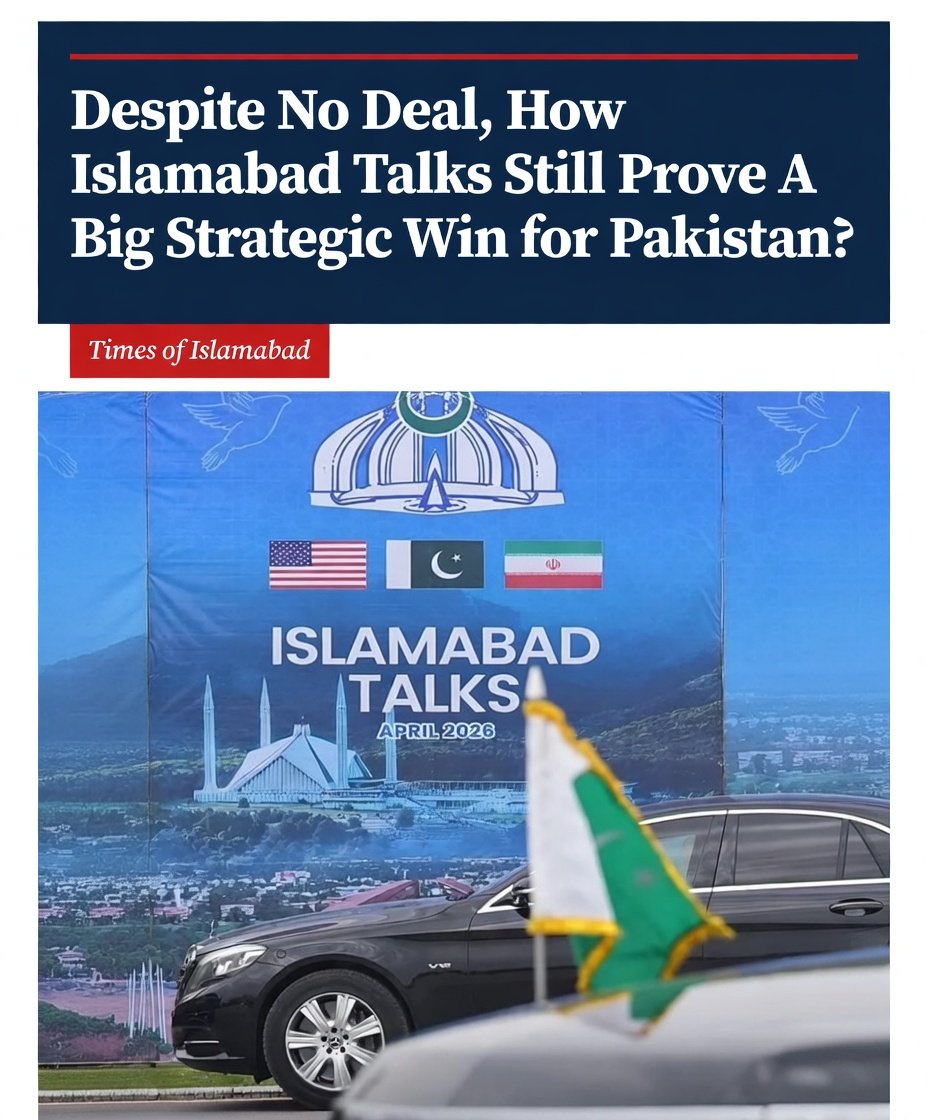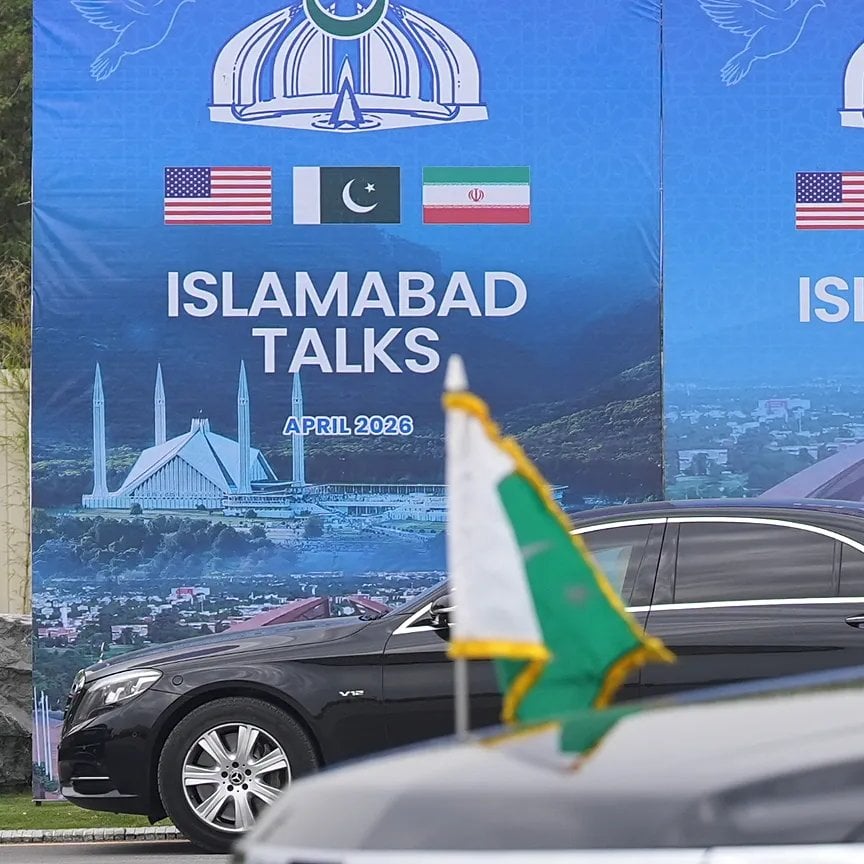




ISLAMABAD: Despite the absence of any concrete agreement from the recent US-Iran negotiations held in the Pakistani capital, leading analysts have unanimously described the talks as a major strategic victory for Pakistan.
The high-level engagement succeeded in its core objective of placing the two adversaries at the same table and forcing clarity on red lines.
Michael Kugelman, a senior South Asia specialist, observed on social media that Washington sought a deal primarily to ease its way out of potential conflict driven by domestic political pressures.
He noted that the deployment of a senior delegation to Islamabad itself signalled serious American intent and commitment to the process.
Kugelman added that even after the US vice-president’s public statements further rounds of dialogue could still materialise although the location remains undecided.
Peter Schak questioned the immediate aftermath pointing out that the American side left without any pact leaving Washington in a visibly weaker negotiating position.
He warned that Iran now understands this vulnerability and may exploit it in future exchanges.
Former Afghan ambassador Ashraf Haidari viewed the outcome more optimistically stating that the Islamabad talks had already achieved their initial purpose.
Both sides had articulated their positions clearly and identified areas of possible flexibility as well as firm limits.
Haidari urged observers to treat the discussions as part of a longer diplomatic process rather than a single dramatic episode.
He expressed confidence that each delegation would return home conduct internal reviews and potentially resume contact.
Pakistani journalist Reza Rumi warned that an outright collapse could intensify regional tensions trigger fresh energy shortages and accelerate global inflation plus economic instability.
He nevertheless predicted that talks would continue precisely because the stakes remain too high for either side to walk away permanently.
Rumi described Pakistan’s role as a quiet strategic triumph noting that simply convening the United States and Iran on neutral diplomatic soil constituted a significant success.
Pakistan’s mediation has enhanced its image as a credible regional broker without expending military or financial resources.
Regional media outlets have emphasised that the Islamabad venue allowed both powers to test intentions away from the glare of traditional European or Gulf capitals.
Energy market data underscores the importance of such de-escalation efforts with global oil prices already fluctuating by up to twelve percent in recent weeks amid renewed threats.
Pakistan imports nearly eighty-five percent of its crude oil requirements with the annual bill exceeding twelve billion dollars according to official statistics.
Any sustained spike could add two billion dollars to the national import burden and push domestic fuel prices higher fuelling already elevated inflation.
Analysts project that prolonged deadlock might drive benchmark crude above one hundred and ten dollars per barrel compounding supply risks through the Strait of Hormuz.
That chokepoint carries twenty-one percent of the world’s petroleum liquids making any disruption a global economic shock.
By hosting the talks Pakistan has positioned itself to benefit from any future breakthrough while insulating itself from direct fallout.
The diplomatic platform also strengthens Islamabad’s leverage with both Washington and Tehran at a time when regional alliances are shifting rapidly.
Senior Pakistani officials have maintained silence on the outcome reinforcing the narrative of quiet achievement rather than public grandstanding.
International coverage has remained limited allowing regional voices to shape the initial narrative around Pakistan’s behind-the-scenes gains.
Reza Rumi’s assessment resonates widely in local circles where the ability to bring adversaries together is seen as a rare diplomatic asset.
Ashraf Haidari’s call to view the process as ongoing aligns with Pakistan’s long-term interest in stable neighbourhood relations.
Even Michael Kugelman’s cautious notes highlight that the senior-level American presence in Islamabad was no small feat.
Peter Schak’s concerns about negotiating weakness may pressure Washington to return to the table sooner than expected.
Collectively these expert views paint a picture of measured progress beneath the surface of apparent failure.
Pakistan has therefore converted an inconclusive meeting into tangible strategic capital that could yield dividends in future regional security and economic forums.
The talks have also demonstrated Islamabad’s capacity to manage sensitive diplomacy amid competing global pressures.
As tensions linger the quiet victory in hosting the dialogue may prove more enduring than any immediate agreement could have delivered.