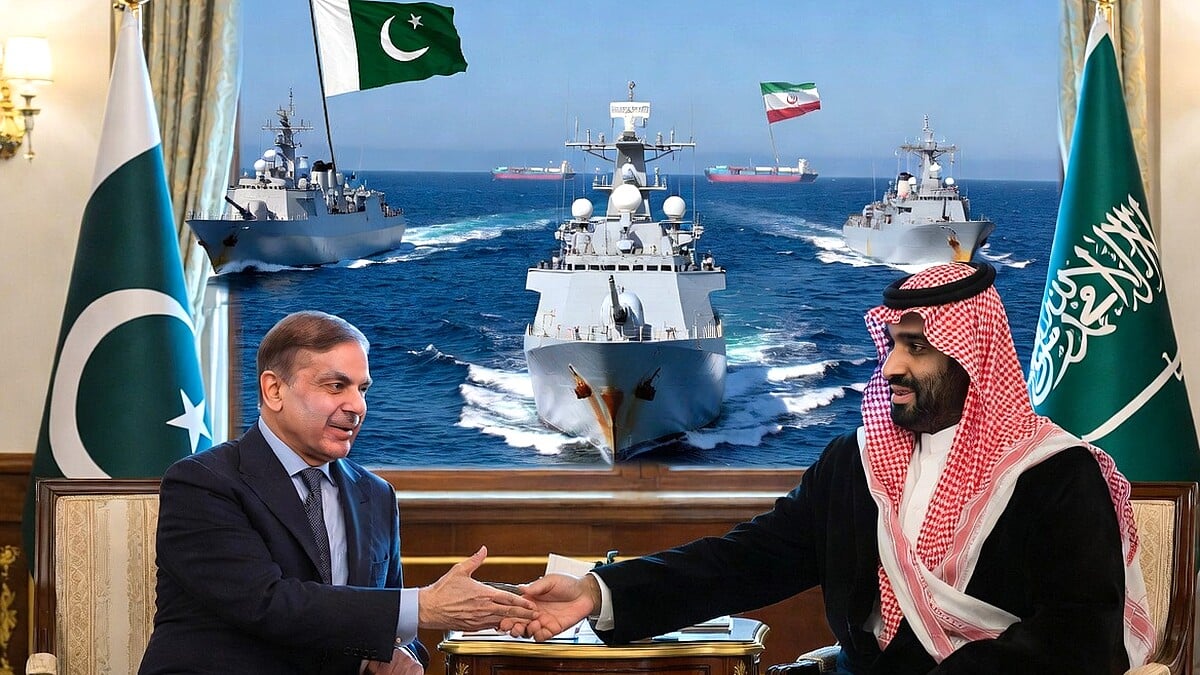




ISLAMABAD: Sources indicate that Prime Minister Shehbaz Sharif may proceed on a emergency travel to Saudi Arabia pointing to a major breakthrough.
The United States and Iran may have reportedly reached an understanding that Pakistan and Saudi Arabia, alongside Iranian naval forces, will conduct joint patrolling of the Strait of Hormuz.
This development comes amid fragile ceasefire efforts following weeks of regional conflict that disrupted vital shipping lanes.
The Strait of Hormuz handles nearly 21 million barrels of crude oil daily, accounting for over 20 percent of global seaborne petroleum trade and one-third of liquefied natural gas shipments.
Its closure during the recent US-Israel-Iran hostilities triggered oil price spikes exceeding 30 percent and forced Pakistan to seek alternative Saudi supply routes via the Red Sea.
Pakistan has already secured safe passage for 20 of its flagged vessels through Iranian coordination, a direct outcome of Islamabad’s mediation role.
Since the April 7 ceasefire took effect, approximately 30 commercial ships have transited the waterway, though traffic remains far below pre-conflict levels of hundreds daily.
Regional media outlets and informed circles in Islamabad highlight the timing of Sharif’s potential trip as more than routine diplomacy.
It builds on his March 12 restricted meeting with Crown Prince Mohammed bin Salman in Jeddah, where full solidarity was pledged amid escalating Middle East tensions.
That brief visit, framed officially as urgent consultations on de-escalation, included detailed talks on bilateral defence ties and regional stability.
Under a 2025 mutual defence pact, Pakistan has deployed fighter jets and support aircraft to a Saudi eastern air base for joint readiness operations.
Naval cooperation now appears set to expand into maritime security, filling a gap left by limited US escort commitments due to high operational risks.
NATO allies have signalled interest in longer-term Hormuz patrols, yet European diplomats stress the need for inclusive regional involvement including Iran to avoid escalation.
Pakistan’s navy, with proven anti-piracy experience in the Arabian Sea, brings critical logistical strengths to any multinational framework.
Analysts note that joint Pakistan-Saudi-Iran patrols could deter threats from non-state actors and ensure neutral shipping without direct foreign power dominance.
The arrangement aligns with Tehran’s 10-point proposal during Islamabad-hosted talks, which includes maintaining strait control while lifting sanctions and ending hostilities.
Washington, however, has rejected any Iranian toll system on vessels and insists on free navigation under international law.
Prime Minister Sharif’s mediation has already delivered a Pakistan-brokered framework to both sides, paving the way for the April 10 round of US-Iran discussions in Islamabad.
Sources close to the process describe the Hormuz patrol plan as a confidence-building measure essential for sustaining the two-week ceasefire.
Pakistan imports over 80 percent of its oil, making secure Hormuz transit a national economic imperative valued at billions in annual trade.
Any successful joint operation would also bolster Saudi energy exports, which constitute the backbone of the kingdom’s economy and Pakistan’s deferred-payment oil supplies.
Defence analysts project that Pakistani naval assets could integrate with Saudi patrol vessels within weeks, supported by existing command-and-control links established during recent joint exercises.
This trilateral model contrasts with earlier failed attempts at purely Western-led escorts, which Iran viewed as provocative.
If confirmed, the pact would represent a diplomatic triumph for Pakistan, positioning it as the indispensable bridge between Gulf monarchies, Tehran and Washington.
It underscores Islamabad’s shift from observer to active guarantor of maritime security in one of the world’s most contested chokepoints.
Observers warn that implementation details remain sensitive, including rules of engagement and command rotation among the three navies.
Yet the momentum from recent ship transits and high-level phone calls between Sharif and the Saudi crown prince on April 7 suggests rapid progress.
The potential emergency visit would allow Sharif to finalise operational protocols directly with Riyadh while updating on parallel US-Iran negotiations.
For Pakistan, success in Hormuz would translate into enhanced strategic leverage, energy security and strengthened alliances worth tens of billions in trade and investment.
Regional stability hangs in balance, with global markets watching closely for any announcement that could normalise oil flows and ease inflationary pressures worldwide.