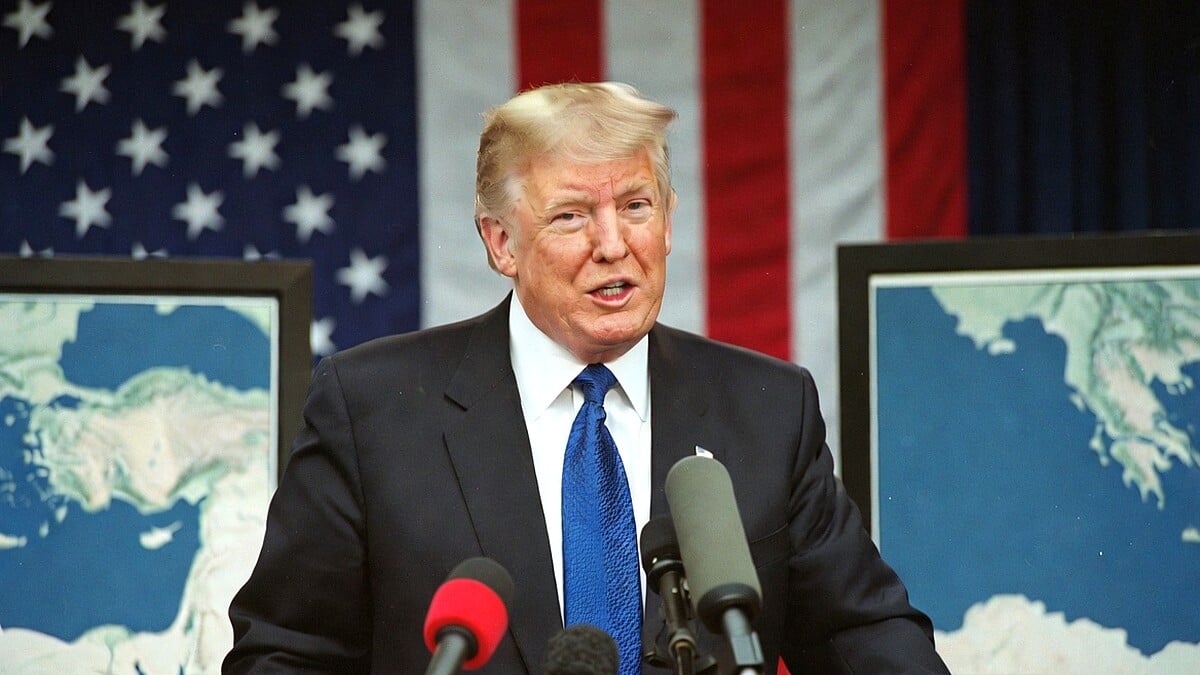




ISLAMABAD: US President Donald Trump is showing clear desperation to terminate the Iran war despite his repeated boasts of decisive military boosts and strategic triumphs that initially propelled the campaign.
The six-week conflict launched on February 28 has suddenly pivoted toward a fragile two-week ceasefire with direct talks hosted here in Islamabad exposing underlying vulnerabilities in Washington's position.
Trump's abrupt reversal from apocalyptic threats of civilizational destruction to embracing a Pakistani-mediated 10-point peace plan underscores mounting pressures that no amount of early battlefield rhetoric could mask.
Global energy markets have borne the brunt with the Strait of Hormuz disruption halting nearly 20 percent of worldwide oil and LNG shipments.
Oil prices surged from around 71 dollars per barrel to over 100 dollars triggering immediate economic shocks across Asia Europe and the United States itself.
Analysts warn that prolonged closure could push crude to 140 or even 150 dollars per barrel crippling recovery in multiple economies.
Gulf states reeling from Iranian retaliatory strikes on infrastructure and shipping have added their own layer of pressure despite some initial hawkish calls for continuation.
Saudi Arabia and the United Arab Emirates now face combined daily production drops exceeding 10 million barrels alongside food import crises that spiked consumer prices by 40 to 120 percent.
Regional GDP losses for Arab nations are projected between 120 billion and 194 billion dollars according to United Nations estimates forcing even traditional allies to urge de-escalation.
International coalition dynamics have further complicated Trump's calculus with NATO allies openly refusing support.
European powers including France Britain and Spain denied US access to bases and airspace for operations against Iran prompting Trump to lash out at the alliance.
The president has warned of reassessing NATO membership post-conflict highlighting the absence of any meaningful multinational coalition beyond Israel.
Military expenditures have escalated dramatically with the Pentagon reporting 11.3 billion dollars in costs for the first six days alone.
Independent estimates from the Center for Strategic and International Studies place daily spending at approximately 500 million dollars pushing the five-week total toward 22 to 31 billion dollars.
This includes massive munitions depletion battle damage repairs and operational outlays that exclude pre-war buildup expenses.
No clear victory has emerged despite Trump's claims of exceeding all military objectives including degradation of Iran's missile navy and nuclear programs.
Iranian resilience has prevented regime change or full capitulation leaving proxies active and the Islamic Republic defiant after six weeks of intense bombardment.
The war's asymmetric nature has inflicted unexpected costs with US equipment losses and regional infrastructure damage adding billions more in long-term liabilities.
Domestic American sentiment has turned sharply against prolonged engagement polls showing widespread fatigue over another Middle East quagmire.
Republican Party rifts have deepened as Trump loyalists clash over the shift from promised swift dominance to negotiated exit.
Energy price spikes have directly hit US consumers and businesses amplifying political risks ahead of midterm elections.
Trump's initial boasts of obliterating Iranian capabilities in days have given way to pragmatic recognition that indefinite conflict yields diminishing returns.
Pakistani diplomacy has played a pivotal role in facilitating the current ceasefire framework with negotiations set to intensify involving US Vice President JD Vance and Iranian counterparts.
The Islamabad venue itself signals a regional pivot away from unilateral American action toward multilateral pressure points.
Humanitarian concerns have intensified with threats to civilian power plants and bridges drawing global condemnation from the United Nations and religious leaders including Pope Leo XIV.
Such rhetoric from Trump warning that an entire civilization could die overnight has backfired amplifying calls for restraint.
Economic ripple effects extend far beyond the Gulf with Asian LNG prices jumping over 140 percent and global supply chains disrupted.
Gulf desalination plants targeted in retaliatory strikes have threatened drinking water for millions in Kuwait and Qatar where such facilities supply 99 percent of needs.
Aviation across the region has ground to a halt with major carriers like Emirates and Qatar Airways suspending operations due to airspace closures.
These cascading impacts have compelled even Gulf voices that once favored escalation to prioritize stability and reopened shipping lanes.
Trump's administration now highlights the ceasefire as a path to long-term peace in the Middle East while keeping forces positioned for potential resumption.
Yet the haste to conclude talks reveals an acknowledgment that military damages and expenditures far outweigh any remaining strategic gains.
No definitive end to Iran's proxy network or full nuclear safeguards has been secured leaving analysts to question the war's ultimate legacy.
International observers note the rapid about-face from annihilation threats to diplomatic embrace occurred within hours of the latest deadline.
This pattern suggests internal assessments within the White House concluded that continuation risked broader regional destabilization and domestic backlash.
Pakistan's successful mediation effort has drawn praise for averting further escalation while positioning Islamabad as a key player in Gulf security architecture.
For the United States the war's financial toll already rivals early phases of past conflicts with replacement of advanced munitions alone straining inventories.
Global markets reacted positively to the ceasefire announcement with oil futures plunging and stock indices jumping in anticipation of reopened Hormuz traffic.
Yet the fragility of the truce underscores that underlying tensions persist absent a comprehensive agreement.
Trump's desperation stems not from weakness in forces but from the cumulative weight of unsustainable costs that no initial boosts could indefinitely sustain.
Regional Gulf pressures have crystallized around the need to restore energy flows and economic normalcy after weeks of disruption.
International coalition absences have isolated Washington forcing reliance on bilateral channels rather than broad alliances.
Energy price volatility has exposed vulnerabilities in global supply chains directly affecting American households and industries.
Absence of clear victory metrics has eroded political capital at home where voters demand swift resolution.
Military damages including losses to naval assets and forward bases have compounded the expenditure burden.
These intertwined factors have converged to make ending the conflict an imperative despite early declarations of triumph.
The Islamabad talks represent a critical juncture where data-driven realities have overtaken rhetorical momentum.
As delegations convene the world watches whether this pause translates into enduring peace or merely a tactical breather.
Trump's administration insists objectives were met yet the urgency to formalize withdrawal speaks volumes about the war's hidden toll.
Pakistan continues to facilitate as host underscoring its neutral broker role in a conflict that has reshaped Middle East alliances.
Ultimately the president's pivot illustrates how economic military and diplomatic pressures can compel even the most assertive leader toward de-escalation.
The coming days in Islamabad will test whether these forces suffice to forge a lasting end to hostilities.