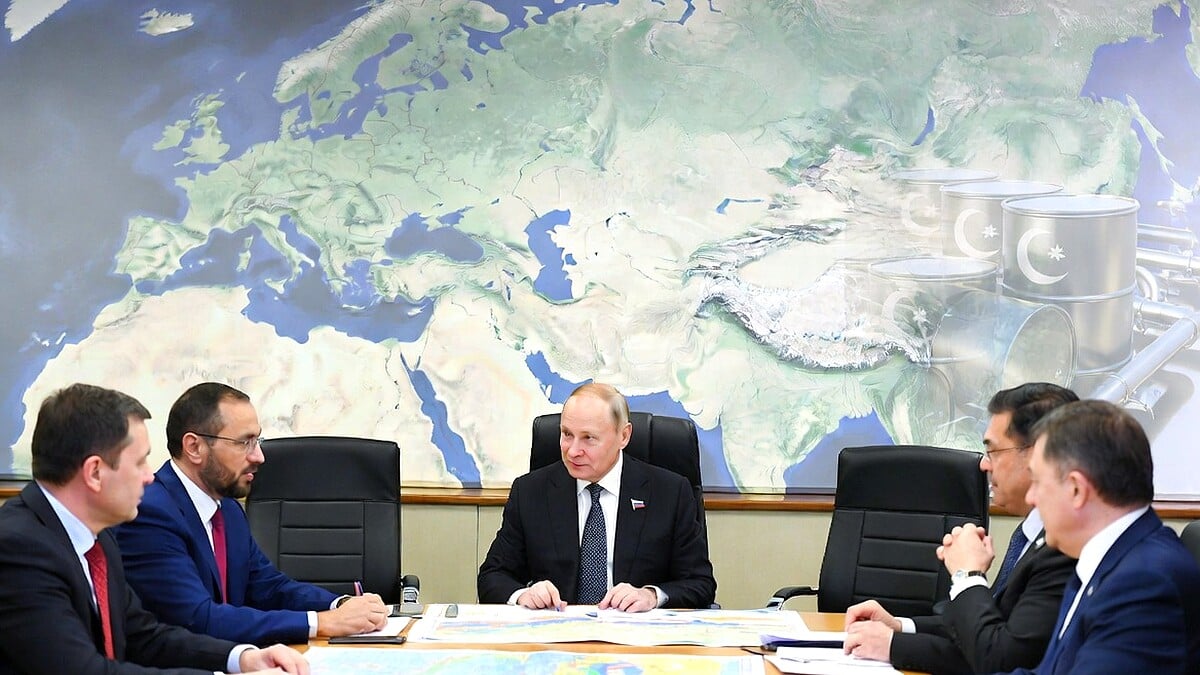




ISLAMABAD: Russia has extended a formal offer to supply discounted crude oil to Pakistan, positioning itself as a key alternative energy partner amid global market volatility triggered by Middle East tensions.
Russian Ambassador to Pakistan Albert P. Khorev announced that Moscow stands fully prepared to provide uninterrupted and concessional oil supplies if Islamabad submits a formal request.
The offer comes at a critical juncture when Pakistan’s oil reserves reportedly dipped to as low as 11 days in recent assessments, heightening concerns over fuel security and rising domestic prices.
Pakistan has already imported Russian crude since 2023, with initial shipments valued at around 47.63 million US dollars in that year according to trade data, paid largely in Chinese yuan to bypass certain restrictions.
Regional media reports highlight that cheaper Russian oil, often available at discounts of 5 to 18 dollars per barrel below benchmarks in past deals, could deliver significant relief to Pakistani consumers facing elevated fuel costs.
Ambassador Khorev emphasized that energy cooperation forms a cornerstone of bilateral ties, urging Pakistan to initiate engagement to capitalize on current market conditions shaped by disruptions in traditional supply routes.
Global oil markets tightened sharply following conflicts involving Iran, with a reported one-fifth of world production effectively strained by restrictions around the Strait of Hormuz.
Pakistan warned in March 2026 that diesel stocks provided only about 24 days of cover, while petrol levels remained stable through ongoing imports and refinery operations.
Experts note that successful negotiations with Russia could lower import bills substantially, as Pakistan’s energy imports constitute a major portion of its trade deficit.
Finance Minister Muhammad Aurangzeb earlier indicated in December 2025 that energy ministries of both countries were discussing broader oil sector cooperation, including exploration, production, refining, and potential upgrades to Pakistani refineries.
Russian Energy Minister Sergei Tsivilev had also signaled interest in investing in Pakistan’s refining infrastructure.
Such collaboration could expand beyond crude supplies to long-term agreements, mirroring patterns seen with other Asian buyers who increased Russian imports during supply shocks.
Pakistan imported roughly 1.9 million barrels per day from Russia in March 2026 in some regional analyses of Asian shifts, though exact bilateral figures remain under negotiation.
The Russian offer gains added weight as prospects rise for US-Iran peace talks hosted or mediated in Islamabad, raising hopes that sanctions on Tehran could ease.
Regional reports suggest that if restrictions on Iran lift, Pakistan could resume cheaper oil purchases from its neighbor, potentially through revived pipeline projects stalled for years.
Iran has historically supplied small quantities of oil to Pakistan via informal channels despite sanctions, with experts estimating potential for far larger volumes once barriers fall.
Officials and analysts cited in Pakistani media indicate that sanction removal could allow Iranian supplies to reach Asian ports within three to four days, further easing pressure on global benchmarks.
A successful Russia-Pakistan deal followed by normalized Iran trade would diversify sources dramatically for Islamabad, reducing reliance on Gulf suppliers and mitigating risks from Hormuz disruptions.
Pakistan’s daily gas needs stand at around 2,700 million cubic feet from domestic fields in decline, supplemented by LNG imports that faced volatility.
Over 60 percent of Pakistan’s LPG has come from Iran in the past, underscoring the strategic value of normalized energy ties with both Moscow and Tehran.
Broader bilateral trade between Russia and Pakistan grew from 450 million dollars in 2014 to 1.1 billion dollars by 2023, with energy emerging as a pivotal sector.
Prime Minister Shehbaz Sharif’s planned engagements with Russia, including potential preferential trade agreements with the Eurasian Economic Union, signal deepening strategic alignment.
Analysts view these moves as pragmatic responses to economic challenges, where cheaper oil could ease balance of payments strains and support industrial recovery.
Formal talks, if initiated promptly, hold potential to deliver tangible relief before Eid and harvest seasons when fuel demand spikes.
Pakistan’s petroleum ministry continues monitoring stocks, with additional crude cargoes in transit and arrangements finalized for coming months.
The Russian ambassador reiterated that progress depends entirely on Pakistan’s initiative, while Moscow remains ready to contribute to regional stability through energy dialogue.
Observers note that such arrangements could set precedents for currency-friendly payments and long-term contracts extending into 2025-2026 and beyond.
As global players compete for discounted Russian barrels amid Asian demand surges, Pakistan’s position as a strategic partner gains prominence.
The interplay between Russian offers and potential Iranian sanction relief presents a rare window for Islamabad to secure affordable energy on multiple fronts.
Successful outcomes would not only stabilize domestic fuel prices but also strengthen Pakistan’s energy security architecture for years ahead.