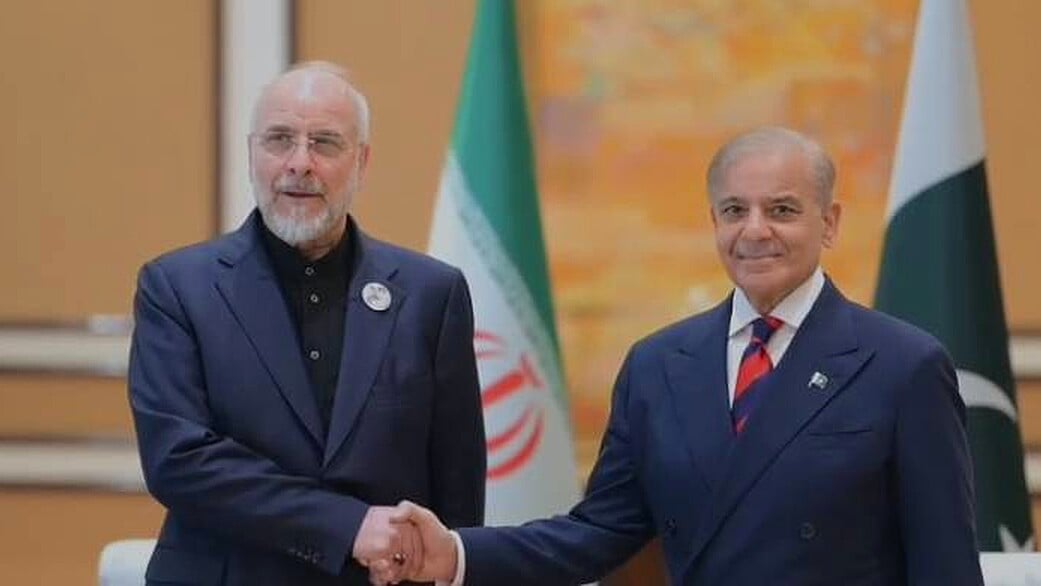




ISLAMABAD: Prime Minister Shehbaz Sharif has bluntly told the United States and Iranian negotiating teams that the peace talks they are holding in Islamabad will not be easy as he held separate meetings with both sides on Saturday.
There was a stark difference between the hopes, expectations and demands from both the sides.
The warning came as Iranian and American delegations gathered at Islamabad’s Serena Hotel to begin negotiations aimed at ending the devastating Middle East war triggered six weeks earlier by US-Israeli strikes on Tehran.
PM Shehbaz Sharif met first with the Iranian delegation led by Parliamentary Speaker Mohammad Bagher Ghalibaf and later with US Vice President JD Vance accompanied by White House envoy Steve Witkoff and Jared Kushner.
The Prime Minister commended both sides for their commitment to constructive engagement while stressing the enormous difficulties lying ahead in reaching any durable agreement.
According to 24NewsHD TV channel the Prime Minister made it clear that these talks represent one of the most complex diplomatic challenges in recent history.
The conflict that erupted on February 28 2026 has already caused massive disruption across global energy markets.
Strait of Hormuz shipping lanes were partially blocked for 18 days resulting in a 22 percent drop in daily oil exports according to shipping tracker Vortexa.
Brent crude prices spiked to an unprecedented 128 dollars per barrel within the first week pushing global inflation projections up by 1.2 percentage points per IMF emergency assessment.
European natural gas prices surged 85 percent while Asian LNG import costs jumped 60 percent triggering emergency energy rationing in several countries.
J P Morgan estimates suggest the six-week conflict has wiped out 380 billion dollars in global economic output with developing nations bearing the heaviest burden.
Pakistan itself faces an additional 2.8 billion dollar oil import bill for the current fiscal year due to elevated prices.
The Prime Minister’s office stated that Shehbaz Sharif expressed hope these Islamabad talks would serve as a stepping stone toward durable peace in the region.
Iranian media reported that the negotiating format remains undecided with uncertainty whether direct face-to-face meetings between US and Iranian teams will occur or if Pakistan will continue shuttling messages.
Both delegations arrived at the Serena Hotel amid tight security with Pakistani authorities deploying over 1 200 personnel for the event.
The war has claimed more than 4 800 lives according to regional monitoring groups and displaced nearly 1.2 million people across the Gulf region.
Field Marshal Syed Asim Munir and Deputy Prime Minister Ishaq Dar have been closely coordinating Pakistan’s mediation efforts since the outbreak of hostilities.
Global supply chain disruptions from the conflict delayed over 380 container vessels rerouted around Africa adding 14 days to average transit times.
Gold prices climbed above 3 100 dollars per ounce as investors sought safe havens while major stock indices in Europe and Asia dropped between 9 and 14 percent.
PM Shehbaz Sharif emphasised to both sides the urgent need to restore stability to prevent further economic haemorrhage.
The United States delegation arrived carrying specific mandates on nuclear issues and regional proxy conflicts while the Iranian side insists on sanctions relief and security guarantees.
Pakistan’s unique position as a nation maintaining diplomatic ties with both countries has made Islamabad the only viable venue for these sensitive discussions.
Analysts note that without Pakistani facilitation the two sides would likely have remained in indirect communication for months longer.
The six-week war has already reversed two years of global post-pandemic recovery gains in several key sectors.
Food prices in import-dependent nations have risen 18 percent on average according to FAO emergency bulletins.
Pakistan has offered full logistical and security support while maintaining strict neutrality throughout the mediation process.
Separate meetings with the Prime Minister allowed each delegation to outline their red lines and expectations before broader sessions begin.
The Iranian delegation expressed appreciation for Pakistan’s role in arranging the talks under extremely short notice.
US officials similarly acknowledged Islamabad’s swift response in hosting the high-level delegations.
Energy market experts warn that failure of these talks could push oil prices towards 160 dollars per barrel triggering a global recession risk of 45 percent according to Goldman Sachs models.
Pakistan’s own GDP growth forecast has been revised downward by 1.1 percent due to indirect effects of the conflict.
PM Shehbaz Sharif reiterated Pakistan’s commitment to continue facilitation for as long as necessary to achieve lasting peace.
The talks at Serena Hotel mark the first time senior US and Iranian officials have gathered in the same venue since the escalation began.
Regional media including Al Jazeera and Press TV have highlighted Pakistan’s crucial bridging role in what many describe as a make-or-break diplomatic moment.
International observers are closely watching whether the delegations can move beyond initial positions towards concrete compromises.
The outcome of these negotiations carries implications not only for the Middle East but for global economic stability in 2026 and beyond.
As sessions continue the world holds its breath hoping Islamabad succeeds where previous efforts have failed.