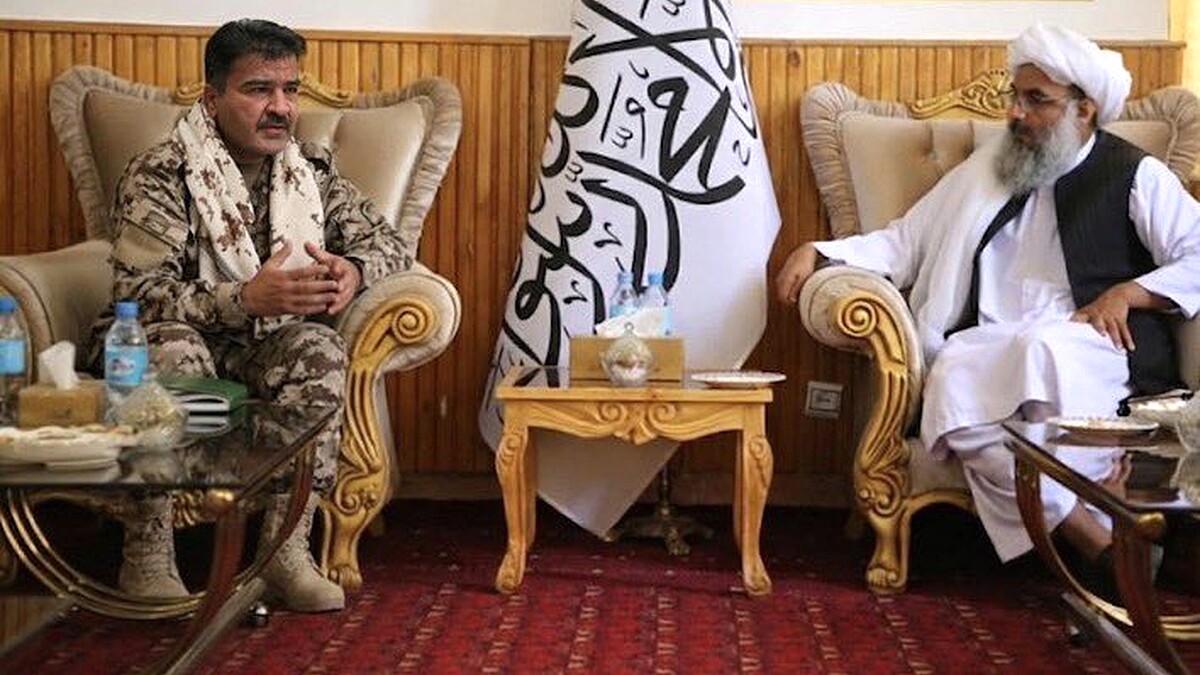




Intelligence reports reveal alarming cross-border coordination threatening Balochistan stability.
ISLAMABAD: Balochistan Liberation Army chief Bashir Zeb has reportedly traveled to Herat in Afghanistan where he held secret meetings with Taliban Governor Molvi Noor Ahmad Islamjaar raising fresh fears of a devastating new wave of terrorist attacks across Pakistan's largest province.
Pakistani security officials are on high alert following credible intelligence that the banned militant group is actively planning large-scale coordinated operations targeting security installations economic projects and civilian infrastructure in Balochistan.
The sensational revelation comes months after BLA's “Operation Herof 2.0” in late January and early February 2026 which saw militants launch assaults across more than a dozen districts including Quetta Nushki Mastung Dalbandin Kalat Kharan Gwadar and Pasni.
In those attacks BLA fighters used suicide bombings gunfire and grenades resulting in the deaths of 31 civilians and 17 security personnel according to official figures while Pakistani forces neutralized 145 to 216 militants in intense counter operations lasting over 40 hours.
Regional media and intelligence sources confirm that Bashir Zeb the elusive BLA leader crossed into Afghanistan and met directly with Herat Governor Molvi Noor Ahmad Islamjaar at the Governor House in a development that signals deepening militant ties with elements across the porous border.
The meeting is viewed as highly provocative given Afghanistan's Taliban administration maintains influence over western provinces bordering Balochistan where safe havens have long been alleged for anti-Pakistan groups.
Data from the Pakistan Institute for Peace Studies shows Balochistan recorded 254 terrorist attacks in 2025 a 26 percent increase from the previous year causing over 400 deaths and 607 injuries marking one of the deadliest years for the province in recent history.
BLA itself claimed responsibility for 521 attacks throughout 2025 asserting they killed more than 1060 security personnel though official tallies report lower verified figures with 700 insurgents eliminated in counterinsurgency drives.
Security analysts warn that the Herat meeting could facilitate renewed logistics training and cross-border movement of fighters and weapons potentially escalating violence beyond the levels seen in the January-February 2026 offensive.
The recent wave dubbed Operation Herof 2.0 or Black Storm 2.0 involved simultaneous strikes on schools hospitals banks markets police stations and even a high-security prison with female fighters participating in some assaults according to released BLA videos.
Pakistani Armed Forces responded with Operation Radd-ul-Fitna 1 a precision intelligence-based campaign that restored control within days and prevented wider disruption to the China-Pakistan Economic Corridor projects.
Balochistan's strategic importance cannot be overstated as it hosts Gwadar Port key CPEC routes and vast mineral resources yet remains plagued by insurgency that claimed 1534 total fatalities in 2025 including 347 civilians and 751 security personnel.
Chief Minister Sarfraz Bugti had earlier highlighted intelligence warnings that enabled pre-emptive actions against the earlier coordinated attacks saving countless lives while underscoring the need for enhanced border management.
The latest intelligence on Bashir Zeb's travel has prompted heightened deployments including the recent movement of 3000 additional Federal Constabulary personnel to bolster law enforcement across vulnerable districts.
Taliban authorities in Herat have not publicly commented on the reported meeting but the governor's hardline stance on internal issues has drawn regional attention amid ongoing concerns over Afghan soil being used for external militancy.
Experts point to a qualitative shift in BLA tactics from hit-and-run operations to ambitious coordinated campaigns aimed at disrupting governance and economic activity with direct threats to major infrastructure.
In 2025 alone the province witnessed record militant activity with groups like BLA and allied factions expanding use of drones explosives and targeted assassinations against state symbols.
The development has sparked urgent high-level security reviews in Islamabad with emphasis on sealing border gaps and intensifying intelligence cooperation to preempt the planned new offensive.
While international coverage of specific cross-border meetings remains limited Pakistani regional outlets and security briefings authenticate the growing pattern of BLA leadership operating from Afghan territory.
Analysts caution that failure to disrupt these networks could lead to even bloodier campaigns threatening not only Balochistan but broader national stability and regional connectivity projects.
Security forces remain vigilant with enhanced patrols and rapid response units deployed as intelligence agencies track potential infiltration routes from western Afghanistan.
The situation underscores the persistent challenge of cross-border terrorism and the need for sustained diplomatic and military pressure to dismantle militant sanctuaries.