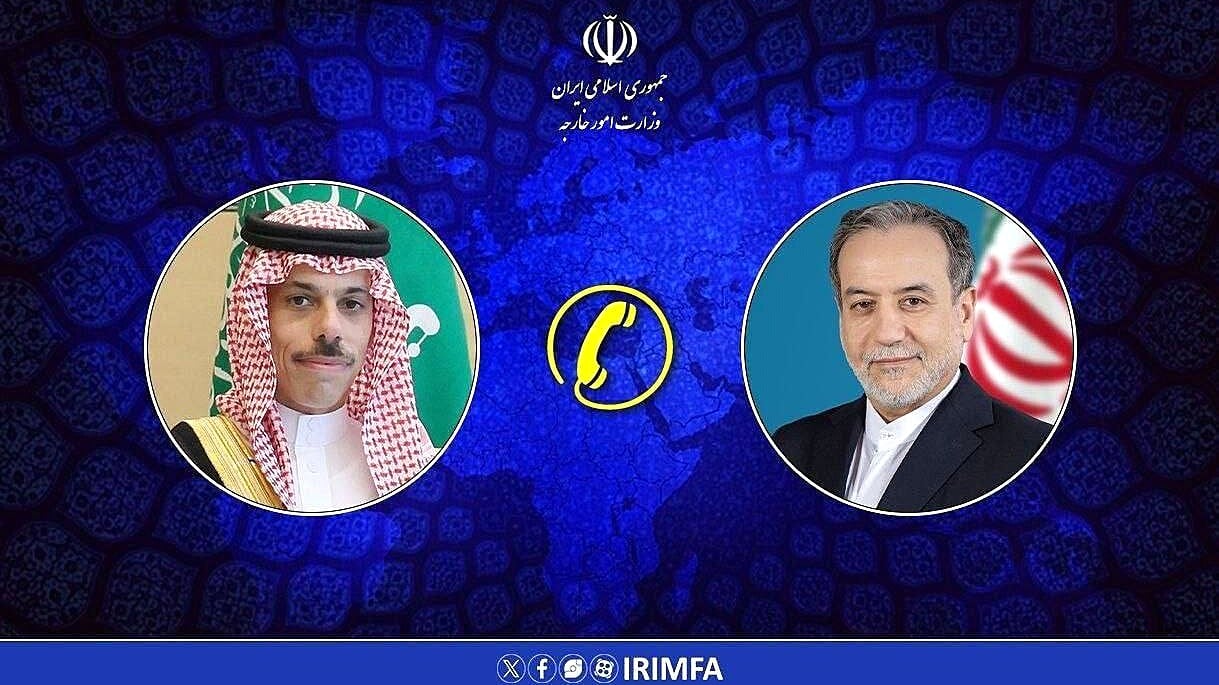




ISLAMABAD: Iranian Foreign Minister Seyed Abbas Araghchi and Saudi Foreign Minister Prince Faisal bin Farhan Al Saud held a telephone conversation focusing on the latest developments in the region.
The call came at a critical juncture as tensions in the Middle East have surged following direct confrontations involving Iran and multiple actors.
During the discussion both ministers reviewed bilateral relations that have shown gradual improvement since the 2023 China-brokered rapprochement.
Iranian state media reported that Araghchi briefed his Saudi counterpart on outcomes of recent indirect negotiations between Iran and the United States on the nuclear issue.
These indirect talks in Geneva lasted three hours and reportedly established guiding principles for future discussions.
Saudi sources confirmed the exchange of views on key regional issues and ongoing efforts to address them without providing further specifics on the nuclear briefing.
The conversation occurred against a backdrop of heightened regional volatility with reports of missile exchanges and attacks affecting Gulf states.
In recent months Saudi Arabia faced Iranian ballistic missile strikes prompting strong statements from Riyadh reserving the right to military action if necessary.
Regional analysts note that trust between the two nations has been severely tested yet diplomatic channels remain active.
Bilateral trade between Iran and Saudi Arabia has seen modest recovery reaching approximately 1.2 billion dollars in the year following diplomatic restoration according to available trade figures.
The 2023 agreement facilitated reopening of embassies and consulates marking a shift from years of proxy conflicts in Yemen Syria and elsewhere.
Observers highlight that the phone call signals continued preference for dialogue over escalation despite underlying frictions.
Iran has maintained that its actions target specific threats while emphasizing the need for regional security arrangements less dependent on external powers.
Saudi Arabia for its part has intensified outreach to various counterparts including calls with Gulf Cooperation Council members to coordinate responses.
The Gulf Cooperation Council held an extraordinary meeting in March 2026 to address reported Iranian attacks on member states including the UAE Bahrain and Saudi Arabia itself.
Such gatherings underscore the collective concern over potential spillover effects on energy infrastructure and global oil supplies.
Strait of Hormuz remains a vital chokepoint handling nearly 21 percent of global petroleum liquids consumption based on international energy data.
Any disruption could send oil prices soaring beyond 150 dollars per barrel experts warn.
The Iranian-Saudi diplomatic engagement comes as broader international efforts seek to contain the conflict.
Pakistan Turkey and Egypt have also been involved in mediation attempts with foreign ministers meeting in Islamabad to discuss de-escalation.
Japan has publicly praised Saudi efforts in maintaining energy stability amid challenges including de-facto pressures on key maritime routes.
Economic implications extend far beyond the region with global markets closely monitoring developments.
Inflation concerns in Europe and Asia have already risen due to energy price volatility linked to Middle East instability.
The phone call between Araghchi and Prince Faisal represents one thread in a complex web of communications aimed at preventing wider war.
Both countries share interests in regional stability given their roles as major oil producers.
Saudi Arabia holds the world’s second-largest proven oil reserves at over 267 billion barrels while Iran possesses significant reserves estimated at 208 billion barrels.
Cooperation on energy issues could form a foundation for broader confidence-building measures.
However challenges persist including differences over proxy groups and influence in neighboring countries.
Yemen ceasefire efforts have faced repeated setbacks with humanitarian costs mounting to millions displaced and thousands affected.
The ministers agreed in principle to maintain open lines of communication as the situation evolves.
Regional media in both nations portrayed the call positively emphasizing commitment to dialogue.
Iranian outlets highlighted the briefing on nuclear talks as a gesture of transparency.
Saudi reports stressed the importance of collective security and addressing threats to sovereignty.
International coverage has been limited focusing more on direct conflict flashpoints than this specific diplomatic exchange.
Such underreporting underscores the value of direct statements from foreign ministries for authentication.
Analysts suggest these conversations could pave the way for higher-level meetings in coming weeks.
The broader context includes ongoing indirect Iran-US engagements that carry implications for sanctions relief and nuclear constraints.
Any progress there could ease pressures on Gulf economies heavily reliant on stable energy markets.
Pakistan-based observers note the Islamabad meetings involving multiple foreign ministers as parallel efforts to support de-escalation.
The Iranian-Saudi channel remains crucial given historical rivalries and geographic proximity.
Population dynamics add another layer with Saudi Arabia at around 37 million and Iran exceeding 89 million creating large domestic constituencies affected by regional peace.
Youth unemployment rates hover near 25 percent in parts of the region making economic stability a pressing governance issue.
The phone call thus carries symbolic weight beyond immediate agenda items.
It reflects a pragmatic approach where rivals maintain contact even amid strains.
Future developments will likely hinge on implementation of any agreed principles from nuclear or regional talks.
Both sides have expressed willingness to meet in person at the earliest opportunity.
Such a meeting could address embassy operations and expand people-to-people ties currently limited.
Cultural and religious exchanges hold potential given shared Islamic heritage and pilgrimage connections.
Millions of pilgrims visit holy sites annually generating significant economic activity.
Preserving these links requires sustained diplomatic effort.
The conversation between the foreign ministers offers a glimmer of continuity in turbulent times.
As regional actors navigate complex threats the emphasis on dialogue gains renewed importance.
Stakeholders across the Middle East and beyond watch closely for signs of de-escalation or further friction.