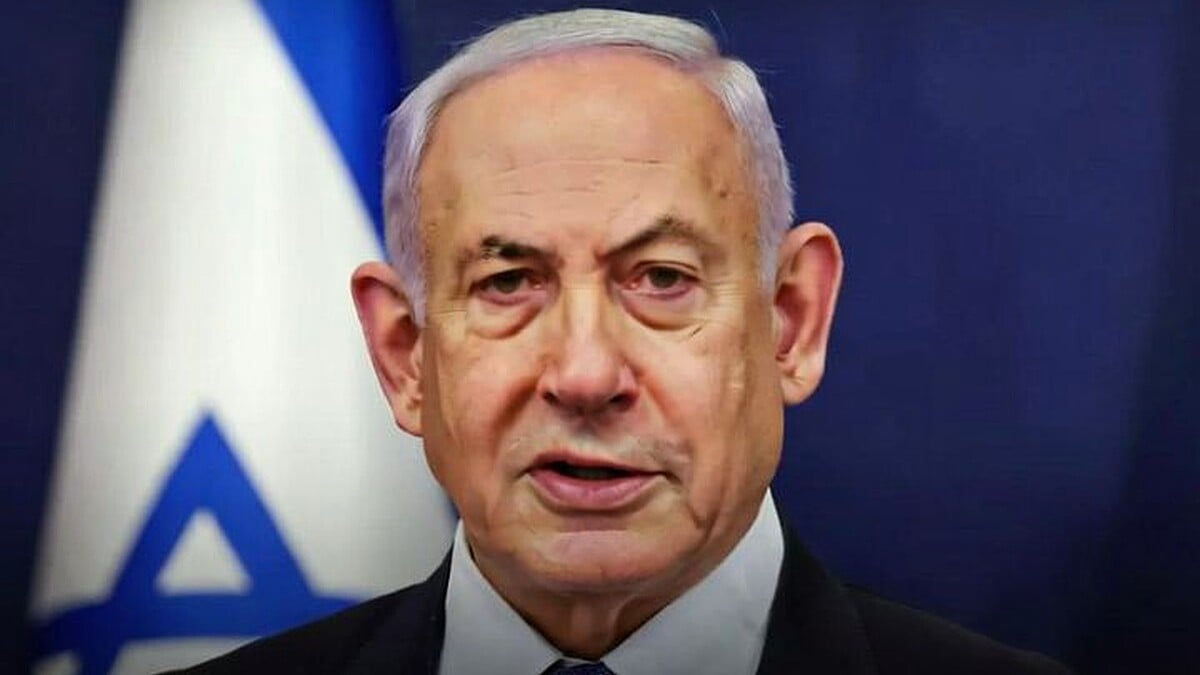




ISLAMABAD: Israeli Prime Minister Benjamin Netanyahu declared on Wednesday that the newly announced two-week ceasefire between the United States and Iran does not mark the conclusion of the military campaign.
He stated that Israel remains on track to fulfil its strategic goals against Tehran and its proxies.
Netanyahu made the remarks during a press conference in Jerusalem amid reports of continued Israeli strikes in Lebanon despite the truce with Iran.
The ceasefire brokered by US President Donald Trump aims to halt direct hostilities for two weeks while negotiations begin.
Netanyahu however emphasised that the pause serves only as a temporary station toward full achievement of objectives.
These include neutralising Iran’s nuclear programme and ballistic missile capabilities that have long threatened Israel and regional allies.
International media outlets including BBC, The New York Times and Times of Israel reported Netanyahu saying the ceasefire is not the end of the campaign.
He added that Israel has more goals to accomplish either by agreement or by renewing the fighting with its finger remaining on the trigger.
Regional reports from Al Jazeera and Reuters highlighted that the truce explicitly does not extend to operations against Hezbollah in Lebanon.
Israeli forces conducted fresh strikes there on the same day as the announcement.
Analysts note that the conflict erupted in late February 2026 following escalating exchanges involving Iranian missiles and Israeli airstrikes.
Over the six-week period Israeli and US forces reportedly destroyed significant portions of Iran’s nuclear infrastructure and missile production sites.
Estimates suggest hundreds of ballistic missile launchers were eliminated along with key Revolutionary Guard facilities.
Netanyahu claimed the joint operations prevented Iran from relocating sensitive projects underground.
He described Iran as entering negotiations in a weakened position after suffering heavy losses in leadership and military assets.
The Strait of Hormuz which handles nearly 20 percent of global oil trade saw temporary closures and attacks during the fighting.
Iranian state media acknowledged the supreme leader’s order to cease fire but echoed that the war itself was not over.
Pakistani Prime Minister Shehbaz Sharif earlier announced that the ceasefire would apply everywhere including Lebanon.
Netanyahu’s office quickly clarified that the deal excludes operations against Hezbollah.
This distinction has raised concerns over potential escalation on the northern front where more than one million Lebanese have been displaced.
Israeli opposition leaders criticised the ceasefire as a diplomatic setback claiming it fell short of the stated aim to dismantle the Iranian threat entirely.
Some domestic polls cited in Israeli media indicated mixed public reaction with many citizens relieved by the pause yet wary of unresolved dangers.
Netanyahu countered by asserting that Israel emerged stronger than ever from the campaign.
He pointed to coordinated US-Israeli actions that reshaped the regional power balance.
Defence experts estimate that Iran’s missile arsenal suffered losses exceeding 40 percent in certain categories during the intense exchanges.
Nuclear facilities faced repeated strikes though full damage assessments remain classified.
The developments come against a backdrop of broader regional instability involving multiple proxies.
Hezbollah which fired thousands of rockets into Israel since the conflict intensified continues to face daily Israeli operations.
Netanyahu stressed that these strikes will persist independently of the Iran truce.
Global oil prices fluctuated sharply during the six weeks with brief spikes of over 15 percent due to fears over Hormuz disruptions.
Energy markets now watch closely as Iran agrees to reopen the strait under ceasefire terms.
Diplomatic sources indicate upcoming talks may involve multiple rounds in neutral venues though details stay limited.
Netanyahu maintained daily communication with President Trump and rejected any notion of surprise over the ceasefire timing.
He framed the pause as coordinated rather than imposed.
The Israeli leader has long positioned the campaign as essential to eliminate existential threats from the ayatollah regime.
Critics however argue that full regime change remains unlikely and the truce leaves core Iranian capabilities intact.
As negotiations loom the coming days will test whether the fragile pause holds or gives way to renewed confrontation.
Regional observers warn that any violation could rapidly escalate tensions across the Middle East once again.
Netanyahu’s firm stance signals Israel’s determination to press forward regardless of temporary halts.