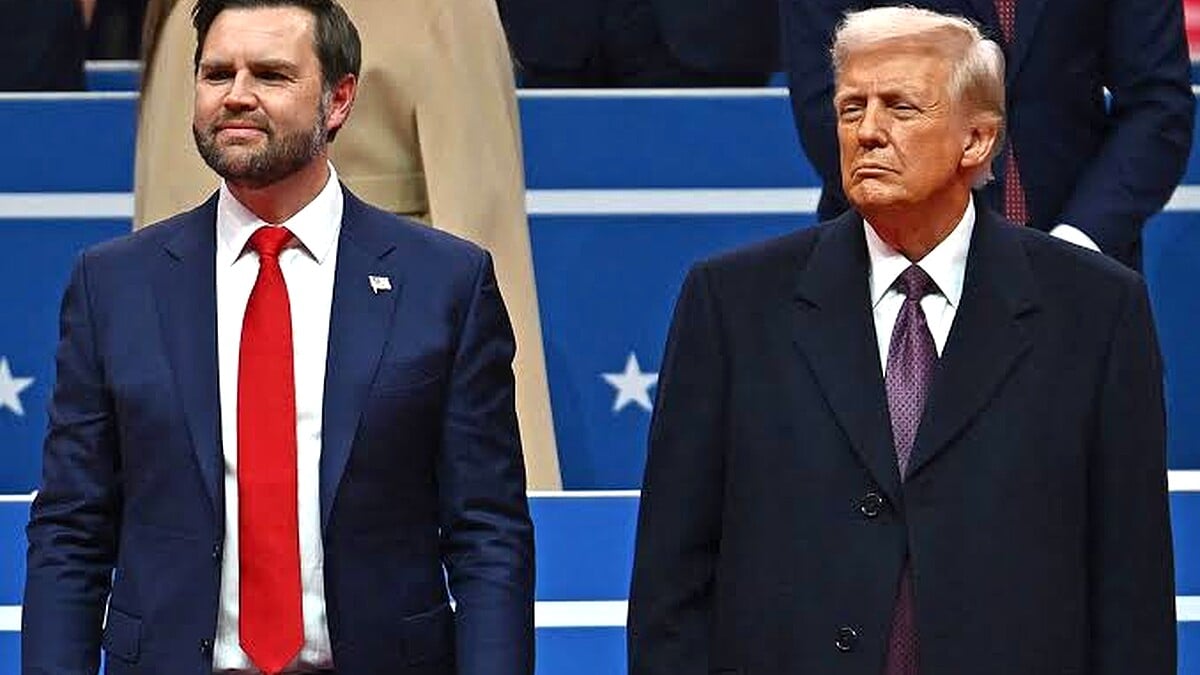




ISLAMABAD: President Donald Trump has disclosed that Vice President JD Vance will likely be unable to join high-stakes negotiations with Iran in Pakistan owing to serious security concerns.
The revelation came in an exclusive New York Post interview published on April 8 2026 as Washington prepares for face-to-face talks in Islamabad.
Trump indicated the negotiating team could still include special envoy Steve Witkoff and Jared Kushner while leaving Vance’s participation uncertain with the words maybe JD I don’t know.
The comments inject fresh uncertainty into a diplomatic process already marked by fragile progress following a Pakistan-brokered two-week ceasefire.
That ceasefire halted a 40-day conflict involving United States and Israeli strikes on Iranian targets after intense back-channel efforts led by Pakistani Prime Minister Shehbaz Sharif and Army Chief General Asim Munir.
Pakistan proposed the truce extension to avert further escalation and requested immediate reopening of the Strait of Hormuz a vital global oil chokepoint.
Regional media including Jang reported the ceasefire was announced at Pakistan’s direct request confirming Islamabad’s central mediating role.
International outlets from the New York Post to Al Arabiya echoed the same details validating the brokered pause.
Bilateral trade between Iran and Pakistan provides additional context for the stakes involved.
Iran exported 1.2 billion dollars worth of goods to Pakistan in 2024 with petroleum gas alone accounting for 687 million dollars according to the Observatory of Economic Complexity.
Refined petroleum added another 122 million dollars while dried legumes contributed 67.1 million dollars.
Pakistan’s exports to Iran remained minimal at just 73 400 dollars in the same period highlighting vast untapped potential.
Current overall trade volume has already crossed the three billion dollar mark with both nations targeting an ambitious 10 billion dollars through new connectivity projects and barter mechanisms.
Stability in the region could unlock even larger opportunities estimated at 45 billion dollars in disrupted Gulf trade routes.
Security concerns cited by Trump are grounded in persistent threats documented by United States State Department travel advisories.
In March 2026 the department ordered non-emergency personnel and families to depart US consulates in Lahore and Karachi citing elevated safety risks.
Terrorist attacks remain a constant danger across Balochistan Khyber Pakhtunkhwa and even major urban centres including Islamabad.
Extremist groups have repeatedly targeted transportation hubs hotels markets and government installations often without warning.
Vice President Vance had emerged as a pivotal figure in earlier phases of diplomacy.
He maintained direct contact with Pakistani leadership including General Asim Munir during formulation of a potential 45-day ceasefire framework.
Some reports indicated Iran preferred direct engagement with Vance over other envoys underscoring his perceived influence.
Yet the sudden spotlight on security risks introduces a surprising twist just days before talks are slated to begin as early as Friday April 10.
The proposed Islamabad summit aims to transform the temporary truce into a permanent settlement addressing Iranian nuclear ambitions proxy support and regional economic reopening.
Failure could reignite hostilities with global repercussions for oil prices and Middle East stability.
Pakistani officials have welcomed the mediation opportunity viewing it as a chance to enhance diplomatic leverage and economic ties.
Analysts note Islamabad’s unique position with relatively functional relations to both Washington and Tehran makes it an ideal neutral venue.
Trump’s impatience for a concrete deal has been publicly echoed by Vance who described the current truce as fragile due to Iranian unreliability.
The vice president warned of severe consequences if Tehran lies or cheats during the pause.
As the clock ticks toward the summit the absence of Vance could alter the dynamics of what many describe as one of the most consequential diplomatic engagements in recent years.
Observers will watch closely whether the negotiations proceed smoothly or encounter further complications rooted in security and strategic calculations.
Pakistan’s successful brokerage already stands as a notable achievement in a region long plagued by conflict and mistrust.
The coming days promise to test the resilience of this delicate peace process with billions in trade and global energy security hanging in the balance.