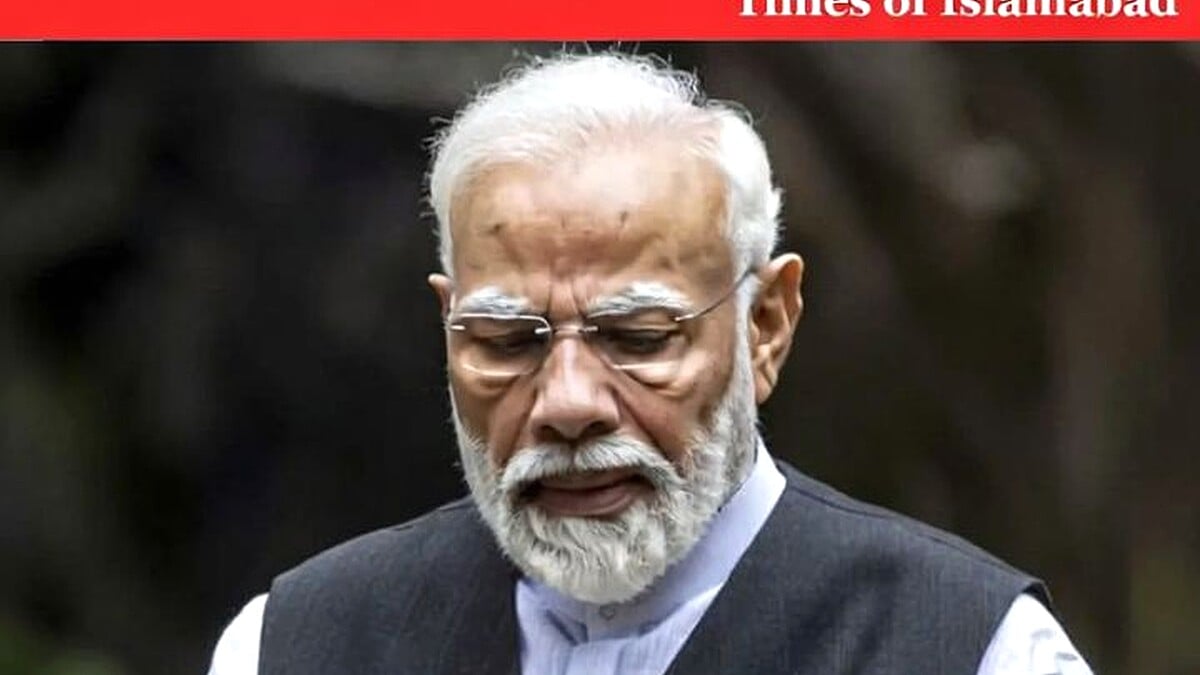




ISLAMABAD: Pakistan has thrust itself into the heart of the US-Iran crisis as an active mediator while India maintains a studied silence, delivering a sharp blow to Prime Minister Narendra Modi’s decade-long campaign to isolate Islamabad internationally.
The reversal has triggered fierce criticism inside India with opposition leaders declaring Modi’s foreign policy in tatters.
Pakistan relayed a detailed 15-point US peace plan to Tehran only last week and formally offered to host face-to-face talks between the two sides.
Iran rejected the hosting proposal yet acknowledged Islamabad’s bridging role in indirect contacts that helped secure a fragile two-week ceasefire.
Pakistan’s Foreign Minister then flew to Beijing this week to win Chinese endorsement for a complementary five-point peace framework designed to prevent further escalation.
These moves have placed Pakistan at the centre of West Asian diplomacy leveraging its 900-kilometre shared border with Iran and deep ties with Gulf monarchies.
Analysts note that Islamabad also serves as a vital security buffer against Iranian-backed militias operating across Yemen Iraq and Lebanon.
In stark contrast Indian External Affairs Minister S Jaishankar told an all-party meeting last week that Pakistan’s mediation amounted to little more than “dalali” or brokerage a role it has played since 1981 including during US-Taliban negotiations.
“We don’t run around asking countries what kind of brokerage we can do” Jaishankar reportedly said dismissing any notion of diplomatic setback.
Congress leaders immediately hit back calling the remarks an attempt to mask India’s embarrassment.
Senior Congress spokesperson Jairam Ramesh declared that India’s own diplomatic failures had turned a “broken country” into a credible broker leaving Modi exposed.
The party labelled Pakistan’s mediation a “severe setback” to Modi’s highly personalised diplomacy and accused the government of conspicuous silence on Israeli actions in Gaza and strikes on Iran.
Strategic experts in Delhi describe the mood as one of competitive anxiety with one analyst noting Pakistan has outmanoeuvred India in the war of narratives.
Former Indian foreign secretary Nirupama Rao posted on X that the conflict had damaged India’s interests in every practical sense and questioned New Delhi’s failure to speak on sovereignty civilian protection and limits of force.
Compounding India’s discomfort 18 Indian-flagged vessels or ships operated by Indian crews remain stranded in the Strait of Hormuz amid the fighting.
Pakistan meanwhile has joined US President Donald Trump’s newly established Board of Peace under Prime Minister Shehbaz Sharif signalling fresh international confidence in Islamabad.
The Modi government’s long-promoted narrative of isolating Pakistan now lies in ruins as regional media and international outlets including BBC highlight Islamabad’s rising clout.
Pakistani officials responded to Jaishankar’s comments with measured restraint.
Foreign Ministry spokesperson Zahid Haider said such undiplomatic language reflected deep frustration rather than strategy.
Defence Minister Khawaja Asif mocked the Indian minister calling the outburst a sign of personal irritation.
Senior Pakistani figures emphasised that Islamabad believes in diplomacy and dignity not rhetoric.
The episode has reignited debate over Modi’s isolation policy launched more than ten years ago through global campaigns and selective alliances.
Multiple Indian analysts now concede that Pakistan’s proactive peacemaking has instead left New Delhi diplomatically sidelined.
Pakistan’s unique geography and networks have proven decisive in a crisis where Washington sought a Muslim-majority interlocutor with leverage over Tehran.
Oil-import-dependent Pakistan acted swiftly to protect the Strait of Hormuz chokepoint through which much of its energy supply flows.
India’s preference for quiet diplomacy has kept it out of the mediation loop despite its own potential as a peacemaker.
Opposition voices warn that prolonged silence risks further erosion of India’s influence in West Asia.
With the two-week ceasefire holding tenuously Pakistan continues shuttle diplomacy while India grapples with the optics of exclusion.
The developments have drawn coverage from both BBC English and Urdu services as well as major Indian dailies like The Hindu underscoring the story’s regional resonance.
Pakistani commentators describe the moment as validation of Islamabad’s independent foreign policy focused on peace rather than confrontation.
As the US-Iran tensions simmer analysts predict Pakistan’s mediation profile will only grow further cementing its role beyond South Asia.
For Modi the episode represents an ironic twist the leader who vowed to sideline Pakistan now finds his own government answering uncomfortable questions at home about diplomatic isolation.
The data speaks volumes 900 kilometres of border 15-point and five-point plans 18 stranded vessels and brokerage since 1981 all point to a transformed regional reality.
India’s silence once a calculated stance now appears as a costly strategic misstep.