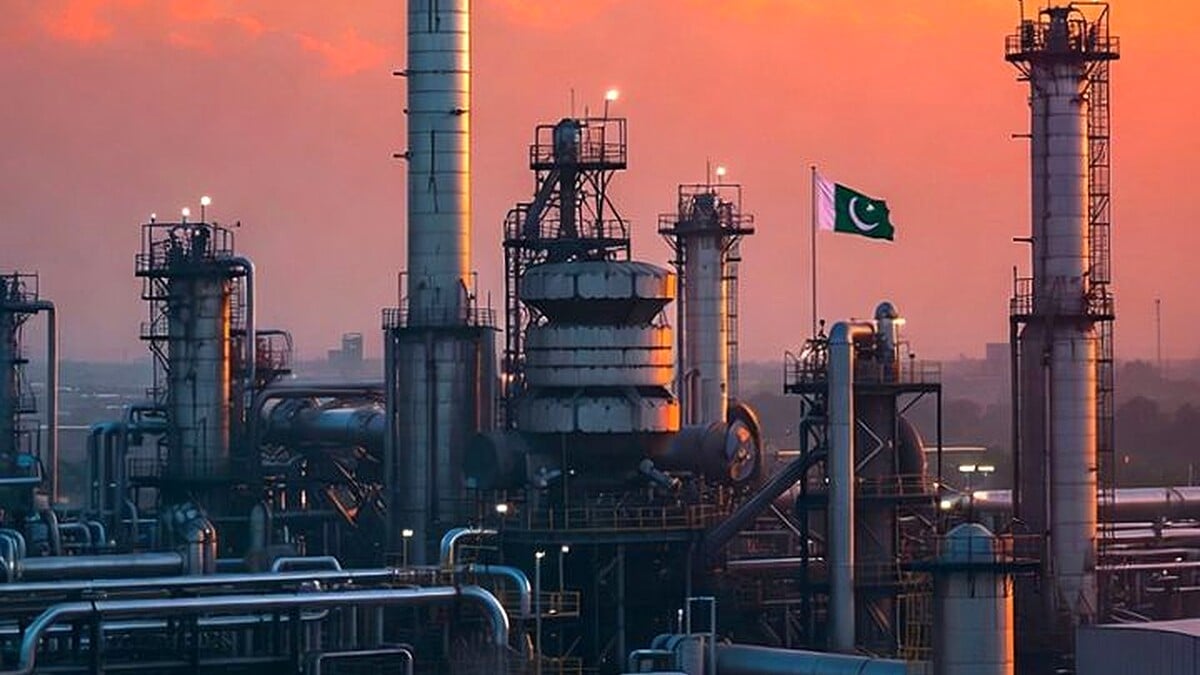




ISLAMABAD: Pakistan’s oil refineries are generating an extraordinary windfall profit of approximately 22 billion rupees per month on high-speed diesel alone.
This surge comes as the government continues to set diesel prices on import parity basis even though 87 percent of the country’s daily diesel requirement is met through local refining.
Daily diesel demand in Pakistan stands at around 16,000 metric tons while local production reaches 14,000 metric tons covering the bulk of needs without incurring international freight insurance or rerouting costs linked to regional tensions.
Between April 2025 and November 2025 gross refining margins for these facilities jumped sharply from 4.5 dollars per barrel to 13.3 dollars per barrel marking nearly a threefold increase.
Current consumer price of diesel has climbed to 520 rupees per litre while the ex-refinery price sits at 461 rupees per litre creating a significant gap that benefits producers.
After accounting for actual domestic production costs which remain far below import levels analysts estimate an extra margin of roughly 100 rupees per litre on locally refined diesel.
With monthly production volume of approximately 223 million litres this translates directly into the 22 billion rupees monthly windfall figure highlighted in economic commentary.
Dr Farrukh Saleem in his analysis for The News Pakistan detailed how refineries receive payments as if they were importing fuel despite avoiding expenses such as Strait of Hormuz transit risks war-risk insurance and alternative shipping routes.
Only about 13 percent of diesel is actually imported yet the pricing mechanism applies import parity across the board allowing local players to capture gains tied to global volatility.
This situation has intensified amid recent sharp fuel price hikes driven by Middle East conflicts with diesel jumping more than 54 percent in one recent adjustment.
International media has widely reported Pakistan’s fuel price surges exceeding 50 percent in early April 2026 linking them to global oil spikes yet the domestic windfall aspect has drawn focused coverage in regional outlets.
Critics argue that while consumers bear the full brunt of elevated prices refineries enjoy protected high margins without corresponding cost pressures.
A proposed 50 percent windfall tax on these excess diesel profits could generate around 33 billion rupees in just three months according to estimates.
Such revenue might provide targeted relief including 2,500 rupees monthly support to at least 13 million motorcycle riders who form a large segment of the commuting population.
Several countries have already implemented similar measures during periods of energy windfalls.
India imposed windfall taxes on private refiners such as Reliance during previous profit spikes.
The United Kingdom introduced an energy profits levy while Italy and Hungary applied sector-specific windfall taxes on energy companies.
More recently finance ministers from Germany Italy Spain Portugal and Austria have jointly called for an EU-wide windfall tax on energy firms to ease burdens on the public amid rising fuel costs.
In Pakistan however the additional profits continue to accrue to refineries while the cost is passed directly to end consumers including transporters farmers and low-income households.
Economic observers note that import parity pricing was originally designed to incentivize local refining capacity and ensure supply security.
Yet in the current environment with dominant local production the mechanism appears to deliver outsized returns disconnected from actual operational risks.
Refinery throughput has remained robust with some months showing double-digit growth in output despite global uncertainties.
Diesel stocks provide around 25 days of cover while petrol and crude inventories are also managed through a mix of domestic refining and scheduled imports.
The windfall phenomenon raises questions about equitable distribution of gains during times of economic stress on ordinary citizens.
Petrol prices have also seen substantial increases reaching 458 rupees per litre in recent revisions compounding inflationary pressures across the economy.
Analysts suggest revisiting pricing formulas to better reflect the high share of local diesel output and shield consumers from unnecessary pass-through of global premiums.
Without policy intervention the monthly 22 billion rupees profit flow could persist benefiting a handful of refining entities while millions face higher transportation and goods costs.
The debate echoes global discussions on excess profits during crises where governments in multiple jurisdictions have chosen to claw back portions for public relief.
Pakistan’s policymakers now face the choice of allowing continued windfall accumulation or introducing targeted taxation to balance industry incentives with consumer protection.
Regional reports emphasize that local refineries face none of the logistical or security premiums associated with actual imports yet continue to earn equivalent rewards.
This disconnect has fueled calls for greater transparency in margin calculations and potential adjustments to the import parity framework during exceptional periods.
As fuel prices remain elevated the scale of refinery gains underscores the need for data-driven policy responses grounded in actual production realities rather than hypothetical import scenarios.