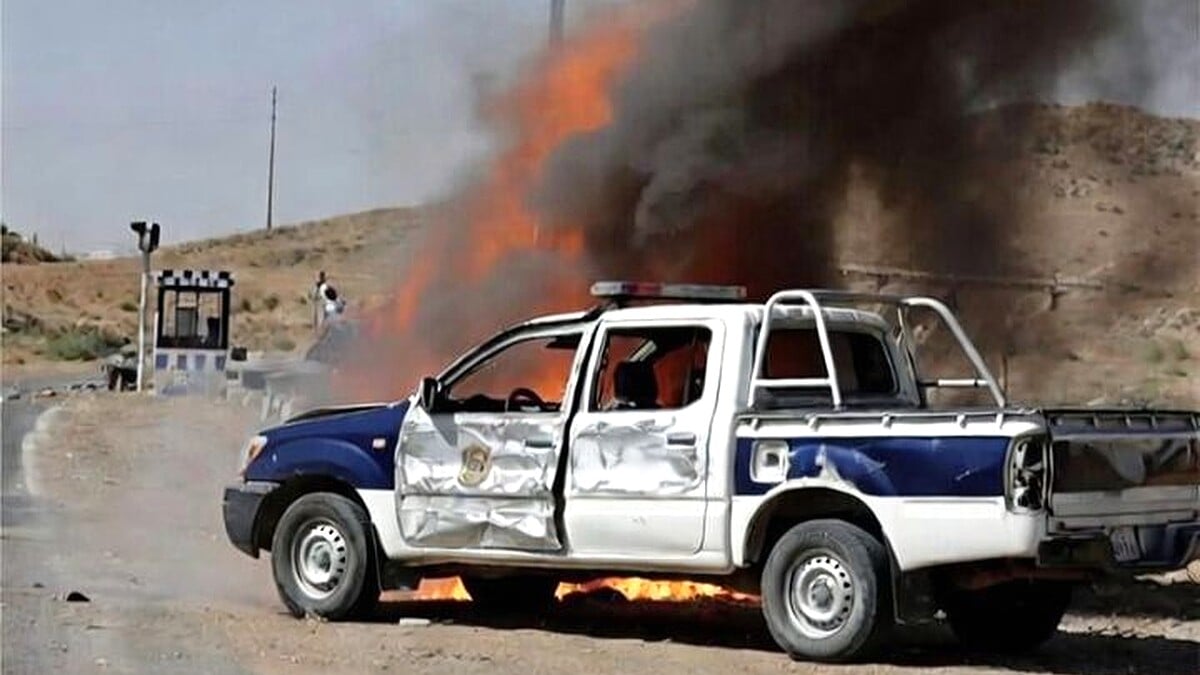




ISLAMABAD: At least five police personnel sustained injuries when an improvised explosive device rigged to a motorcycle targeted their patrol vehicle in the Shahbazkhel area of Lakki Marwat district, Khyber Pakhtunkhwa, on Tuesday.
The blast struck a police mobile from Shahbazkhel police station along the Bannu-Dera Ismail Khan section of the Peshawar-Karachi Indus Highway, damaging the vehicle and leaving officers shaken in one of the province’s most volatile regions.
District Police Officer Lakki Marwat Nazir Khan confirmed the attack involved a motorcycle-borne IED detonated remotely or by timer as the patrol passed.
Injured personnel include Assistant Sub-Inspector Jamaluddin, Constable Arif, driver Mir Hassan, and two other constables.
All five were rushed to a nearby hospital where they are receiving treatment, with officials describing their condition as stable yet under observation.
DPO Nazir Khan reached the site promptly with a heavy contingent, joined by Counter-Terrorism Department and Bomb Disposal Squad teams.
He ordered a detailed investigation into all aspects of the incident, including possible links to banned outfits operating from across the border.
This latest assault highlights the persistent threat of low-cost, high-impact IED tactics in southern Khyber Pakhtunkhwa districts bordering Afghanistan.
Regional media reports attribute such strikes to Fitna-al-Khawarij, the state’s term for Tehreek-e-Taliban Pakistan splinter groups that have intensified operations since 2021.
Lakki Marwat and adjacent Dera Ismail Khan have witnessed a sharp escalation in violence, with multiple motorcycle and roadside IED attacks recorded in early 2026 alone.
Just days earlier, on April 1, another motorcycle-fitted IED in Serai Naurang injured nine people, including four police officers, according to Bannu regional police spokesperson Amir Khan.
In March, seven policemen, including a station house officer, were martyred in a similar roadside IED blast near Rasul Khel check post in the Bettani area of the same district.
January saw further incidents, including three policemen injured near Darah Tang and seven killed in Tank district when an armoured personnel carrier hit an IED.
Data from security trackers indicate Khyber Pakhtunkhwa recorded 1,762 terrorism cases in 2025, marking a 67 percent rise from the prior year.
Attacks specifically targeting police surged 64 percent, though officer fatalities dropped slightly as forces repulsed more assaults.
The Counter-Terrorism Department reported 137 police personnel killed across the province in 2025, part of a broader toll where security forces accounted for a significant portion of over 600 personnel deaths.
Independent analyses, including the Global Terrorism Index 2026, note TTP activity concentrated in KP border regions, with 595 attacks claimed by the group in 2025, all within Pakistan and primarily in Khyber Pakhtunkhwa.
Militants increasingly favour IEDs mounted on motorcycles for their mobility, deniability, and ability to strike moving patrols without direct confrontation.
Such devices often weigh three to four kilograms and are triggered as vehicles pass, maximising damage to soft-skinned police vans.
Authorities have responded with intensified intelligence-based operations, eliminating dozens of militants in Lakki Marwat and Dera Ismail Khan in recent months.
Yet the pattern persists, raising concerns over porous borders and the regrouping of banned networks.
Local peace committees and residents in Lakki Marwat have expressed frustration, with some areas announcing measures against families linked to militants.
Security experts point to the province’s merged tribal districts as a persistent challenge, where rugged terrain aids hideouts and cross-border movement.
Tuesday’s incident occurred during a routine patrol, underscoring vulnerabilities in daily law enforcement duties in high-risk zones.
No group has yet claimed responsibility, but investigators are examining forensic evidence from the motorcycle remnants and blast site.
DPO Nazir Khan assured that the search operation continues, with cordons in surrounding areas to trace perpetrators.
This attack adds to a grim tally that has seen combat deaths in KP surge in early 2026, with February alone recording spikes in security personnel fatalities.
Broader regional media coverage from outlets in Peshawar and Dera Ismail Khan consistently links these strikes to efforts aimed at destabilising police presence and undermining counter-terror gains.
Pakistan’s security apparatus maintains that such incidents will not deter operations against terrorism.
Officials emphasise coordination between police, CTD, and military to dismantle networks.
The injured officers’ swift medical evacuation reflects improved response protocols, yet the frequency of attacks signals ongoing challenges.
As investigations deepen, authorities have appealed for public cooperation in reporting suspicious activities along key highways.
The Shahbazkhel blast serves as a stark reminder that while major clearances occur, asymmetric threats like IEDs continue to exact a toll on frontline police.
Sustained vigilance and community engagement remain critical to restoring normalcy in these districts.
Analysts warn that without addressing root enablers, including external sanctuaries, such incidents risk becoming routine in southern KP.
The provincial government and federal authorities are expected to review patrol tactics and vehicle protection in light of repeated motorcycle IED successes.
For now, the focus remains on the recovery of the five injured and the pursuit of those responsible for yet another strike on Pakistan’s law enforcers.