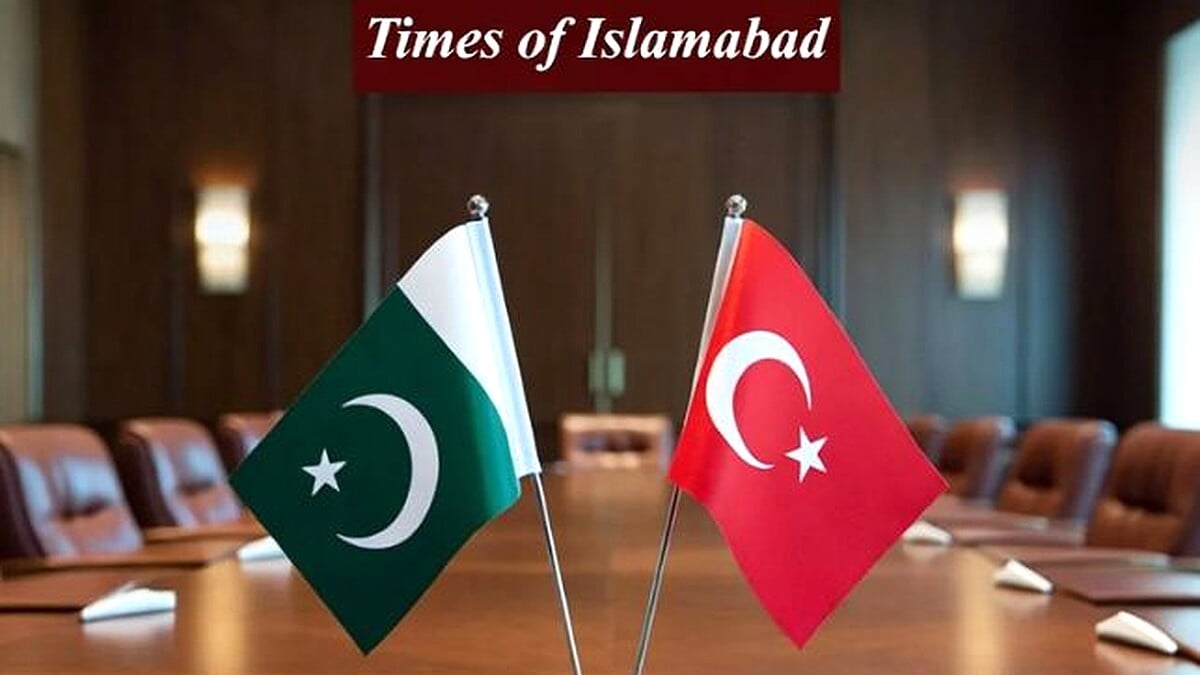




ISLAMABAD: In a major boost to bilateral institutional relations, the Supreme Court of Pakistan and the Constitutional Court of Turkiye signed a comprehensive Memorandum of Understanding on judicial cooperation on Monday, April 6, 2026.
The agreement establishes a structured framework for long-term collaboration between the two apex courts, focusing on capacity building, judicial exchanges, and sharing of best practices in adjudication.
A high-level Turkish delegation led by Kadir Özkaya, President of the Constitutional Court of Turkiye, arrived in Islamabad for a four-day visit from April 6 to 9.
The delegation included distinguished judges and senior officials from the Turkish court.
The signing ceremony took place at the Supreme Court building in Islamabad and was attended by Chief Justice of Pakistan Yahya Afridi, other honourable judges of the Supreme Court, chief justices of high courts, Law Minister Azam Nazeer Tarar, and senior judicial officials.
This development comes at a time when both nations are modernising their justice systems amid growing caseload pressures.
Pakistan’s superior judiciary handles over 50,000 cases annually at the Supreme Court level alone, while Turkiye’s Constitutional Court manages complex constitutional reviews involving fundamental rights and democratic governance.
The MoU aims to address common challenges through joint training programmes targeting district judiciary, academic exchanges, and exposure to comparative judicial practices.
Experts view the pact as a strategic step towards enhancing efficiency, transparency, and public access to justice in both countries.
Regional media reports highlight that the agreement will promote mutual judicial reforms aligned with international best practices.
During the ceremony, speakers emphasised the deep historical, cultural, and fraternal bonds between Pakistan and Turkiye that date back decades.
The partnership reflects shared commitment to constitutional governance, rule of law, and protection of fundamental rights.
The visit schedule includes institutional engagements, briefings on court procedures, and sightseeing tours to Taxila and the Walled City of Lahore.
Such people-to-people and institutional contacts are expected to further strengthen diplomatic ties between the two Muslim-majority nations.
Judicial cooperation of this nature is rare but increasingly vital in a globalised world where cross-border legal issues, human rights cases, and constitutional interpretations often intersect.
The MoU is expected to pave the way for reciprocal visits, workshops on emerging legal technologies, and collaborative research on judicial administration.
Pakistan has been actively pursuing judicial reforms, including digitisation of court records and use of technology for case management.
Turkiye, known for its advanced constitutional jurisprudence, brings valuable expertise in areas like individual applications to constitutional courts.
The agreement specifically targets professional development of judges and court staff, aiming to reduce case backlogs and improve delivery of timely justice.
Analysts note that successful implementation could serve as a model for judicial cooperation among Organisation of Islamic Cooperation member states.
With over 200 million combined population, Pakistan and Turkiye represent significant voices in the Muslim world.
This judicial pact signals maturity in bilateral relations beyond traditional defence and trade cooperation, now extending into core state institutions.
The Supreme Court statement described the MoU as a forward-looking framework committed to enhancing public trust in justice systems.
Chief Justice Yahya Afridi hosted a luncheon in honour of the Turkish delegation, underscoring the warmth of the occasion.
The four-day programme will allow deeper exchanges on constitutional jurisdiction and modern adjudication techniques.
Observers believe the initiative will contribute to a more responsive and efficient justice system in both countries.
As the delegation continues its engagements until April 9, expectations are high for concrete follow-up actions stemming from the newly signed agreement.
This landmark step reinforces the enduring partnership between Pakistan and Turkiye in advancing shared values of justice and constitutionalism.