



ISLAMABAD: Tehran conducts $42 billion in annual business with Gulf countries, a figure now at grave risk following the ongoing war that has severely disrupted regional shipping and energy routes.
Experts warn that prolonged conflict, including threats to the Strait of Hormuz, could force Iran to reroute significant trade volumes, presenting Pakistan with a historic economic opportunity through its Karachi ports.
Iran’s overall foreign trade reached approximately $110 billion in 2025, according to Iranian customs data, with non-oil exports at $51.657 billion and imports at $58.016 billion across 191.588 million tons of goods.
Trade with the United Arab Emirates alone stood at around $6.62 billion in 2024, while Iranian oil exports to the UAE totaled $4.41 billion in 2025, highlighting deep economic interdependence with Gulf states.
UAE imports from Iran included hydrocarbons, and the emirate served as a key transshipment hub despite broader sanctions.
Recent reports indicate Iran’s non-oil exports to the UAE reached $5.815 billion in the first nine months of a recent period, underscoring the scale of bilateral flows now vulnerable to disruption.
The ongoing US-Israel conflict with Iran has effectively impacted shipping through the Strait of Hormuz, a chokepoint handling nearly 20 percent of global oil supplies and significant LNG volumes.
Analysts estimate that disruptions could lead to storage facilities in the Gulf filling rapidly, forcing production cutbacks and rerouting of cargo to alternative ports, including those in Pakistan.
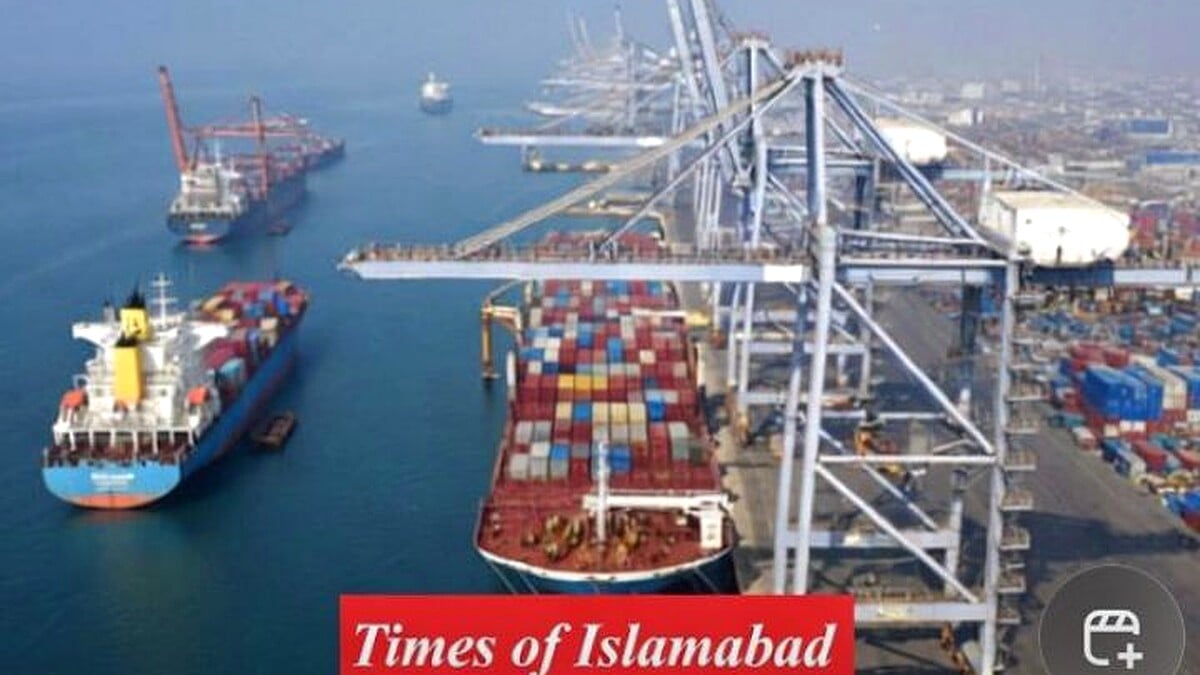
Karachi ports have already witnessed a sharp rise in transshipments since early March, as vessels avoid higher-risk Gulf routes amid elevated insurance costs and security concerns.
Regional media reports highlight Pakistani officials securing additional ships to navigate affected waters, positioning Karachi as an emerging transit hub for redirected cargo.
If Iran redirects even a portion of its $42 billion Gulf trade through Pakistani channels, the country could attract up to $45 billion in annual investment and related economic activity, according to the Iranian journalist’s assessment.
This potential influx would dwarf current Pakistan-Iran bilateral trade, which has reached around $3 billion, with ambitious targets set at $10 billion through enhanced connectivity and barter mechanisms.
Iran exported $1.2 billion to Pakistan in 2024, primarily petroleum gas worth $687 million, refined petroleum at $122 million, and dried legumes.
Pakistan’s exports to Iran remain minimal at roughly $73,000 in recent data, though both nations aim to boost volumes via new agreements and border markets.
The war has already triggered global economic ripples, with oil prices surging past $100 per barrel and estimates suggesting Arab economies could face up to $200 billion in lost growth from disrupted energy and fertilizer supplies.
Gulf Cooperation Council merchandise trade, excluding intra-GCC flows, hit $1.6 trillion in 2024, reflecting the massive scale of regional commerce now under pressure.
Pakistan’s strategic location offers logistical advantages, with Karachi capable of handling increased cargo volumes and serving as a gateway for Iranian goods to South Asian and beyond markets.
Economists note that infrastructure upgrades at Pakistani ports, combined with improved road and rail links to the Iranian border, could accelerate this shift and generate substantial revenue through port fees, logistics services, and ancillary industries.
Skeptics caution that geopolitical risks, sanctions enforcement, and competition from other regional routes could limit the full realization of such gains.
However, proponents argue that the current crisis creates a window for Pakistan to emerge as a neutral trade facilitator, attracting foreign direct investment in ports, warehousing, and transport sectors.
Government sources indicate active engagement with Iranian counterparts to explore enhanced transit protocols and joint ventures that could solidify long-term partnerships.
The potential $45 billion figure, while ambitious, aligns with broader estimates of rerouted trade flows amid Hormuz uncertainties, where up to 15 percent of global oil supplies have faced interruptions.
Fertilizer exports from the Gulf, accounting for 40 percent of global seaborne urea, also face risks, opening additional avenues for Pakistani agricultural and industrial sectors.
Analysts project that sustained disruption could redirect billions in non-oil trade, including petrochemicals, metals, and consumer goods traditionally flowing through Gulf hubs.
Pakistan’s economy, facing its own challenges, stands to benefit from job creation in logistics, increased foreign exchange reserves, and technology transfers in port management.
International observers have noted the rise in Karachi transshipments as vessels seek safer alternatives, with some reports confirming shipments successfully reaching Pakistani ports despite regional tensions.
This development echoes historical patterns where conflict-driven rerouting bolstered alternative trade corridors.
To capitalize fully, Pakistan would need to streamline customs procedures, enhance security at ports, and invest in capacity building to handle larger vessel traffic.
Bilateral talks have already set sights on a $10 billion trade target, with 12 agreements signed in recent years to promote connectivity and people-to-people ties.
The Iranian journalist’s claim, amplified in regional discourse, underscores a rare convergence of interests where Iran’s necessity could translate into Pakistan’s prosperity.
As the conflict evolves, the scale of trade diversion remains uncertain, yet the opportunity for Karachi to emerge as a pivotal node in regional commerce appears increasingly tangible.
Stakeholders emphasize the need for swift policy measures to secure this potential windfall before alternative routes stabilize or global markets adapt.
The stakes are high, with data-driven projections suggesting transformative impacts on Pakistan’s GDP contribution from trade and services sectors.