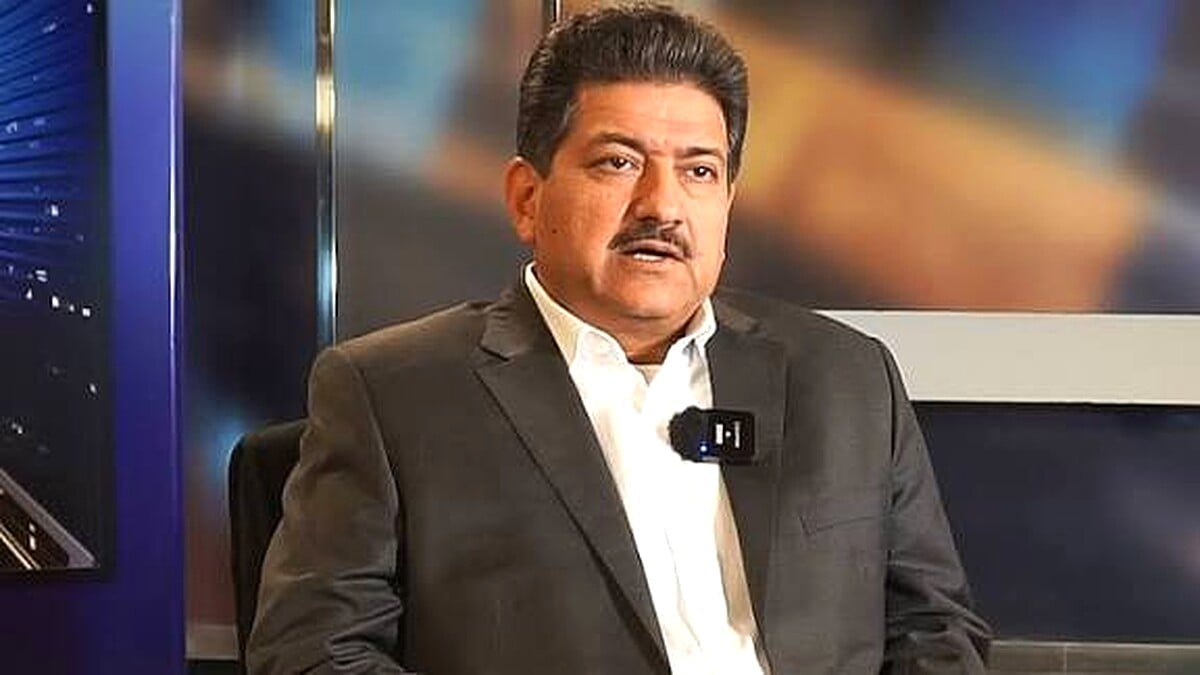




ISLAMABAD: Senior journalist Hamid Mir has made a startling revelation about intense backroom diplomacy at a major Islamic conference where attempts were made to pressure Pakistan into taking strict action against Iran.
The effort unfolded during the Consultative Ministerial Meeting of foreign ministers from key Arab and Islamic countries held in Riyadh on March 19 2026.
Pakistan and Turkey firmly opposed the push reportedly led by the United Arab Emirates.
As a result Islamabad successfully postponed any option for military action against Tehran.
Hamid Mir disclosed that the campaign aimed to enlist Pakistan in a tougher stance amid ongoing Iranian attacks on Gulf targets including ballistic missile and drone strikes on residential areas oil facilities and airports.
International outlets such as Al Jazeera reported the joint statement issued by 12 nations including Pakistan Turkey UAE Saudi Arabia Egypt Jordan Qatar and others condemning the Iranian actions and calling for an immediate halt while affirming the right to self-defence under UN Charter Article 51.
Yet regional Pakistani media highlighted that Pakistan and Turkey blocked harsher language preventing escalation in the final text.
Pakistan maintains deep economic stakes with Iran bilateral trade has already hit 3 billion dollars with both sides targeting an ambitious 10 billion dollars through enhanced connectivity barter trade and border markets.
Iran supplies petroleum gas and refined petroleum worth over 800 million dollars annually to Pakistan while Islamabad exports rice meat and agri-products.
Disrupting ties could derail this momentum especially as Pakistan seeks to reverse earlier declines in cross-border commerce.
The Iran conflict now threatens Pakistan’s remittance lifeline which forms a cornerstone of its external finances.
Over 55 percent of inflows originate from the Middle East with Saudi Arabia contributing 23.5 percent and the UAE 20.6 percent.
Analysts from the Pakistan Institute of Development Economics warn that prolonged instability could block half a million new migrants and force a similar number home resulting in annual losses of 3 to 4 billion dollars in remittances.
Such a hit would widen the current account deficit strain the rupee and squeeze domestic jobs for millions of families dependent on Gulf earnings.
Pakistan’s strategic calculus also rests on its military edge.
According to the 2026 Global Firepower Index Pakistan ranks 14th globally while Iran stands at 16th.
Islamabad fields superior manpower reserves exceeding 9 million available personnel compared to Iran’s 9.2 million alongside stronger air and land assets in key categories.
Despite this capability senior officials chose diplomacy over confrontation preserving neutrality that positions Pakistan as a trusted mediator.
Islamabad has already conveyed US proposals to Tehran and offered to host direct talks between Washington and Iran.
Foreign Minister Ishaq Dar has confirmed that both sides expressed confidence in Pakistan’s facilitation role.
Turkey echoed Islamabad’s restraint reinforcing a united front against any forced alignment.
The revelation by Hamid Mir underscores deeper regional fault lines where Gulf states seek solidarity against perceived Iranian aggression while Pakistan prioritises economic stability and historic ties.
Iran-Pakistan border cooperation remains vital for countering shared threats including militant groups in Balochistan.
Any military involvement would risk drawing nuclear-armed Pakistan into a wider conflict with unpredictable consequences for South Asia and the Gulf.
Observers note that the Riyadh meeting’s moderated outcome reflects Pakistan’s successful navigation of competing pressures.
By postponing aggressive options Islamabad has kept channels open for de-escalation.
This stance aligns with its broader foreign policy of promoting dialogue amid the 2025-2026 Iranian protests and cross-border strikes that have already claimed thousands of lives and disrupted global energy routes.
Economic data further validates the decision.
A potential 15 percent drop in Gulf remittances alone could cost Pakistan 3 billion dollars annually exacerbating import bills already inflated by higher global oil and freight prices.
Pakistan’s 3.85 million migrant workers in GCC countries remain vulnerable to any slowdown in construction logistics and services sectors.
Hamid Mir’s disclosure has sparked debate in Pakistani circles about external attempts to exploit Islamabad’s alliances for proxy confrontations.
Yet the government’s response emphasises sovereignty and peace.
With Turkey as a key partner Pakistan has signalled that Islamic unity must not translate into forced military adventurism.
The coming weeks will test whether this diplomatic balancing act can prevent further escalation while safeguarding economic lifelines.
Analysts predict continued Pakistani mediation efforts including follow-up meetings in Islamabad involving Saudi Arabia Egypt and others.
For now the revelation reinforces Pakistan’s image as a responsible regional actor unwilling to be drawn into conflicts that threaten its own security and prosperity.