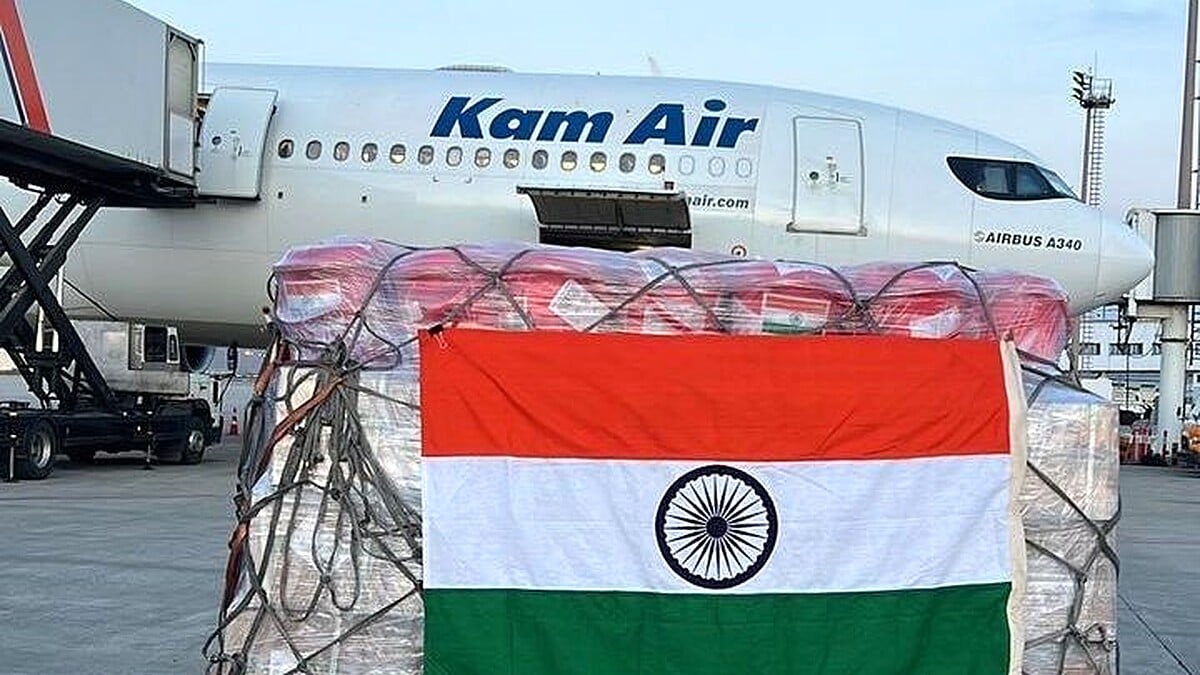




ISLAMABAD: Pakistani intelligence agencies have exposed what they describe as a calculated smuggling operation concealed within Indian humanitarian aid shipments to flood-devastated Afghanistan.
Recent consignments delivered by air reportedly include not only medicines and relief supplies but also critical drone components and small arms destined for Tehrik-i-Taliban Pakistan and Afghan Taliban fighters.
The revelation targets Pakistan’s western border forces directly according to multiple intelligence briefs shared with senior military officials.
Afghanistan has endured relentless flooding since late March with official tallies confirming at least 61 deaths and 116 injuries across 13 provinces.
United Nations coordination data further records around 900 families displaced and over 600 homes completely destroyed in the latest deluge.
An additional 2448 houses suffered partial damage while vital irrigation canals and roads spanning 93 kilometres were ruined compounding the humanitarian emergency.
India has maintained a pattern of air-delivered assistance to Kabul including 73 tonnes of life-saving medicines vaccines and nutritional supplements dispatched in November 2025.
A further 2.5-tonne consignment of emergency medical kits reached Kabul in March 2026 ostensibly to bolster healthcare amid regional crises.
Pakistani sources now allege the fresh post-flood aid batches contain hidden quadcopter drone parts and small-calibre weapons packaged among legitimate relief items.
Anti-Taliban journalists operating inside Afghanistan corroborated the claims describing suspicious cargo manifests observed during unloading at Kabul facilities.
These dual-use materials are said to be routed toward TTP hideouts along the Durand Line for immediate assembly and deployment.
Pakistan recorded a staggering 5397 terrorist incidents throughout 2025 according to military disclosures with more than 400 involving quadcopter drones dropping explosives on security positions.
Such drone strikes represented nearly one in ten attacks that year marking a tenfold surge from prior periods and directly linked to enhanced militant capabilities.
Tehrik-i-Taliban Pakistan operations in 2025 already exceeded the full-year total for 2024 per independent conflict trackers like ACLED.
Border clashes have intensified with TTP fighters using smuggled technology to target Frontier Corps outposts and army patrols in Khyber Pakhtunkhwa and Balochistan.
Intelligence dossiers detail how drone components enable precision strikes on Pakistani convoys while small arms sustain sustained guerrilla campaigns.
The alleged diversion occurs despite Islamabad’s repeated diplomatic demands for the Afghan Taliban to dismantle TTP sanctuaries on their soil.
Regional analysts note that such covert supplies could exacerbate proxy dynamics in an already volatile neighbourhood where humanitarian corridors risk weaponisation.
Pakistan’s defence establishment has responded by heightening cargo inspections and deploying advanced anti-drone systems along the 2600-kilometre frontier.
Earlier floods in 2024 claimed over 300 lives in northern provinces alone underscoring the recurring climate vulnerability that aid ostensibly addresses.
Yet sources insist the scale of concealed weaponry points to a deliberate strategy aimed at destabilising Pakistani border security.
Anti-Taliban voices within Afghanistan warn that unchecked shipments empower hardliners and prolong cross-border instability.
Islamabad has urged international donors to implement stricter verification protocols for all future assistance entering Taliban-controlled territory.
The disclosures have triggered urgent security reviews in Pakistan with emphasis on countering the evolving drone threat from western militants.
Geopolitical observers highlight longstanding accusations of external interference through Afghan proxies though India consistently rejects any involvement in regional terrorism.
As flood recovery efforts continue the dual narrative of humanitarian goodwill versus alleged sabotage dominates strategic calculations in Islamabad.
Further intelligence assessments are expected to shape Pakistan’s next diplomatic and operational responses along the troubled frontier.