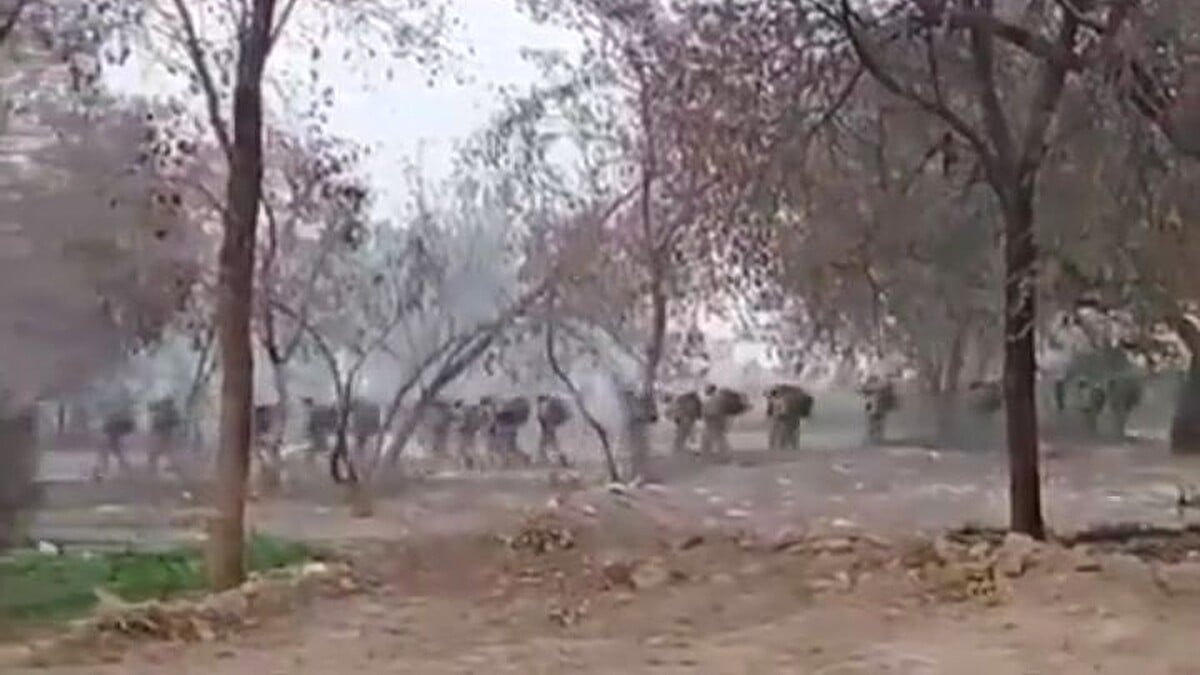




ISLAMABAD: A short 8-second video allegedly showing United States troops near the Iran-Pakistan border has gone viral on Indian media accounts, sparking claims of a larger operation unfolding against Iran from Pakistani soil.
CNN fact check has confirmed the footage is fake, part of a broader wave of misleading content surrounding the ongoing US-Iran conflict.
Regional analysts note that such unverified clips often surface during heightened tensions to influence public opinion and diplomatic narratives.
The Iran-Pakistan border stretches approximately 900 kilometres, a rugged terrain that has historically seen limited military activity but remains sensitive due to Baloch insurgent groups and cross-border smuggling.
Pakistan maintains strict neutrality in the US-Iran war while offering to host peace talks between Washington and Tehran.
Pakistani officials, including Deputy Prime Minister Ishaq Dar, have repeatedly emphasised Islamabad’s role as a mediator, citing confidence expressed by both sides for potential direct or indirect dialogue in the coming days.
US Central Command reports indicate thousands of American troops and marines have deployed to the broader Middle East region, with figures around 2,500 to 3,000 personnel from units like the 82nd Airborne Division mentioned in various assessments for possible reinforcement roles.
These movements focus primarily on Gulf states, naval operations in the Strait of Hormuz, and support for air campaigns rather than direct ground presence along the Pakistan frontier.
Independent verification shows no credible evidence of US ground forces operating near Pakistani territory in coordination with Islamabad against Iran.
Indian channels shared the brief clip claiming it depicted American special forces activity, suggesting something bigger unfolding from the Pakistani side.
However, CNN’s analysis identified the video as fabricated, consistent with numerous AI-generated or manipulated visuals that have racked up tens of millions of views since the US-Iran conflict escalated in late February 2026.
Experts tracking disinformation highlight that fake explosions, missile strikes, troop movements, and even captured soldiers have proliferated across social platforms, often amplified by accounts seeking to escalate narratives or score geopolitical points.
Pakistan’s military has focused on securing its western border amid separate clashes with Afghan Taliban forces and managing internal security challenges.
The country shares deep religious and trade ties with Iran while maintaining its status as a major non-NATO ally of the United States.
This delicate balancing act has positioned Pakistan as a potential venue for de-escalation talks, with foreign ministers from Turkey, Saudi Arabia, and Egypt recently convening in Islamabad to discuss the crisis.
Fuel prices in Pakistan have surged due to disruptions in global oil supply routes linked to the conflict, prompting government austerity measures and school closures in some areas.
Over 7,800 targets in Iran have been struck by US forces in Operation Epic Fury, according to CENTCOM data, involving more than 8,000 combat flights and damage to over 120 Iranian vessels.
Iran has responded with missile and drone barrages, claiming hits on US assets, though many such reports remain contested or linked to unverified footage.
Losses on the US side include drones and isolated incidents, with some media outlets reporting discrepancies in casualty figures that fuel speculation.
The viral 8-second clip fits into a pattern where short, sensational videos gain rapid traction before fact-checkers can respond.
CNN and other international outlets have documented similar fakes, including AI-generated scenes of US troops captured or fighting inside Iran, many bearing digital artifacts like distorted faces and unnatural movements.
Pakistani authorities have not commented directly on the specific video but continue to stress border vigilance without endorsing any foreign military presence.
Defence analysts point out that any significant US troop movement near the tri-border area involving Afghanistan would risk complicating Pakistan’s ongoing operations and refugee management.
The broader conflict has already displaced populations and strained economies across the region, with potential spillover effects into Balochistan province.
As mediation efforts continue, observers warn that disinformation campaigns could undermine trust and prolong instability.
Pakistan’s offer to host talks reflects its strategic interest in preventing a wider war that could destabilise its 900-kilometre frontier with Iran.
International media coverage has largely focused on Gulf operations and aerial campaigns, with limited mention of direct Pakistan border activity, lending weight to the assessment that the circulated footage lacks authenticity.
Regional media in India amplified the claim rapidly, but the absence of corroboration from US or Pakistani official sources raises further doubts.
Fact-checking remains crucial as the conflict enters a phase where both military actions and information warfare shape perceptions.
Stakeholders urge reliance on verified data from CENTCOM, Pakistani ISPR, and reputable global outlets to separate fact from fabrication in this high-stakes environment.