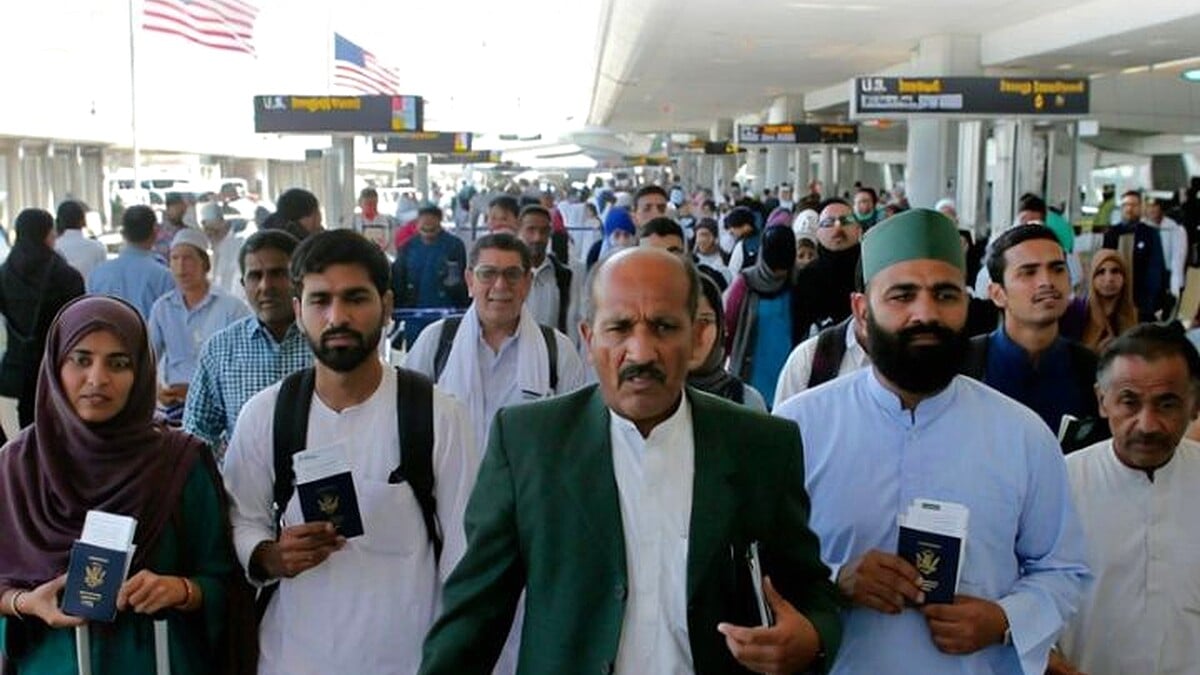




ISLAMABAD: The Trump administration has partially lifted a sweeping halt on asylum adjudications imposed after a deadly shooting incident involving an Afghan national, bringing cautious optimism for immigrants including Pakistanis in United States.
U.S. Citizenship and Immigration Services announced the resumption of processing for thoroughly screened asylum seekers from non-high-risk countries while maintaining maximum vetting protocols across all cases.
The policy shift comes months after a November 2025 freeze that stranded over 1.5 million pending immigration cases amid heightened national security concerns.
In November 2025 the administration suspended all asylum decisions following the shooting of two National Guard members near Washington by an Afghan immigrant granted asylum under previous vetting processes. One guardsman later died from injuries.
Officials blamed Biden-era screening lapses for the incident which prompted an aggressive immigration crackdown including expanded travel restrictions.
The initial halt affected affirmative asylum applications handled by USCIS outside immigration courts and created massive backlogs delaying work authorizations and legal protections for legitimate claimants.
Under the new directive USCIS has lifted the adjudicative hold for applicants from nations not designated as high-risk allowing resources to focus on rigorous security checks for higher-risk profiles.
Exact countries classified as non-high-risk remain undisclosed but the move excludes nationals from the 39 nations now subject to full or partial travel bans expanded in December 2025 and January 2026.
Pakistan is not included in the primary full travel ban list of 19 countries that features Afghanistan Iran Syria Somalia and several African states.
Regional media reports in Pakistan have highlighted potential benefits for Pakistani asylum seekers many of whom flee religious persecution political threats or economic instability linked to regional conflicts.
Historical data shows Pakistan consistently ranks among countries with notable asylum grant rates in U.S. proceedings with grant percentages reaching around 67 percent in certain recent fiscal year samples for defensive asylum cases.
Thousands of Pakistanis have filed asylum claims in recent years often citing blasphemy laws security concerns in Khyber Pakhtunkhwa or Balochistan and threats from militant groups.
The partial resumption could accelerate decisions for screened Pakistani applicants potentially granting protection and work permits to hundreds or thousands currently in limbo.
Critics argue the selective lift still leaves uncertainty for many while supporters view it as a balanced approach prioritizing American safety without completely shutting humanitarian pathways.
The Trump administration had already imposed a travel ban on 12 countries in July 2025 which was later expanded by seven more nations after the National Guard incident bringing the total restricted list to 39.
These measures target entry for both immigrants and in some cases nonimmigrants from listed states citing terrorism risks and public safety threats.
Broader immigration enforcement under Trump has seen deportations rise sharply with estimates suggesting efforts toward removing up to one million unauthorized individuals annually though actual 2025 figures hovered closer to 600,000.
Refugee admissions plunged to historic lows with the 2026 cap set at just 7,500 slots primarily for select groups.
For Pakistani immigrants in the U.S. the news carries particular significance as community leaders note many families await asylum outcomes amid backlogs exceeding two million cases system-wide at peak periods.
Legal experts indicate that applicants from Pakistan who pass enhanced screening may now see faster adjudications potentially reducing wait times that stretched beyond 18 months in some instances.
The policy does not affect defensive asylum cases in immigration courts nor does it alter ongoing deportations or restrictions on high-risk nationalities.
Pakistani diplomatic channels have reportedly engaged U.S. counterparts to ensure fair treatment for bona fide applicants from the country emphasizing strong bilateral ties and Pakistan’s role in regional counterterrorism.
Sensational elements of the original shooting which involved an individual previously vetted under earlier administrations have fueled public debate on immigration vetting efficacy.
Data from U.S. immigration courts reveal wide variations in asylum outcomes by nationality with some groups experiencing grant rates as low as 10-20 percent while others exceed 60 percent depending on credible fear demonstrations.
The partial reopening signals a pragmatic adjustment in the administration’s hardline stance allowing processing to resume without compromising core security objectives.
Immigration analysts project the change could clear tens of thousands of cases in coming months freeing up USCIS capacity for thorough vetting of remaining applications.
For overseas Pakistanis including students professionals and families in the U.S. on temporary statuses the development offers a glimmer of stability amid broader policy uncertainties.
Community organizations in cities like New York Houston and Chicago have begun advising affected individuals to consult legal counsel for updated case statuses.
While the full impact remains to be seen the announcement underscores a nuanced evolution in U.S. immigration enforcement balancing enforcement with selective humanitarian considerations.
Observers note that maximum screening including biometric checks intelligence reviews and third-country verifications will continue unabated for all applicants.
This development arrives as global migration patterns shift with Asia facing energy shortages and other regions dealing with instability potentially increasing future asylum flows.
For Pakistani immigrants the selective resumption represents a targeted opportunity within a stricter overall framework.