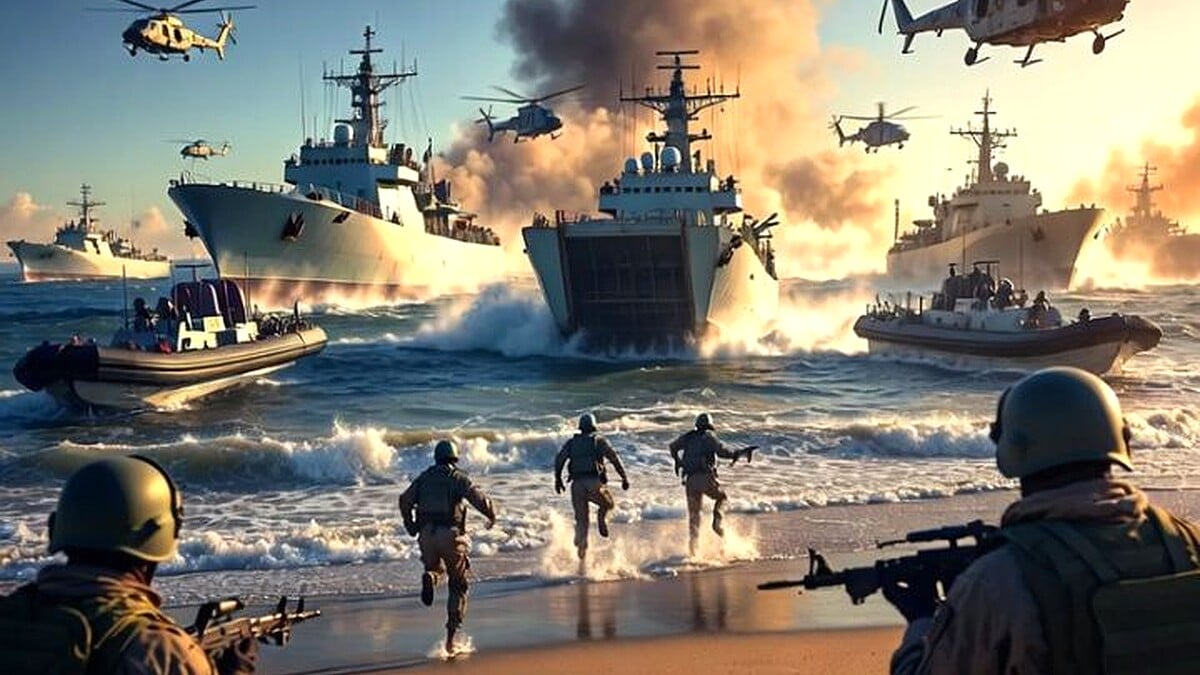




ISLAMABAD: Iranian state television has issued a stark warning that Tehran’s armed forces stand prepared to seize the coastlines of the United Arab Emirates and Bahrain should the United States commit what it calls a strategic mistake by sending more troops into the region.
National security analyst Morteza Simiari, speaking on IRIB, declared that Iran’s military could fundamentally reshape the Persian Gulf map through such action. The comments come as tensions spiral in an ongoing conflict now entering its fourth week.
The threat marks a dramatic escalation from earlier Iranian statements focused on missile and drone strikes against US assets hosted in Gulf states. Simiari explicitly linked any additional American ground deployment to a potential Iranian ground operation targeting Emirati and Bahraini shores.
Regional observers note that the UAE already hosts thousands of US personnel at bases including Al Dhafra, while Bahrain serves as headquarters for the US Navy’s Fifth Fleet. US military buildup reports indicate additional Marines and warships have arrived in recent days to bolster defences amid Iranian retaliation.
Iran has fired over 1,700 missiles and drones toward the UAE alone since hostilities intensified, according to Emirati defence ministry figures. Bahrain reports intercepting more than 350 projectiles, including 244 drones and 143 missiles.
Gulf states have repeatedly denied allowing their territory for direct strikes on Iran, yet Tehran accuses them of providing launch platforms for attacks on its Abu Musa and Kharg islands. Kharg Island handles the bulk of Iran’s oil exports, making it a critical economic target.
Earlier this month Iranian state media urged evacuation of three major UAE ports — Jebel Ali, Khalifa and Fujairah — claiming without evidence that US forces operated from these civilian facilities. The ports handle vast volumes of global trade, with Jebel Ali alone processing over 14 million containers annually.
The latest IRIB statement introduces the possibility of territorial seizure, a move analysts describe as highly provocative given the disputed islands in the Gulf already claimed by both Iran and the UAE.
Pakistan-based and other national media outlets have highlighted the claim as part of broader regional instability, noting that such rhetoric could disrupt shipping through the Strait of Hormuz, which carries nearly 20 percent of global oil trade.
US officials have not publicly responded to the specific coastline seizure warning, but Washington continues to reinforce its Gulf presence. Reports indicate emergency arms packages worth billions of dollars flowing to UAE, Saudi Arabia and other allies.
The analyst’s remarks on Iranian state television coincide with Iranian claims of readiness to deploy naval mines and conduct further asymmetric operations if provoked. Simiari stressed that any US misstep would trigger forces “fully prepared to take action” including reshaping the region.
Gulf cooperation council members have condemned Iranian attacks as violations of sovereignty. The UAE ministry of defence has confirmed multiple interceptions of incoming ballistic missiles and drones, with debris causing limited civilian disruption in Abu Dhabi and Dubai areas.
Bahrain has urged residents to seek shelter during repeated air raid alerts. Saudi Arabia and Kuwait have also reported interceptions and heightened alerts at oil facilities.
International coverage remains limited on the precise coastline seizure threat, relying heavily on Iranian state media translations circulated through Middle East Eye and social platforms. Local and national reports from Gulf and South Asian outlets treat the statement as authentic escalation from Tehran.
Analysts warn that any attempt at ground operations would risk direct confrontation with US forces and trigger wider conflict involving multiple Gulf navies. The UAE maintains advanced air defences purchased from the United States and France, while Bahrain hosts multinational coalition assets.
Oil prices have fluctuated sharply amid the threats, with concerns that closure or disruption of Hormuz could push Brent crude beyond 150 dollars per barrel. Global shipping insurers have raised premiums for vessels transiting the area.
The Iranian armed forces, particularly the Islamic Revolutionary Guard Corps navy, have conducted repeated drills simulating control of Gulf waterways. Tehran has long viewed the presence of foreign bases as a direct threat to its security.
As the conflict continues, diplomats from several countries including Pakistan have called for de-escalation and dialogue to prevent further spillover. The possibility of Iran acting on its coastline warning remains unverified beyond state television rhetoric, yet it has already heightened anxiety across the energy-rich region.
Further US deployments could test Tehran’s declared red lines, potentially drawing the entire Gulf into deeper military engagement with unpredictable consequences for global energy security and trade routes.