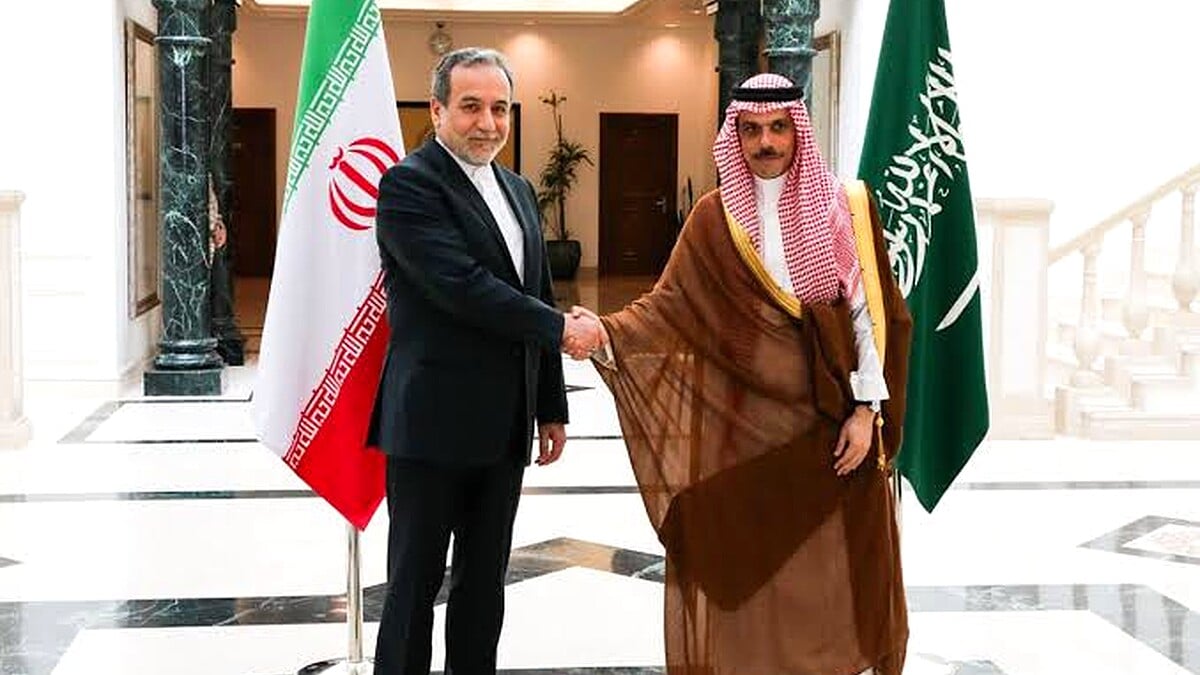




ISLAMABAD: Saudi Arabia has declared five members of the Iranian diplomatic mission persona non grata and ordered them to leave the kingdom within 24 hours.
The decision targets Iran’s military attaché, his assistant and three embassy staff members amid escalating missile and drone attacks on Saudi territory.
The Saudi Foreign Ministry issued the statement on Saturday, citing Iran’s repeated violations of sovereignty, civilian safety and economic interests.
It described the strikes as blatant aggression against the kingdom, Gulf Cooperation Council states and other Arab and Islamic countries.
Such actions breach international conventions, good neighbourliness principles and the 2023 Beijing Agreement that restored diplomatic ties.
The ministry also referenced United Nations Security Council Resolution 2817 of 2026 in condemning the attacks.
Iran’s behaviour contradicts the Islamic brotherhood values it publicly upholds, the statement added.
This expulsion reaffirms a March 9 warning that continued Iranian operations would trigger serious consequences for bilateral relations.
Saudi Arabia vowed to take all measures necessary under Article 51 of the United Nations Charter to defend its territory, airspace and citizens.
The move follows weeks of Iranian ballistic missile and drone barrages launched since early March 2026.
Saudi air defences intercepted hundreds of threats, including 51 drones in one morning and a total exceeding 575 drones plus dozens of missiles.
Despite interceptions, strikes damaged the Ras Tanura oil refinery, forcing a temporary shutdown and disrupting exports.
Civilian areas in the Eastern Province suffered impacts, with reports of two deaths and 12 injuries in verified incidents.
Energy infrastructure across the Rub al-Khali desert and Shaybah oil field faced repeated targeting.
Similar attacks hit neighbouring Gulf states, prompting unified condemnation from the Gulf Cooperation Council.
Qatar recently expelled Iranian military and security attachés for parallel sovereignty violations.
These steps signal deepening strain in relations rebuilt only in 2023 after a seven-year break.
Diplomatic ties were severed in 2016 following the execution of Shia cleric Nimr al-Nimr and attacks on Saudi missions in Iran.
The China-brokered Beijing Agreement had eased proxy conflicts in Yemen and improved trade prospects.
Yet current Iranian retaliation against US-Israeli operations has shattered rebuilt trust, Saudi officials say.
The foreign minister explicitly reserved the right to military response if attacks persist.
Gulf Arab states now coordinate closely, with recent Riyadh meetings of Arab and Muslim ministers demanding Iran halt provocations.
The gatherings urged Tehran to stop arming proxies and threatening maritime routes like the Strait of Hormuz.
Regional stability hangs in balance as oil production faces repeated disruptions.
Global energy markets already reflect volatility from supply interruptions across the Gulf.
For Pakistan, maintaining balanced ties with both Riyadh and Tehran, the crisis highlights risks to broader Muslim world unity.
Analysts note the expulsions go beyond symbolism and may precede further diplomatic or security measures.
Iran’s embassy in Riyadh now prepares the designated personnel for departure before the 24-hour deadline expires.
The incident revives long-standing geopolitical rivalries between the two powers despite recent reconciliation efforts.
Without de-escalation, bilateral economic cooperation and security frameworks risk prolonged damage.
International observers call for renewed dialogue to prevent wider Middle East instability.
Saudi Arabia’s firm stance underscores its commitment to protecting national interests against external threats.
This latest development adds urgency to regional calls for restraint amid ongoing conflict.