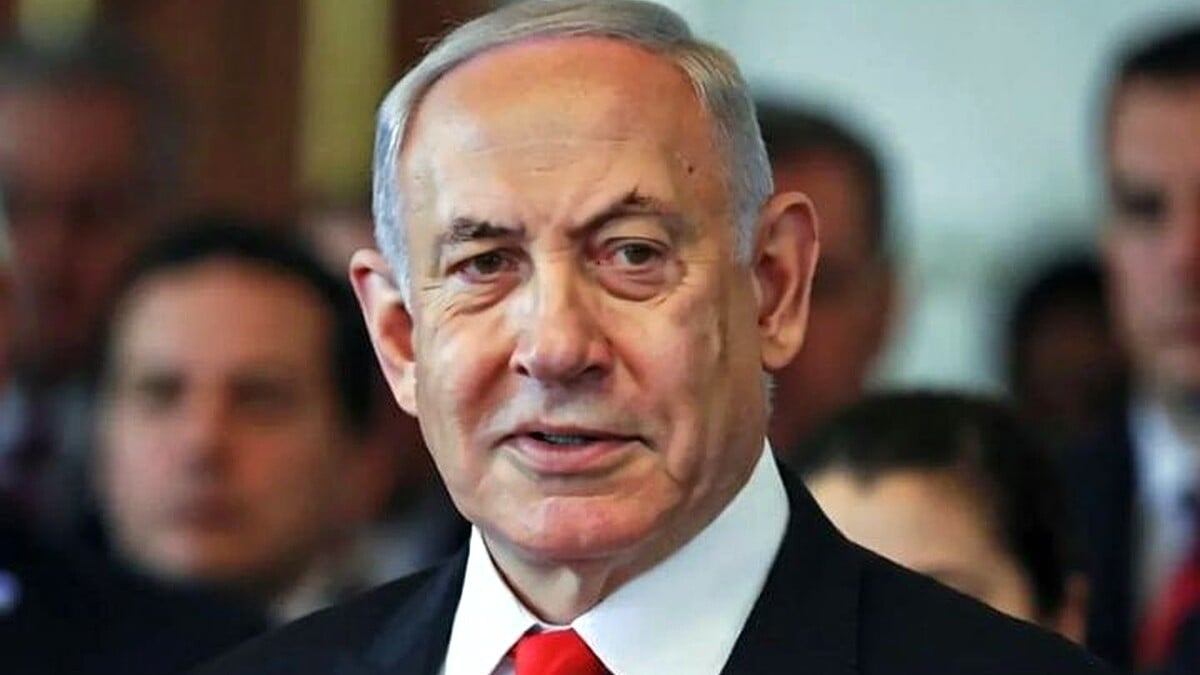




ISLAMABAD: Israeli Prime Minister Benjamin Netanyahu has ignited widespread controversy with a provocative historical analogy during a televised press conference on March 19, 2026, comparing Jesus Christ to the Mongol conqueror Genghis Khan and asserting that ruthless power ultimately prevails over moral goodness.
The statement came amid heightened tensions in the ongoing conflict involving Israel, the United States, and Iran, where Netanyahu emphasized the need for overwhelming strength to counter perceived threats from adversaries he described as barbaric forces.
Netanyahu quoted American historian Will Durant, stating that history demonstrates, unfortunately, Jesus Christ has no advantage over Genghis Khan. He elaborated that if one is strong enough, ruthless enough, and powerful enough, evil will overcome good, and aggression will overcome moderation.
The remark was part of a broader argument urging resolute military action, warning that civilizations must be more powerful than barbarians or risk destruction. Netanyahu referenced Durant’s work from The Lessons of History to support his view that moral values alone cannot ensure survival without the willingness to fight.
Critics quickly condemned the comment as deeply offensive, particularly to Christian communities worldwide. Many accused Netanyahu of diminishing the figure of Jesus Christ, revered by billions as the embodiment of peace, love, and non-violence, by equating him with Genghis Khan, known for brutal conquests that resulted in millions of deaths.
Social media platforms erupted with backlash, with users labeling the statement blasphemous and anti-Christian. Prominent voices, including religious leaders and commentators, argued that the analogy suggests morality is naive and that might makes right, inverting traditional ethical teachings.
In response to the uproar, Netanyahu issued a clarification on X, formerly Twitter, insisting no offense was intended toward Jesus Christ. He described himself as a fervent admirer of Jesus and reiterated that the words originated from Durant, a Christian humanist historian. Netanyahu stressed that the point was morality by itself is insufficient for survival in the face of existential threats.
The controversy unfolded against the backdrop of an escalating regional war. Netanyahu’s address focused on the need for Israel and its allies to maintain superior power to deter aggression from Iran and its proxies. He portrayed the current conflict as a clash between civilization and savagery, drawing parallels to historical struggles where strength determined outcomes.
Observers noted that the quote aligns with Netanyahu’s long-standing rhetoric on security and deterrence. He has repeatedly argued that Israel must project unyielding force to survive in a hostile region, citing threats from nuclear ambitions and militant groups.
The invocation of Jesus Christ and Genghis Khan, however, added a religious dimension rarely seen in his public statements. Jesus Christ represents sacrifice, forgiveness, and turning the other cheek, while Genghis Khan symbolizes relentless expansion through violence and domination.
Analysts suggest the remark may reflect a pragmatic, realpolitik worldview shaped by Israel’s security challenges. Yet it risks alienating international supporters, particularly in Christian-majority nations that form key allies for Israel.
Christian Zionist groups, which have historically backed Israel, faced internal divisions over the comment. Some defended it as a sober historical observation, while others expressed discomfort with the framing.
The statement also drew attention in Muslim-majority countries, where Prophet Isa (Jesus) holds revered status in Islam. Critics in Pakistan and elsewhere viewed it as disrespectful to shared Abrahamic values.
Media outlets across the globe amplified the controversy, with headlines focusing on the perceived mockery of religious figures. Reports highlighted how the quote went viral within hours, sparking debates on power, morality, and religion in modern geopolitics.
Netanyahu’s defenders pointed out that the citation from Durant was intended to underscore a harsh historical reality rather than endorse evil. Durant, in his writings, lamented that civilizations often fall when they fail to defend themselves adequately.
The incident underscores broader tensions in how leaders frame moral versus strategic imperatives during wartime. Netanyahu’s words serve as a stark reminder that in international relations, perceptions of strength often dictate outcomes more than ideals of goodness.
As the conflict with Iran intensifies, such statements may further polarize global opinion. The backlash illustrates the delicate intersection of religion, history, and politics in contemporary discourse.