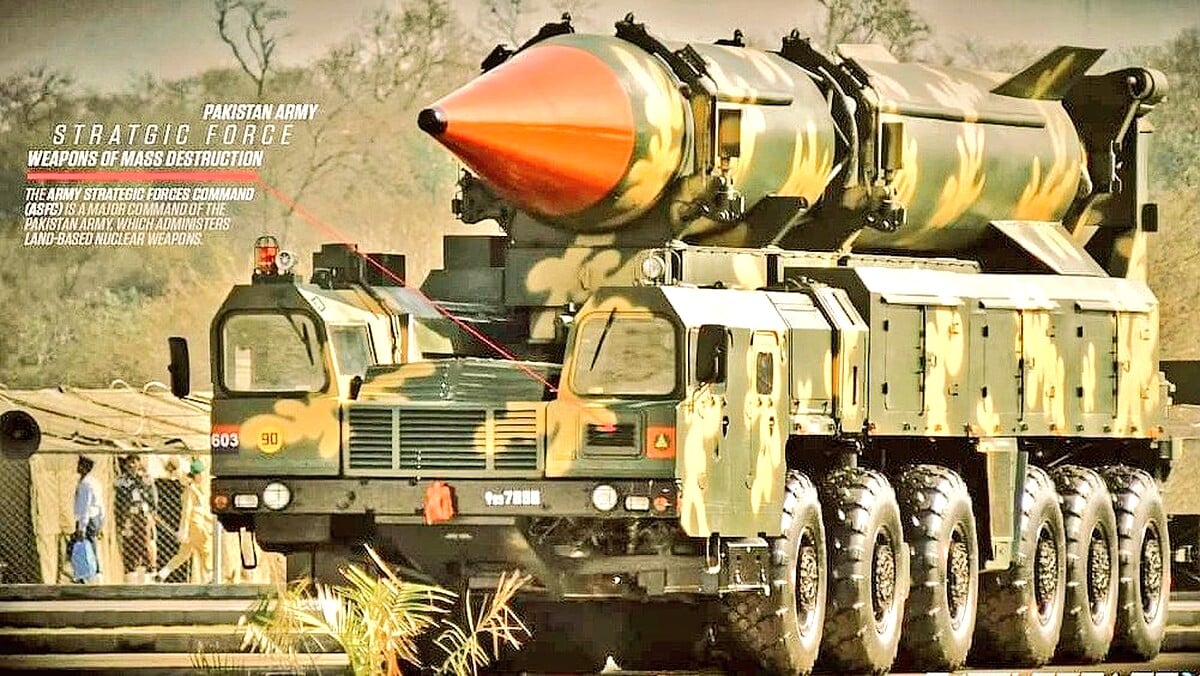




ISLAMABAD: A recent statement by United States intelligence chief regarding concerns over Pakistan’s nuclear and missile capabilities has triggered debate among analysts, policymakers, and regional observers, with many questioning the timing, intent, and broader geopolitical implications of the warning.
The remarks, framed as part of a wider assessment of global security threats, singled out Pakistan’s evolving missile programme and nuclear posture, prompting unease in Islamabad and sparking speculation about shifting priorities in Washington’s South Asia policy. While official US communication maintained a tone of caution rather than accusation, the underlying message was interpreted by experts as a calculated signal aimed at multiple audiences, including and .
Analysts argue that one of the most significant drivers behind the statement is Washington’s increasing concern over deepening strategic ties between Pakistan and China. Over the past decade, bilateral cooperation has expanded beyond economic corridors into defence technology, intelligence coordination, and advanced missile systems. The China-Pakistan partnership, anchored by projects under the China-Pakistan Economic Corridor, is increasingly viewed in Washington as part of Beijing’s broader effort to reshape regional power dynamics.
Security experts suggest that highlighting Pakistan’s nuclear and missile capabilities serves as a subtle pressure tactic designed to limit Islamabad’s strategic proximity to Beijing. By raising concerns over nuclear risks, the US may be attempting to reassert influence over Pakistan’s defence posture and discourage further integration with Chinese military technologies. Some analysts interpret this as part of a wider containment strategy directed at China’s growing footprint in South Asia and the Arabian Sea.
At the same time, the statement is being seen through the lens of Washington’s deepening strategic alignment with India. In recent years, the US-India partnership has expanded significantly, particularly in defence cooperation, intelligence sharing, and joint military exercises. For Washington, India represents a critical counterbalance to China’s rise, making its security concerns a central consideration in US regional policy.
Experts note that raising alarms over Pakistan’s missile capabilities may also serve to reassure New Delhi, which has long expressed concerns about Islamabad’s nuclear arsenal and delivery systems. By publicly acknowledging these concerns, Washington could be reinforcing its commitment to India’s security framework while simultaneously signalling vigilance over South Asia’s nuclear balance.
However, analysts caution against viewing the statement solely through the prism of US-India relations. Another important factor is the broader global emphasis on nuclear non-proliferation and risk management. As geopolitical tensions intensify across multiple regions, including Eastern Europe and the Middle East, nuclear-armed states are under increased scrutiny from international observers.
In this context, Pakistan’s development of tactical nuclear weapons and advancements in missile technology have drawn attention from global non-proliferation bodies. The US intelligence assessment may therefore reflect a genuine concern about escalation risks, command-and-control mechanisms, and the potential for miscalculation in a volatile regional environment.
Former diplomats and defence analysts point out that such statements are often calibrated to maintain strategic ambiguity. By avoiding direct accusations while still highlighting risks, Washington retains flexibility in its engagement with Islamabad. This allows the US to apply pressure without closing the door on cooperation, particularly in areas such as counterterrorism and regional stability.
Another dimension highlighted by experts is the possibility that the statement is intended to keep Pakistan under sustained nuclear pressure within the international system. By periodically raising concerns about its capabilities, global powers can influence Pakistan’s strategic calculus, including its doctrine, deployment patterns, and future development plans.
This approach aligns with historical patterns in US policy, where nuclear-armed states outside formal non-proliferation frameworks are subjected to varying degrees of scrutiny and diplomatic pressure. For Pakistan, which maintains that its nuclear programme is purely defensive and aimed at deterrence, such statements are often viewed as politically motivated rather than technically grounded.
Analysts also point to domestic political factors within the United States. Intelligence assessments and public statements can sometimes reflect internal policy debates or shifts in strategic priorities. In this case, the emphasis on Pakistan’s capabilities may indicate a recalibration of threat perceptions within US security institutions, particularly as attention shifts toward great power competition with China.
From Islamabad’s perspective, the statement has raised concerns about potential reputational impacts and the risk of renewed international pressure on its strategic programmes. Pakistani officials have consistently maintained that their nuclear arsenal is secure, well-regulated, and compliant with international safety standards. They also argue that the country’s missile developments are essential for maintaining credible deterrence in the face of evolving regional threats.
Despite the concerns, some analysts believe the statement could open avenues for renewed dialogue between Washington and Islamabad. By bringing nuclear risk into focus, both sides may find common ground in confidence-building measures, transparency initiatives, and strategic stability talks.
Others, however, remain sceptical, warning that such statements could deepen mistrust and push Pakistan further toward alternative alliances, particularly with China. If perceived as coercive or biased, the US approach may inadvertently accelerate the very strategic shifts it seeks to prevent.
In the broader regional context, the timing of the statement is also significant. South Asia remains one of the few regions where nuclear-armed rivals coexist with unresolved disputes and periodic military tensions. Any external commentary on nuclear capabilities therefore carries heightened sensitivity and potential consequences.
Ultimately, the statement by appears to serve multiple strategic purposes, ranging from signalling concern and exerting pressure to managing alliances and shaping regional narratives. Whether it leads to constructive engagement or further polarization will depend on how both Washington and Islamabad interpret and respond to its implications.
As global power dynamics continue to evolve, Pakistan’s position at the intersection of US and Chinese interests ensures that its nuclear and missile capabilities will remain under close international scrutiny. For policymakers in Islamabad, navigating this complex landscape will require balancing deterrence, diplomacy, and strategic autonomy in an increasingly competitive world order.