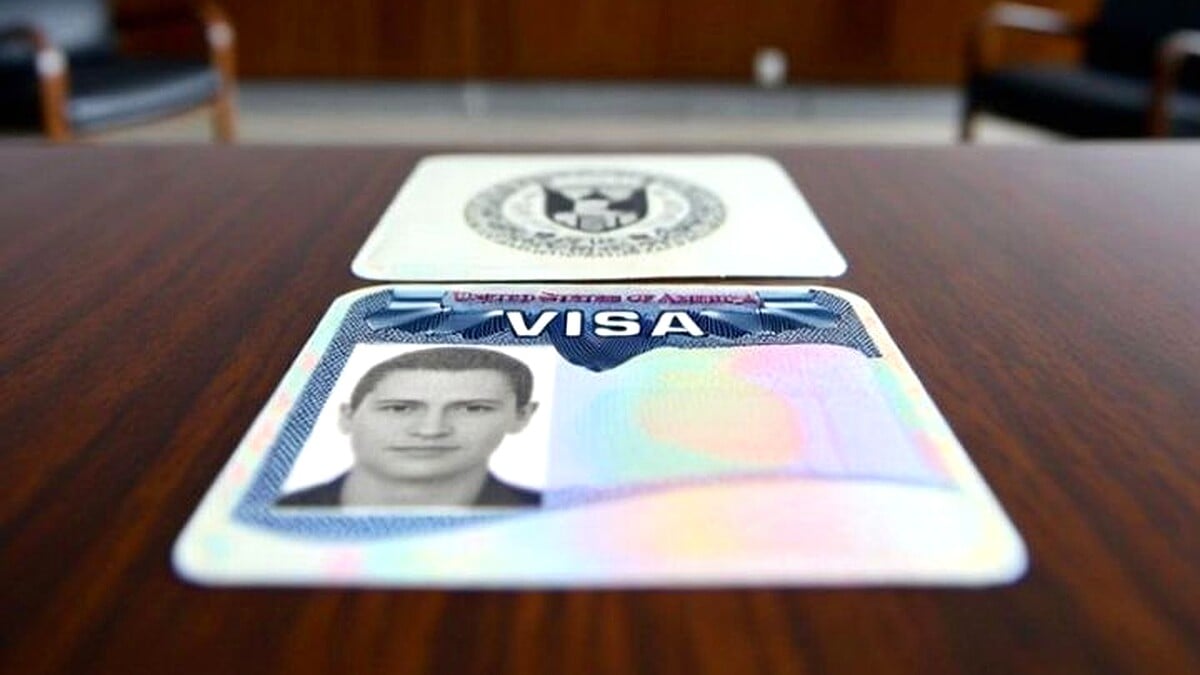




ISLAMABAD: The administration of US President Donald Trump has expanded its visa bond program to cover citizens from 50 countries, requiring them to post a $15,000 bond when applying for B1 or B2 visas for business or tourism purposes.
The State Department announced the expansion on Wednesday, adding 12 new nations to an existing list of 38 countries. The policy takes effect on April 2 and aims to deter visa overstays by making applicants financially accountable for departing the United States on time.
The newly included countries are Cambodia, Ethiopia, Georgia, Grenada, Lesotho, Mauritius, Mongolia, Mozambique, Nicaragua, Papua New Guinea, Seychelles, and Tunisia. These additions bring the total to 50 nations, many of which are in Africa or developing regions with historically higher overstay rates.
The previous 38 countries on the list largely consist of nations from Africa, along with some from Asia, the Caribbean, and elsewhere. They include Algeria, Angola, Antigua and Barbuda, Bangladesh, Benin, Bhutan, Botswana, Burundi, Cabo Verde, Central African Republic, Cote d’Ivoire, Cuba, Djibouti, Dominica, Fiji, Gabon, The Gambia, Guinea, Guinea-Bissau, Kyrgyzstan, Malawi, Mauritania, Namibia, Nepal, Nigeria, Sao Tome and Principe, Senegal, Tajikistan, Tanzania, Togo, Tonga, Turkmenistan, Tuvalu, Uganda, Vanuatu, Venezuela, Zambia, and Zimbabwe.
Under the program, applicants deemed otherwise eligible for a B1/B2 visa must post the bond, typically set at $15,000, though earlier phases allowed variations from $5,000 to $15,000 based on consular discretion. The bond is refundable if the visa holder complies with visa terms by departing before expiration or if they do not travel after approval.
State Department officials have described the measure as effective in reducing overstay numbers. Data from prior implementations of similar pilot programs indicate a measurable decline in violations among covered nationalities, supporting the administration’s claim that financial incentives promote compliance.
Since assuming office in January, President Trump has intensified immigration enforcement. This includes widespread deportations, visa and green card revocations, social media screening for applicants, and reviews of past statements or affiliations.
In June last year, the administration imposed a travel ban affecting citizens from 19 nations on national security grounds, blocking or restricting entry fully or partially. The visa bond initiative complements these efforts by targeting overstays rather than outright entry prohibitions.
The policy draws from existing immigration law provisions allowing bonds to ensure departure. It forms part of a broader strategy to address perceived deficiencies in vetting and high overstay rates from certain countries.
Critics argue the high bond amount creates barriers for legitimate travelers from lower-income nations, where $15,000 often exceeds annual incomes. Supporters counter that it encourages responsibility and protects US immigration integrity without barring entry outright for compliant applicants.
The expansion reflects ongoing priorities of the Republican-led administration to tighten controls on temporary admissions. Officials emphasize that bonds will be returned promptly upon verified compliance, minimizing long-term financial impact for those who follow rules.
As the April 2 implementation approaches, affected nationals are advised to prepare for additional documentation and costs during visa applications. The State Department continues to monitor overstay statistics and may adjust the list or bond amounts based on program outcomes.
This development underscores the persistent focus on immigration reform under the current US leadership, balancing security concerns with pathways for temporary visits.