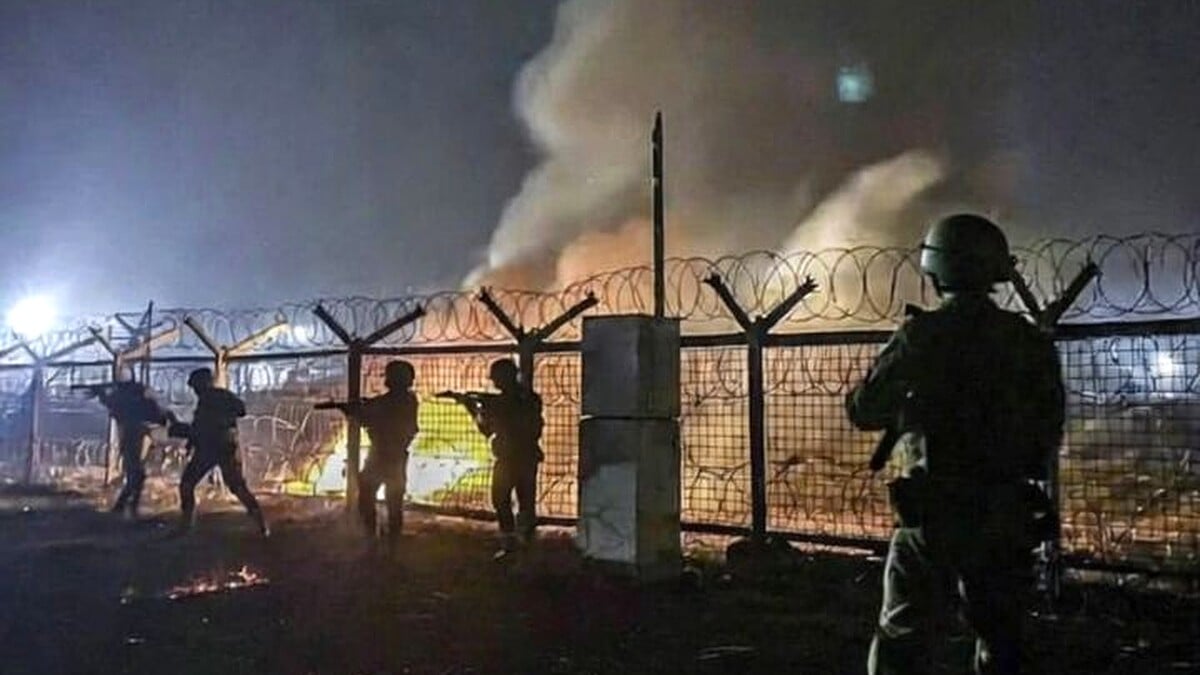




ISLAMABAD: At least five Pakistani soldiers have lost their lives and three others sustained injuries in an incident of intense cross-border firing originating from Afghanistan at the Ghulam Khan border crossing in North Waziristan district of Khyber Pakhtunkhwa province.
The attack unfolded amid ongoing tensions along the porous frontier, where heavy firing continued until late reports, prompting a robust response from Pakistani troops to neutralize the threat and secure the area.
Official sources confirmed the casualties, highlighting the severity of the unprovoked aggression from across the border. Security forces immediately engaged the attackers, ensuring the defense of strategic positions near the crossing point.
This latest incident occurs against the backdrop of escalated hostilities between Pakistan and the Afghan Taliban administration since early 2026. Repeated cross-border incidents have included artillery exchanges, mortar attacks, and militant infiltrations, often linked to sanctuaries in Afghan provinces such as Khost, Paktika, and Nangarhar.
Pakistan has consistently accused the Taliban government of harboring Tehreek-i-Taliban Pakistan militants, enabling attacks on Pakistani soil. In response, Islamabad launched Operation Ghazab lil-Haq in late February 2026, a comprehensive military campaign involving airstrikes and ground operations targeting terrorist hideouts and infrastructure inside Afghanistan.
Reports indicate that the operation has resulted in significant losses for hostile elements, with hundreds of militants neutralized and numerous border posts destroyed across multiple Afghan provinces. Pakistani military statements emphasize that such actions remain defensive and aimed at eliminating threats to national security.
The Ghulam Khan sector has emerged as a frequent flashpoint in these confrontations. Located in North Waziristan, the area connects to Khost province in Afghanistan and serves as a key transit point, making it vulnerable to militant activities and retaliatory fire.
Earlier episodes in the same region saw mortar shells impacting civilian areas near the border, causing tragic losses including children in nearby villages. Such events underscore the broader humanitarian impact of the conflict on border communities caught in the crossfire.
Pakistani authorities maintain that forces exercise maximum restraint but respond decisively when fired upon. The ongoing exchange at Ghulam Khan reflects this policy, with troops repelling attempts to target military positions.
The escalation traces back to February 2026 airstrikes by Pakistan in response to militant activities, followed by Afghan Taliban retaliatory operations. Defense officials in Islamabad described the situation as approaching open war, prompting intensified operations to dismantle terrorist networks.
International observers have noted the risks of wider instability in the region, with calls for de-escalation amid concerns over civilian suffering and potential spillover effects. United Nations reports have documented substantial civilian casualties from indirect fire and strikes during similar clashes.
Pakistan’s military leadership has reiterated its commitment to border security while urging the Afghan side to prevent the use of its territory for attacks. Diplomatic channels remain engaged, though progress has been limited amid mutual accusations.
The latest casualties add to the toll on Pakistani security personnel defending the frontier. Families of the martyred soldiers await repatriation of bodies, while the injured receive treatment at military facilities.
This incident reinforces the urgent need for coordinated efforts to address root causes, including militant safe havens. Until effective measures curb cross-border terrorism, such tragic losses are likely to persist along the Durand Line.
Security analysts point to the strategic importance of North Waziristan in counter-terrorism efforts. Operations in the district have historically targeted militant strongholds, but persistent threats from adjacent Afghan areas continue to challenge stability.
As firing subsided in the Ghulam Khan sector, forces maintained high alert. Surveillance and patrolling intensified to prevent further incursions, ensuring the protection of both military assets and civilian populations in the vicinity.
The government is expected to issue a formal statement condemning the attack and outlining steps to safeguard sovereignty. Public sentiment in Pakistan remains strongly supportive of the armed forces amid these challenges.