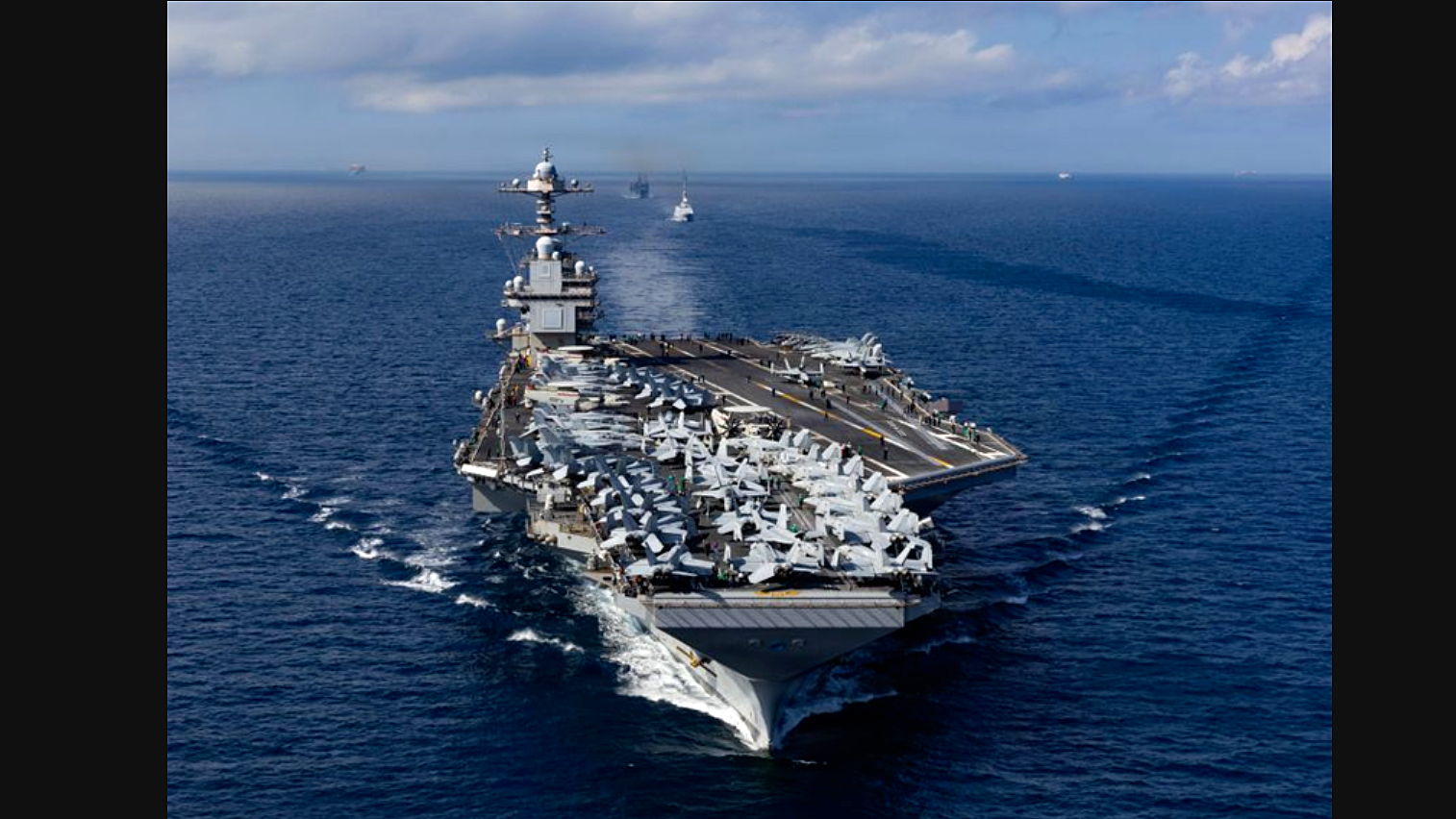




A major fire broke out last week aboard the USS Gerald R. Ford, the US Navy’s most advanced nuclear-powered aircraft carrier, taking over 30 hours to extinguish and severely disrupting living conditions for hundreds of sailors amid an already prolonged deployment in the Red Sea.
ISLAMABAD: A devastating fire erupted in the main laundry facility of the USS Gerald R. Ford (CVN-78) on March 12, forcing the crew to battle the blaze for more than 30 hours before gaining full control.
The incident occurred while the carrier was operating in the Red Sea as part of Operation Epic Fury, supporting ongoing US military efforts in the region amid heightened tensions with Iran.
Official statements from US Central Command and US Naval Forces Central Command described the fire as non-combat related, with no damage to the ship’s propulsion systems, ensuring the vessel remained fully operational for its missions.
Two sailors initially received treatment for non-life-threatening injuries and were reported in stable condition, though later reports indicated a third sailor was medically evacuated for further care.
Sailors and military officials revealed that the prolonged firefighting effort led to significant smoke inhalation among dozens of crew members, causing respiratory difficulties and adding to the physical strain on board.
More than 600 berthing spaces—sleeping quarters for sailors—were destroyed or rendered unusable due to fire damage and water used in suppression efforts.
As a direct consequence, affected personnel have been compelled to sleep on floors, tables, and other makeshift areas across the ship, highlighting the immediate impact on morale and rest during active operations.
The laundry facility itself has been rendered inoperable, leaving the crew without access to onboard washing services for several days and compounding daily hardships in an already demanding environment.
The USS Gerald R. Ford, commissioned as the lead ship of its class and the world’s largest aircraft carrier, has been on deployment since June 24, 2025.
This extended mission, originally planned differently, has now stretched toward an unprecedented 11 months, potentially concluding in May 2026, according to statements from Vice Chief of Naval Operations Adm. Jim Kilby.
Typical US Navy carrier deployments last around seven months to balance operational tempo with crew welfare and maintenance needs, but extensions occur during periods of elevated strategic demand.
The current deployment has already surpassed 250 days at sea by early March, placing it among the longest in recent decades and approaching historical records from earlier eras.
Retired US Navy Rear Admiral John Kirby noted that sustained high-intensity operations over such durations inevitably affect both equipment reliability and crew performance, increasing risks of fatigue-related incidents.
Experts point out that prolonged deployments strain human endurance, with limited rest, confined spaces, and constant readiness requirements amplifying vulnerabilities to mishaps like fires.
The fire follows previous technical challenges on the Ford-class carriers, though officials stressed this incident stemmed from an internal cause rather than design flaws.
Despite the setbacks, the carrier strike group continues its role in regional security operations, launching aircraft and maintaining presence in a volatile theater.
The US Navy has maintained a measured public response, focusing on the containment of the fire and the ship’s continued mission capability without elaborating on root causes or long-term repairs.
Analysts suggest the episode underscores broader pressures on naval resources amid multiple global commitments, where carrier availability is stretched thin.
Crew resilience has been commended in official Navy communications, with emphasis on maintaining readiness despite adversity.
The incident has drawn attention to the human cost of extended deployments, particularly in contested waters where operational demands show no sign of easing.
As investigations continue into the fire’s origin—likely electrical or material-related—the focus remains on supporting the affected sailors and restoring normalcy aboard one of America’s premier warships.
USS Gerald R. Ford Fire Highlights Strain of Extended Deployment