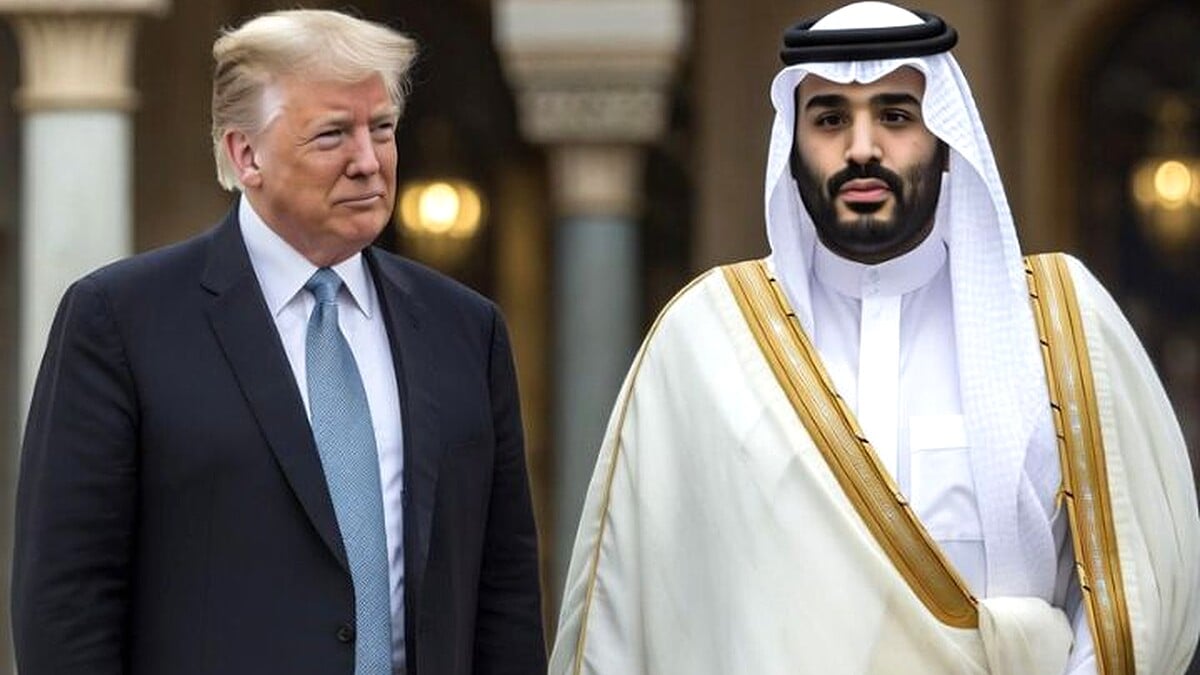




ISLAMABAD: Saudi Arabia has firmly dismissed a report by The New York Times alleging that Crown Prince Mohammed bin Salman encouraged US President Donald Trump to pursue a prolonged military campaign against Iran.
A Saudi source described the claims as entirely false, according to Al Arabiya on Monday.
The New York Times published its report a day earlier, citing unnamed officials who said the Crown Prince advised Trump to “keep hitting the Iranians hard” during frequent communications between the leaders.
This advice reportedly echoed earlier positions from the late Saudi King Abdullah, who once urged cutting off “the head of the snake” in reference to Iran.
The denial comes as the US-Israel conflict with Iran enters a critical phase, with ongoing airstrikes causing significant casualties and disrupting regional stability.
Iranian Foreign Minister Abbas Araghchi responded sharply to the emerging reports, demanding immediate clarification from neighbouring states.
In a post on X, Araghchi highlighted the heavy civilian toll from what he termed Israel-US bombings, claiming hundreds of Iranian civilians killed, including over 200 children.
He accused certain neighbouring countries hosting US forces and permitting attacks of actively encouraging the violence, calling such stances unacceptable without prompt explanation.
The Iranian minister’s statement reflects Tehran’s growing frustration over perceived regional complicity in the conflict.
Reports indicate that more than 1,000 civilians have died in US-Israeli strikes on Iran since late February, with specific incidents drawing international condemnation.
A particularly tragic event involved the bombing of a girls’ primary school in Minab, southern Iran, where at least 150 people, many children, perished.
UNESCO condemned the strike as a grave violation of international humanitarian law, emphasising the protection afforded to educational institutions.
Preliminary inquiries suggest US forces may bear responsibility for the school strike, possibly due to a targeting error near a naval base.
Iranian officials have reported over 200 children among the dead across various strikes, underscoring the humanitarian crisis.
The conflict has also seen Iran restrict maritime traffic through the Strait of Hormuz, heightening global energy concerns.
Oil prices have fluctuated amid fears of prolonged disruption, affecting economies worldwide.
Saudi Arabia’s rejection aligns with its stated preference for diplomatic solutions and avoidance of escalation.
The kingdom has historically viewed Iran as a regional rival but pursued de-escalation in recent years through mediated talks.
Crown Prince Mohammed bin Salman has engaged regularly with Trump, yet Riyadh insists its focus remains on regional stability rather than prolonging conflict.
Multiple Saudi outlets, including Arab News and Saudi Gazette, echoed the denial, reaffirming efforts to prevent broader confrontation.
The New York Times report highlighted Trump’s consultations with Arab leaders amid the war, but unnamed sources provided the core allegations.
No official Saudi comment has directly addressed the frequency of calls, though the kingdom prioritises dialogue over military expansion.
Iran continues to warn against allowing its territory or airspace for attacks, threatening retaliation.
Araghchi’s call for clarity targets states hosting US military assets, amid accusations of enabling aggression.
The episode illustrates deepening tensions in the Middle East, where proxy dynamics and direct confrontations risk wider involvement.
Civilian suffering remains central, with international bodies urging restraint and accountability.
As strikes persist, the international community watches closely for signs of de-escalation or further intensification.
Saudi Arabia’s swift rebuttal seeks to counter narratives that could complicate its diplomatic balancing act.
The kingdom maintains it supports peaceful resolutions to US-Iran disputes through negotiation.
This position contrasts with reports suggesting hawkish private counsel, now officially refuted.
The controversy underscores the challenges of information warfare in active conflicts.
Reliable sourcing and verification grow increasingly vital amid competing claims.
Regional actors face pressure to define their roles clearly as the war evolves.