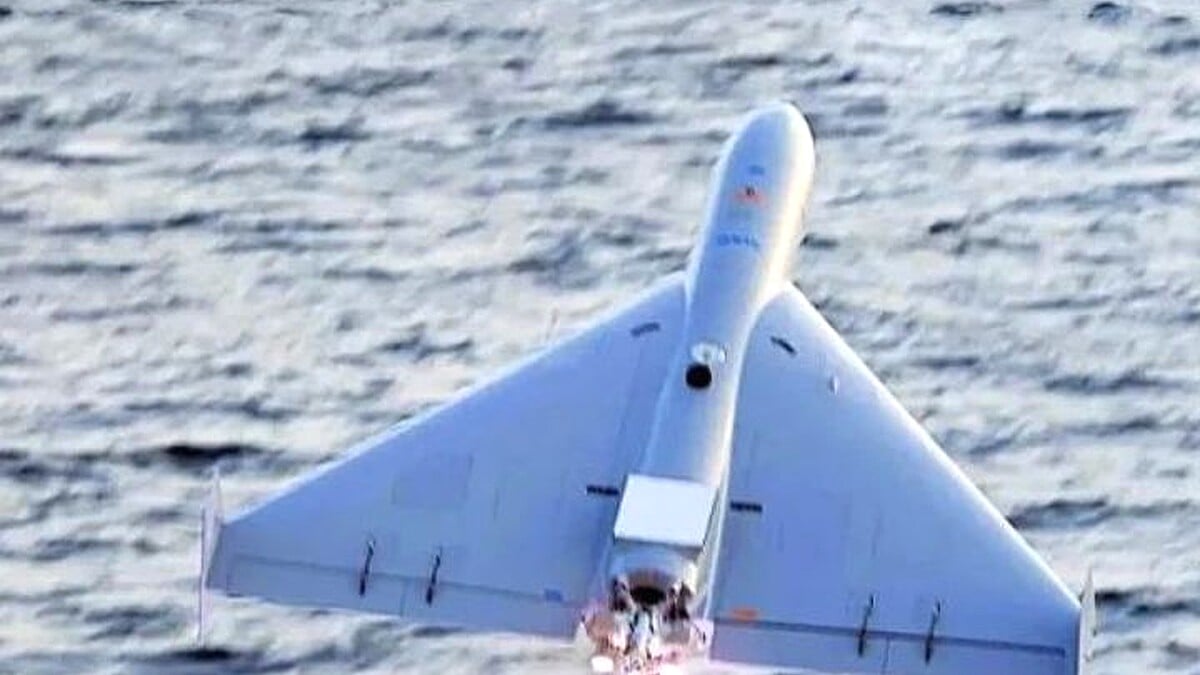




ISLAMABAD: Iran’s Khatam al-Anbiya Central Headquarters has alleged the United States and Israel of orchestrating false-flag operations by deploying the Lucas drone, a purported copy of Iran’s Shahed-136 design, to strike regional targets and blame Tehran.
The accusation emerged in an official statement from the headquarters spokesman, broadcast through Iranian state media including Press TV and IRIB on March 15, 2026. The command described the tactic as a desperate measure following military setbacks and failures to build international coalitions against Iran.
According to the statement, the Lucas drone represents a rebranded and modified version of the Shahed-136, Iran’s low-cost kamikaze drone widely known for its use in asymmetric warfare. Iranian officials alleged that Washington and Tel Aviv have reverse-engineered captured Shahed units to produce these copies, enabling attacks disguised as Iranian operations.
The spokesman highlighted the attack on Saudi Arabia and incidents in neighbouring countries, including Türkiye, Kuwait and Iraq, where civilian infrastructure faced suspicious drone strikes. Western and hostile media outlets quickly attributed these to Iranian forces, the statement claimed, aiming to isolate Tehran diplomatically and provoke tensions with friendly nations.
Iran’s military command emphasized that its forces target only US and Israeli interests, bases and facilities, and openly acknowledge such actions when carried out. The headquarters warned regional states against falling for what it termed deceptive propaganda designed to damage bilateral relations.
This development unfolds amid heightened tensions in West Asia, where ongoing conflicts involve direct US and Israeli military actions against Iranian assets. Reports indicate the Lucas drone, officially termed the Low-cost Uncrewed Combat Attack System, entered combat use recently, modeled explicitly on the Shahed platform after American engineers analyzed downed Iranian drones.
US Central Command has publicly described the Lucas as a cost-effective one-way attack drone, integrating advanced guidance, navigation and real-time targeting capabilities superior to the original Shahed design. Deployments reportedly supported broader strikes on Iranian military infrastructure, including command centres, air defences and production sites.
Iranian officials countered that such admissions confirm the enemy’s capability to replicate and redeploy Iranian technology against regional civilian sites. The statement accused the US and Israel of seeking to frame Iran for unjustified aggression, thereby justifying further escalation.
Analysts note the Shahed-136’s proliferation in conflicts, from Ukraine to Middle Eastern theatres, has prompted multiple nations to develop countermeasures and similar systems. Iran’s accusation frames the Lucas not as innovation but as theft and weaponization of Tehran’s designs for propaganda purposes.
The headquarters reiterated Tehran’s commitment to defending its sovereignty while avoiding actions that harm innocent parties or regional stability. It called on neighbouring governments to investigate attack origins independently rather than rely on biased narratives.
This latest claim adds to a pattern of mutual accusations in the escalating confrontation. Iranian foreign policy channels have previously raised similar concerns about staged incidents in Azerbaijan and elsewhere, allegedly involving Israeli drone operations misattributed to Tehran.
Observers suggest the allegation serves dual purposes: denying involvement in disputed strikes while highlighting perceived hypocrisy in Western criticism of Iran’s drone exports. The Lucas deployment underscores the rapid evolution of drone warfare, where reverse-engineering blurs lines between originator and imitator.
As regional powers navigate the crisis, the focus remains on preventing miscalculations that could widen the conflict. Iran’s statement concluded with a warning that continued false-flag efforts would face appropriate responses, though specifics remained unelaborated.
The international community watches closely, with calls for de-escalation amid fears that drone-related deceptions could undermine trust and prolong instability across the Middle East.