



ISLAMABAD: US President Donald Trump has issued a stark warning that American forces possess the capability to dismantle Iran’s entire electric capacity within one hour, though he emphasised that Washington has refrained from such action so far.
Trump made the remarks while addressing reporters at Joint Base Andrews in Maryland, following domestic travel, amid the ongoing US-Israel military campaign against Iran that began in late February 2026.
The US president stated that destroying Iran’s power grid would render reconstruction nearly impossible for decades, estimating a timeline of up to 25 years for recovery.
He highlighted that the United States has already inflicted severe damage on Iranian military assets, including the near-elimination of Tehran’s navy and air force through repeated airstrikes under Operation Epic Fury.
Trump reiterated his preference to avoid targeting civilian infrastructure like electricity production sites, describing it as a step that would make rebuilding the country extremely difficult.
The comment came against the backdrop of escalating tensions, with US and Israeli strikes having targeted over thousands of Iranian sites, significantly weakening Tehran’s conventional military capabilities.
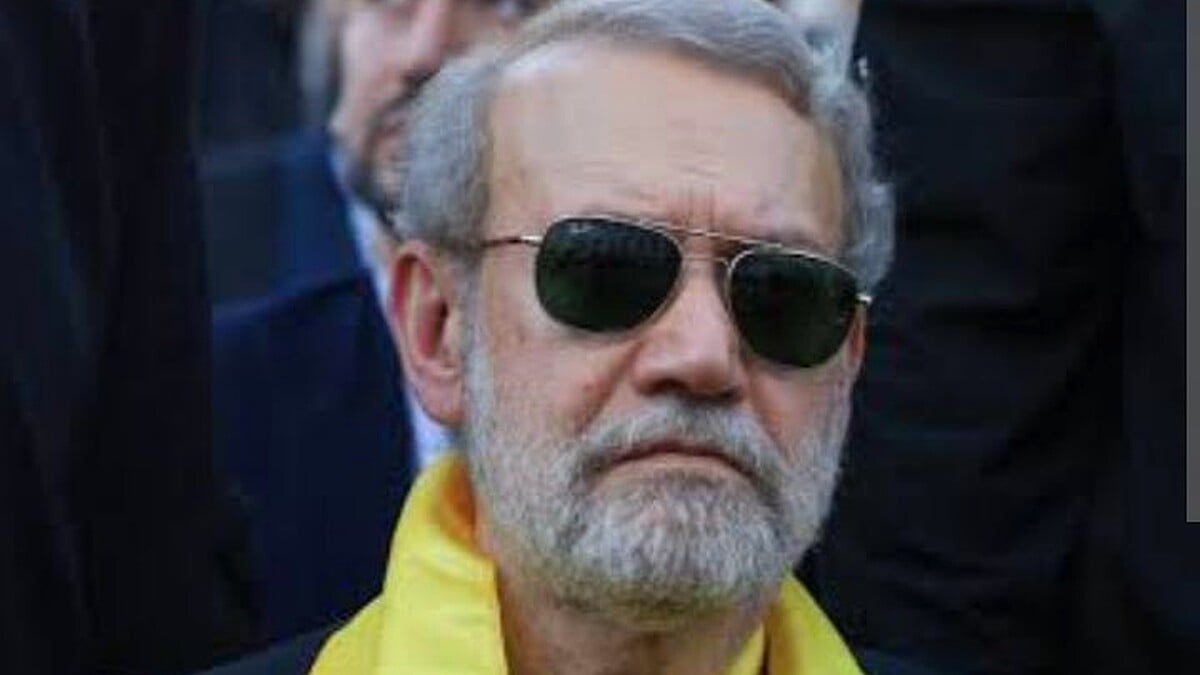
In response, Iran’s Supreme National Security Council Secretary Ali Larijani issued a pointed rebuttal on social media platform X.
Larijani quoted Trump’s statement directly and countered that any attempt to cripple Iran’s electricity network would plunge the entire region into darkness in less than half an hour.
He argued that widespread blackout conditions would create chaos, providing ample opportunities for forces to target fleeing US servicemen seeking safety.
This exchange underscores the high-stakes rhetoric dominating the conflict, now in its second week, as both sides signal readiness for further escalation.
Iran’s power grid has long been identified as a potential vulnerability in strategic assessments, with experts noting its reliance on centralised generation and transmission systems susceptible to precision strikes.
US military doctrine has historically included options for disrupting adversary infrastructure through cyber means, electromagnetic pulses, or conventional munitions, though such actions raise humanitarian and international law concerns.
The grid’s interconnected nature means localised strikes could cascade into nationwide failures, affecting hospitals, water supplies, and communication networks essential for civilian life.
Trump’s assertion aligns with reported US capabilities demonstrated in past operations, where advanced weaponry has rapidly neutralised key targets.
However, analysts point out that Iran’s asymmetric warfare strategy emphasises retaliation through proxies, missiles, and disruptions in global energy routes like the Strait of Hormuz.
Larijani’s warning reflects Tehran’s view that regional interdependence in energy and security could turn any grid attack into a boomerang effect.
Blackouts across borders remain a plausible scenario, given shared electrical interconnections and reliance on Gulf stability for power exports in neighbouring states.
The conflict has already driven global oil prices sharply higher, with Brent crude spiking amid threats to shipping lanes.
Trump has indicated plans to release stocks from the US Strategic Petroleum Reserve to mitigate domestic fuel price surges caused by the war.
Iranian officials, including newly appointed Supreme Leader Mojtaba Khamenei, have maintained a hardline posture, vowing to keep the Strait of Hormuz closed as leverage against adversaries.
This stance has intensified fears of broader economic fallout, including supply chain disruptions and inflationary pressures worldwide.
Military observers note that while the US holds overwhelming technological superiority in conventional strikes, Iran’s retaliatory options extend to irregular tactics that exploit darkness and disorder.
The prospect of a grid takedown thus carries risks of unintended escalation, potentially drawing in regional actors and complicating de-escalation efforts.
Trump’s comments appear aimed at deterrence, signalling to Tehran the high cost of further provocations, such as attempts to block global oil flows.
Yet Larijani’s response highlights the mutual vulnerabilities that characterise modern hybrid warfare in the Middle East.
As the war enters a critical phase, both sides continue to trade threats, with infrastructure emerging as a focal point of strategic messaging.
The international community watches closely, concerned that escalation beyond military targets could trigger humanitarian crises and prolonged regional instability.