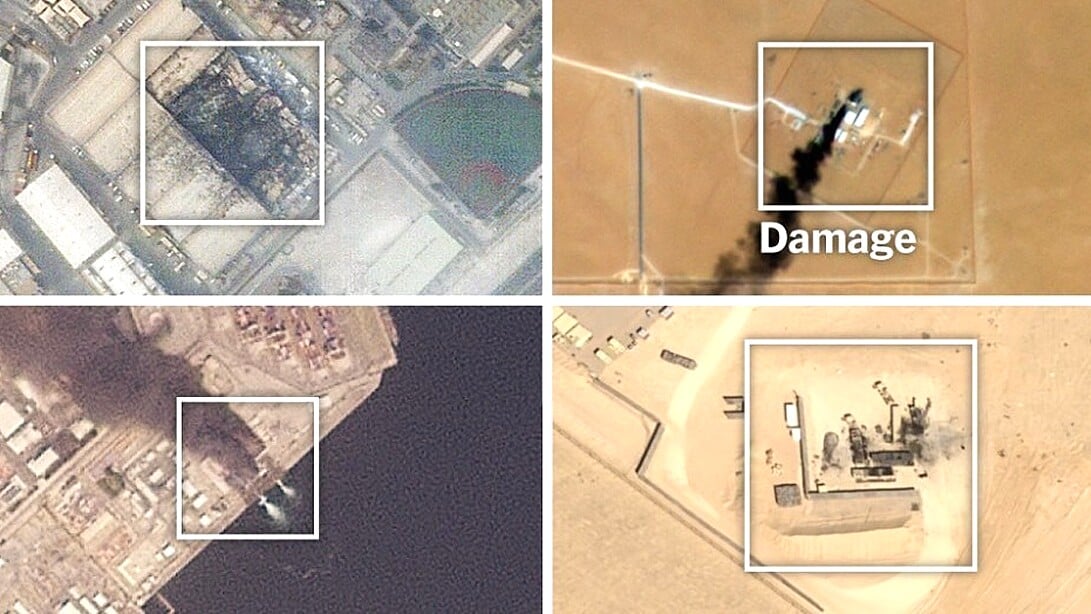




ISLAMABAD: At least 17 American military and diplomatic sites across the Middle East have sustained damage from Iranian retaliatory strikes since the outbreak of war between the United States, Israel, and Iran, according to a detailed analysis by The New York Times.
The New York Times report, drawing on high-resolution commercial satellite imagery, verified social media videos, and statements from US officials and Iranian state media, highlights the scale of destruction inflicted on US installations.
Iran launched thousands of missiles and drones targeting American assets in response to US-Israeli assaults that began in late February 2026, hitting embassies, killing US soldiers, and damaging military bases along with air defense infrastructure.
The analysis identifies damage at nearly half of all US military sites in the region, with at least 11 bases or installations affected, several struck multiple times since hostilities commenced.
US military officials acknowledged that the intensity of Iran’s counterattacks signals greater preparedness than anticipated by many in the Trump administration prior to the conflict’s escalation.
Satellite images reveal severe structural damage, including destroyed satellite communication terminals, radomes protecting radar equipment, and facilities near missile-tracking systems.
Key locations hit include the US Navy’s Fifth Fleet headquarters in Manama, Bahrain, where ballistic missiles and drones destroyed structures and communication gear.
In Qatar, Al Udeid Air Base, the largest US facility in the Middle East, suffered hits to tents housing satellite dishes and other vital equipment.
Kuwait’s Camp Arifjan and Ali Al Salem Air Base reported casualties and infrastructure losses, with one early strike killing US service members and wounding others.
Prince Sultan Air Base in Saudi Arabia and installations in the United Arab Emirates also showed visible damage from missile impacts and drone strikes.
The strikes targeted communication and radar systems critical for tracking incoming threats and coordinating operations across the Gulf.
Iran’s focus on these assets appears aimed at disrupting US military command, control, and coordination capabilities in the theater.
Despite US and allied defenses intercepting most projectiles, the surviving strikes demonstrated Iran’s ability to penetrate layered air defenses with barrages of low-cost drones and ballistic missiles.
Casualties among US forces have mounted, with reports of service members killed in Kuwait and injuries across multiple sites, adding pressure on the ongoing campaign.
The Trump administration has emphasized rapid degradation of Iranian missile and drone production, yet Iran’s retaliatory waves continue, albeit at reduced scale due to prior US-Israeli strikes on launch facilities.
Experts note that Iran’s use of Shahed drones and other inexpensive weaponry has strained US defensive resources in unprecedented ways.
Oil prices have surged amid threats to the Strait of Hormuz, where shipping disruptions and mine-laying attempts further complicate the regional security landscape.
The war, now in its second week, shows no immediate signs of de-escalation, with both sides committing to intensified operations.
US Defense officials describe the campaign as achieving key objectives, including significant setbacks to Iran’s ballistic capabilities.
However, the sustained Iranian responses underscore Tehran’s resilience and willingness to absorb punishment while inflicting costs on American positions.
Satellite evidence continues to emerge, providing rare visual confirmation of battlefield impacts in a conflict marked by heavy reliance on standoff weapons.
The damage assessment raises questions about long-term repair timelines for affected sites, many housing classified systems difficult to replace swiftly.
As the conflict evolves, the effectiveness of Iran’s asymmetric tactics against superior conventional forces remains a focal point for military analysts.
The New York Times interactive mapping of strikes illustrates the geographic spread, from Gulf Arab states to broader regional targets.
This data-driven scrutiny highlights vulnerabilities in forward-deployed US forces amid escalating great-power confrontations in the Middle East.
The full implications for regional stability and global energy markets continue to unfold as hostilities persist.