



Escalating Gulf tensions expose risks for India-bound shipping routes through Hormuz
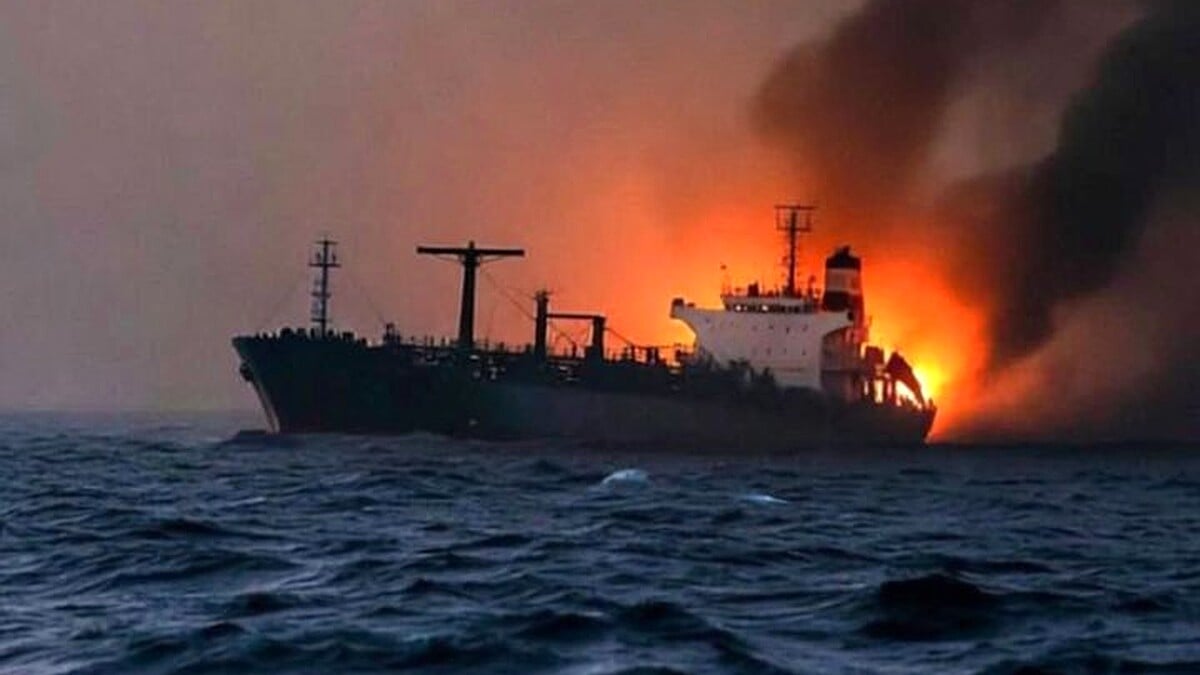
ISLAMABAD: A cargo vessel sailing toward India’s western coast of Gujrat was struck by a projectile from Iran in the strategically vital Strait of Hormuz, raising serious questions about the security of commercial shipping routes connected to India amid rapidly escalating regional tensions. The vessel was reportedly on its way to in the Indian state of Gujarat when the attack triggered a fire on board, forcing emergency rescue operations and intensifying fears that India-linked maritime trade could increasingly become exposed to the widening geopolitical conflict surrounding .
Initial maritime safety reports indicated that the projectile struck the vessel while it was transiting one of the world’s busiest and most sensitive shipping corridors. According to regional monitoring agencies, the ship was carrying commercial cargo and had a multinational crew when the incident occurred. Emergency response teams from nearby Gulf states assisted in rescue efforts, with most crew members reportedly evacuated safely after the fire spread across sections of the deck.
The incident unfolded amid heightened tensions across the Gulf following military confrontations involving the United States, Israel and Iran. The strategic waterway has long been considered one of the most vulnerable chokepoints in global trade, and analysts warn that vessels linked to countries perceived as aligned with Western or Israeli strategic positions could face heightened scrutiny or risk during the current crisis.
Shipping intelligence firms monitoring the attack noted that the vessel’s declared destination — Kandla port in Gujarat — was clearly listed in maritime tracking systems prior to entering the Strait of Hormuz. Such publicly available data means that commercial ships’ routes and final ports are easily identifiable to regional actors monitoring maritime traffic in real time. Analysts say this transparency, while essential for global shipping logistics, can also expose certain vessels to political signalling during periods of conflict.
The Strait of Hormuz carries roughly 20 percent of the world’s daily oil shipments and remains the single most important artery for energy exports from the Gulf to global markets. On average, nearly 20 million barrels of crude oil and petroleum products transit the narrow waterway each day, along with thousands of commercial cargo vessels transporting goods between Asia, Europe and the Middle East. Any disruption in the strait has immediate consequences for global energy markets and maritime insurance costs.
In recent weeks, tensions in the region have intensified sharply as military strikes and retaliatory threats have spread across several Middle Eastern theatres. Iranian officials have repeatedly warned that the security of shipping lanes could deteriorate if hostilities expand, particularly if foreign military operations threaten Iranian territory or infrastructure. Maritime security experts say such warnings have historically been accompanied by increased monitoring of vessels linked to countries perceived as adversarial.
India, which relies heavily on Gulf energy imports, is among the largest users of the Strait of Hormuz shipping route. Nearly 60 percent of India’s crude oil imports originate from Middle Eastern producers, with a substantial share transported through Hormuz before reaching refineries along India’s western coast. Ports such as Kandla, Mumbai and Jamnagar serve as critical entry points for these supplies, making uninterrupted passage through the strait a strategic necessity for New Delhi.
However, the attack on the Mayuree Naree has intensified scrutiny over India’s maritime vulnerability in the region. Although the ship was not Indian-flagged, its India-bound destination underscores how commercial shipping linked to India could become exposed during periods of geopolitical confrontation. Analysts note that vessels do not need to carry an Indian flag to be associated with Indian trade flows, as shipping routes, cargo documentation and port destinations are often publicly accessible.
Security experts say that the incident highlights the complex risks facing international shipping in politically charged waters. Maritime tracking technology, satellite surveillance and open shipping databases mean that commercial vessels’ routes can be monitored by both state and non-state actors across the region. In volatile situations, ships heading toward particular destinations can become symbols of broader geopolitical alignments rather than merely commercial carriers.
India has in recent years expanded the operational reach of the in the Arabian Sea and the wider Indian Ocean region, particularly after previous attacks on merchant vessels linked to Indian trade. Naval deployments have occasionally been used to escort vulnerable ships or monitor sea lanes during periods of heightened tension. However, the vast scale of maritime traffic moving through Hormuz makes comprehensive protection extremely difficult.
Insurance markets have also reacted cautiously to the latest developments. Maritime insurers typically raise war-risk premiums whenever attacks occur near the Strait of Hormuz, which increases the operational costs for shipping companies transporting goods across the region. Any sustained pattern of attacks could therefore translate into higher freight costs for energy importers, including India, whose economy remains deeply dependent on uninterrupted maritime supply chains.
Strategists say the incident may also carry wider implications for regional diplomacy. If vessels connected to major Asian economies begin facing security threats in the Gulf, pressure could grow on those countries to adopt clearer political or security positions regarding the evolving confrontation in the Middle East. For countries attempting to balance relations between rival powers, the safety of maritime trade routes could become an increasingly complex strategic challenge.
For now, investigators continue examining the exact nature of the projectile that struck the Mayuree Naree, while shipping operators remain on high alert across the Strait of Hormuz. Yet the attack has already served as a stark reminder that in times of geopolitical escalation, commercial vessels heading toward key economic partners may find themselves navigating not only narrow waterways but also the fault lines of global power politics.