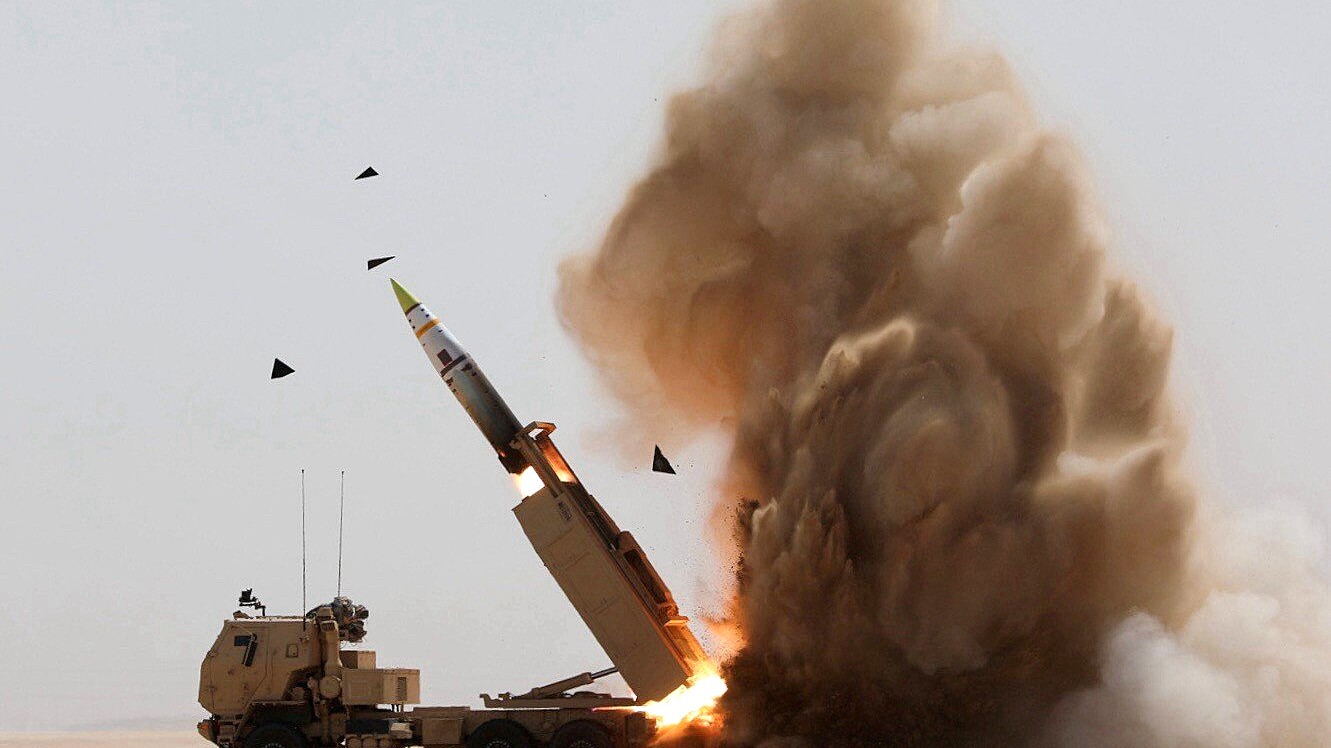




ISLAMABAD: The United States Central Command (CENTCOM) has publicly released video footage depicting missile launches from desert locations in Gulf states, directly aimed at Iranian targets, amid the ongoing Operation Epic Fury.
The unclassified material, shared on official channels, shows ground-based systems firing long-range precision missiles from arid terrains characteristic of regions in Kuwait, Saudi Arabia, and other Gulf Cooperation Council countries.
Analysts interpret the deliberate disclosure as a strategic move by Washington to highlight operational capabilities while placing pressure on regional dynamics.
Gulf states have consistently denied direct involvement in offensive strikes against Iran, maintaining positions of neutrality or defensive support only.
Officials in Riyadh, Abu Dhabi, Doha, and Kuwait City have repeatedly stated that their territories host US forces for protection against potential threats, not for launching attacks.
Despite these assurances, the CENTCOM video visually associates missile trajectories and launch sites with Gulf desert landscapes, contradicting earlier denials.
A notable instance includes reports of an empty American HIMARS ATACMS missile canister discovered by workers in Kuwaiti desert areas, with surroundings matching elements in the released footage.
Such discoveries fuel speculation that US-operated systems, possibly from allied bases, are being used for strikes deep into Iranian territory.
The operation, now in its second week, has seen US forces claim destruction of hundreds of Iranian ballistic missile launchers, drones, and naval assets.
CENTCOM statements emphasize that Iranian mobile launchers, often concealed under bridges, trees, or urban cover, have been systematically targeted and eliminated using advanced surveillance and precision munitions.
Iran has responded with multiple barrages of ballistic missiles and drones toward US bases and allies in the Gulf, including successful and intercepted strikes on facilities in Qatar, Bahrain, Saudi Arabia, and the UAE.
Tehran describes its actions as retaliation for aggression, targeting military infrastructure hosting American personnel.
The release of footage showing launches from Gulf deserts arrives at a sensitive juncture, where Iran has already struck US communication and radar sites across the region.
Iranian missiles have hit areas near naval headquarters in Bahrain and air bases in Qatar, prompting heightened alerts and defensive interceptions by Patriot and other systems.
Experts suggest the public sharing of such visuals serves multiple purposes, including demonstrating US technological superiority and deterring further Iranian escalation.
By visually linking strikes to Gulf territories, the footage may provoke Iranian retaliation against those states, potentially drawing them deeper into active conflict.
This could lead to a cycle where Gulf nations, facing renewed attacks, respond offensively, escalating intra-Muslim tensions in the region.
Observers point to historical patterns where external powers have sought to exploit divisions among Muslim-majority countries to advance strategic interests.
The current conflict, rooted in broader US-Israel-Iran confrontations, has already caused significant degradation of Iranian missile capabilities, with reports of over 3,000 targets struck.
US officials, including CENTCOM Commander Admiral Brad Cooper, have described the campaign as achieving unprecedented success in neutralizing threats to regional allies and shipping lanes.
Iran maintains that its missile arsenal remains potent, with recent barrages demonstrating reach across the Gulf and beyond.
Civilian safety warnings issued by CENTCOM accuse Iran of launching from populated areas, risking collateral damage in cities like Dezful, Esfahan, and Shiraz.
The footage release has drawn criticism from regional commentators who argue it unnecessarily implicates Gulf states, undermining their diplomatic balancing acts.
Gulf governments face domestic pressures to avoid entanglement in what many view as a US-led campaign.
The video’s desert launch scenes, captured in thermal or standard imaging, underscore the forward deployment of US precision strike systems like long-range missiles.
This deployment aligns with CENTCOM’s emphasis on protecting partners from Iranian ballistic threats.
As the conflict intensifies, the strategic calculus involves whether such public disclosures accelerate de-escalation through demonstrated strength or risk wider regional war.
Analysts warn that provoking Iranian strikes on Gulf infrastructure could force reluctant allies into direct confrontation, fulfilling scenarios of mutual Muslim-state hostilities.
The situation remains fluid, with ongoing missile exchanges and diplomatic efforts overshadowed by military actions.
The CENTCOM video stands as a clear signal of US intent to sustain pressure on Iran while exposing operational realities in the Gulf.