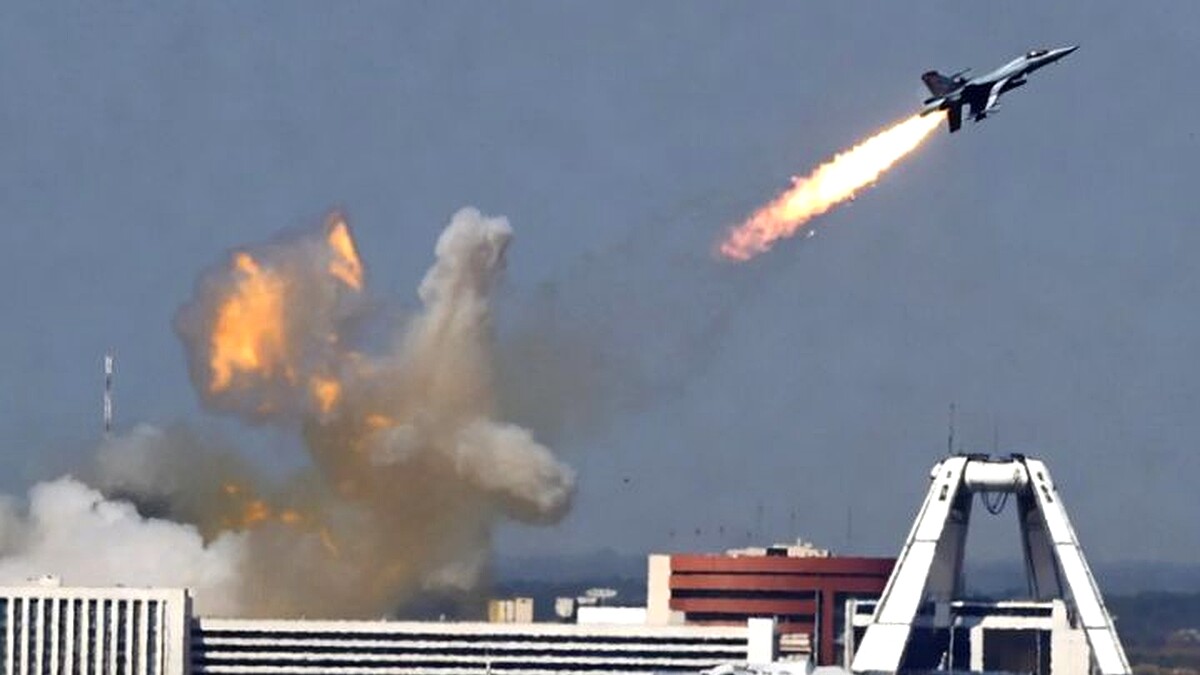




ISLAMABAD: Israeli airstrikes landed perilously close to Pakistan’s embassy in Tehran during intensified US-Israeli operations against Iran, but no damage or casualties were reported at the diplomatic mission, officials confirmed on Thursday.
The incident occurred amid a broader escalation in the ongoing conflict that began on February 28 with joint US-Israeli strikes targeting Iranian military and leadership sites in Tehran and other cities. Eyewitness accounts from Pakistani nationals in Tehran described explosions rocking areas near key government and military compounds, where the Pakistani embassy is situated in a central diplomatic zone.
Pakistan’s Press Attaché at the embassy in Tehran acknowledged the proximity of the bombings, noting that intense aerial activity targeted nearby Iranian military headquarters. Sources familiar with the situation indicated that strikes hit within a short distance of the embassy premises, raising immediate security concerns for staff and Pakistani citizens in the capital.
No injuries or structural harm affected the embassy building itself, according to initial assessments by Pakistani diplomats. The mission remained operational throughout the episode, though staff took precautionary measures as air raid sirens blared across Tehran and Iranian air defenses engaged incoming projectiles.
The close call highlighted the risks to neutral diplomatic facilities in active war zones. Pakistan, which maintains close historical and cultural ties with Iran while balancing relations with the United States and its allies, has repeatedly called for de-escalation. Foreign Office statements emphasized the need to protect civilian infrastructure and diplomatic missions under international law.
The strikes form part of a sustained campaign that has reportedly killed hundreds in Iran, including the confirmed death of Supreme Leader Ayatollah Ali Khamenei in early attacks. US President Donald Trump described the operations as necessary to neutralize threats from Iran’s nuclear program and regional proxies, projecting a prolonged effort lasting weeks.
In Tehran, explosions were heard in central districts, with smoke rising over military sites. Pakistani students and pilgrims evacuating the country recounted chaotic scenes, including missile launches and loud blasts near their residences and hostels, some as close as two kilometers from the embassy.
One medical student returning via the Taftan border crossing described witnessing missiles fired in proximity to civilian areas before seeking shelter and contacting the embassy for assistance. Lecturers from the Pakistan Embassy School in Tehran reported the initial strikes beginning around mid-morning, with Iranian defenses responding swiftly.
Pakistan facilitated the evacuation of hundreds of its nationals, including students and pilgrims, amid temporary airspace closures in Tehran. The Foreign Ministry confirmed that Pakistani airspace remained fully open and safe, allowing for smooth repatriation efforts.
The proximity of strikes to foreign embassies has drawn international attention to the potential for unintended consequences in the conflict. Analysts noted that the Pakistani embassy’s location near sensitive Iranian installations made such a near-miss plausible during precision-guided operations aimed at command centers.
Pakistan’s government condemned the broader attacks on Iran as unwarranted, with Prime Minister statements focusing on the humanitarian impact and risks to regional stability. Diplomatic channels have urged restraint to prevent further spillover.
The incident also underscored challenges for expatriate communities in conflict areas. Iran hosts around 3,000 Pakistani students, many of whom faced uncertainty as bombings disrupted daily life and forced hasty departures.
No official Iranian comment specifically addressed the near-strike on the Pakistani mission, though Tehran has projected defiance amid ongoing retaliatory missile exchanges targeting Israel and US interests in the Gulf.
Regional fallout from the conflict has included violent protests in Pakistan, where demonstrations against the US-Israeli actions led to deaths and injuries near American diplomatic compounds in Karachi. Authorities deployed security forces to contain unrest linked to the killing of Khamenei.
As the war enters its second week, military analysts observe that Israeli and US forces continue pounding targets in Tehran, with reports of damaged infrastructure including police stations and other state buildings. Iran has responded with missile barrages across the region, though many have been intercepted.
The close encounter at Pakistan’s Tehran embassy serves as a stark reminder of how rapidly expanding conflicts can endanger diplomatic presence and civilian lives far from primary battle lines. Pakistan continues monitoring the situation closely while prioritizing the safety of its personnel and nationals abroad.