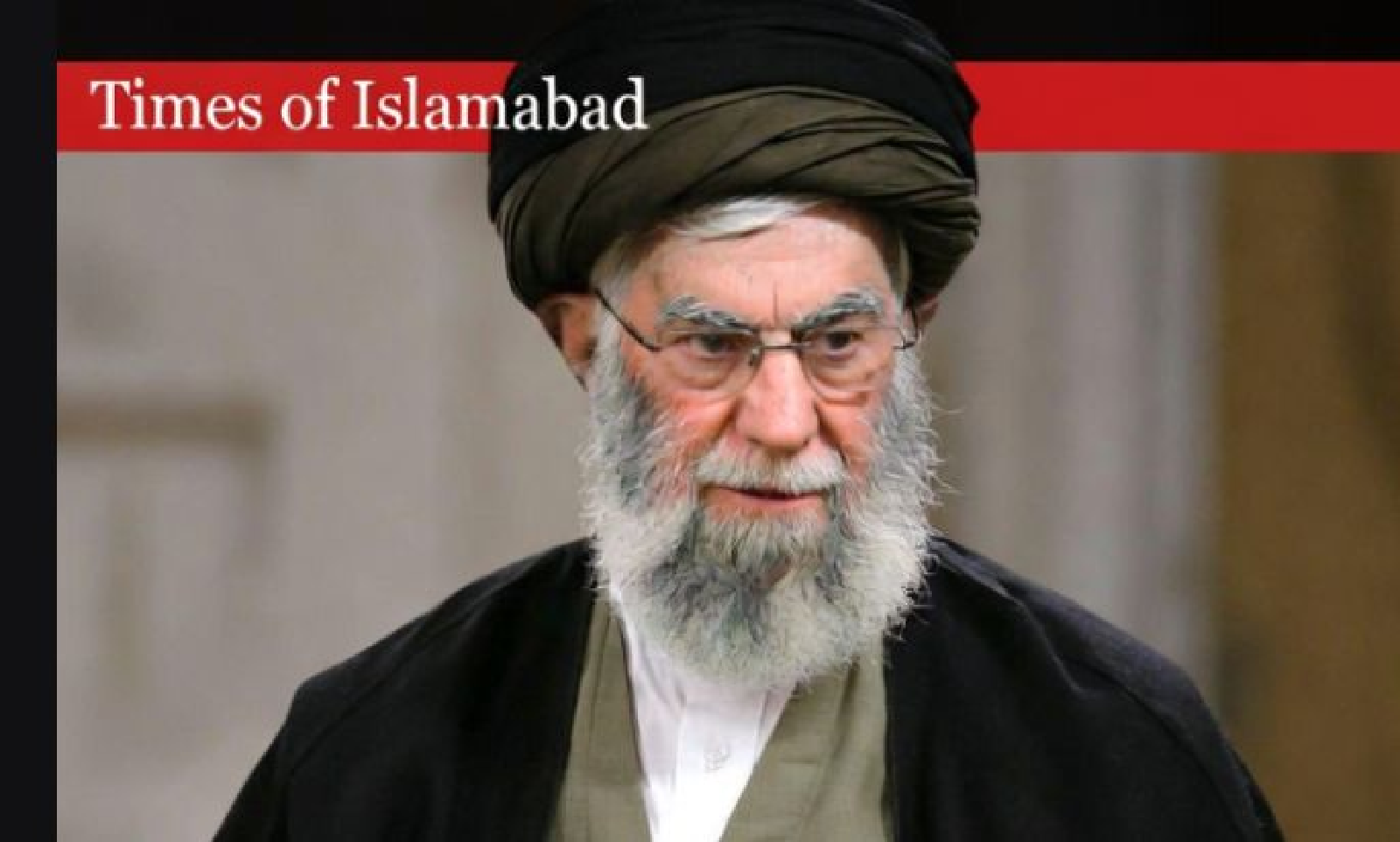




ISLAMABAD: Conflicting reports emerged on Saturday regarding the fate of Iran’s Supreme Leader Ayatollah Ali Khamenei following joint US-Israeli airstrikes on Tehran, with Israeli officials asserting he was killed while Iranian authorities vehemently denied the claims, heightening fears of a broader regional war.
The strikes, dubbed “Operation Epic Fury” by some US media outlets, targeted key Iranian sites including Khamenei’s compound in downtown Tehran, according to multiple sources familiar with the operation. Israeli Prime Minister Benjamin Netanyahu addressed the nation, stating there were “growing signs” that Khamenei was “no longer with us,” and hinted at photographic evidence of his body. This announcement came shortly after explosions rocked the Iranian capital, marking one of the most significant escalations in decades-long hostilities.
Iranian Foreign Minister Abbas Araghchi responded swiftly, affirming that Khamenei was alive “as far as I know” and condemning the attacks as “unprovoked, illegal, and illegitimate.” Tehran dismissed the Israeli assertions as “mental warfare,” insisting the supreme leader had been relocated to a secure location prior to the assault. No official confirmation of Khamenei’s status has been issued by Iranian state media, fueling speculation and uncertainty.
Israeli media, including Channel 12 and N12, cited unnamed senior officials claiming Khamenei’s body had been recovered from the rubble of his destroyed compound. Reuters reported that a high-ranking Israeli source confirmed the death, adding that an official announcement was in preparation. These reports aligned with statements from the Israeli military spokesperson, who claimed several top Iranian officials were eliminated in the strikes.
On the US side, Fox News cited an American official believing Khamenei and 5-10 other commanders were killed in the initial wave of attacks. The Associated Press echoed similar sentiments from Israeli officials briefed on the operation, noting no immediate comment from Washington or Tehran. President Donald Trump’s administration had previously warned of intervention amid Iran’s nuclear activities and regional protests.
Iran retaliated by launching missiles at Israel and US bases in Gulf countries, according to DW and Al Jazeera reports. Iranian ministry spokesman Esmail Baqaei told the BBC he could not confirm Khamenei’s health but emphasized the leadership’s resilience. This denial contrasted sharply with unverified social media footage showing celebrations in Iranian streets, with chants of “Javid Shah” echoing amid explosions.
The context of these strikes traces back to heightened tensions since June 2025, when Israel targeted Khamenei’s aides in a brief war, weakening his inner circle. Recent US considerations of assassinating Khamenei, as reported in January, included meetings with Iran’s exiled crown prince and military preparations like airspace clearances. Satellite imagery reportedly showed the compound reduced to rubble, supporting Israeli claims of a precise hit.
Analysts point to Khamenei’s age—86—and his role as Iran’s ultimate authority since 1989 as factors amplifying the impact of these rumors. If confirmed dead, his demise could trigger a power vacuum, potentially leading to internal upheaval or succession battles within the Islamic Republic. Iranian state TV has broadcast messages of defiance, portraying the attacks as failures.
Social media platforms like X buzzed with mixed reactions, from Iranian expatriates hailing the potential end of “the oppressor” to supporters decrying foreign aggression. Posts from users in Israel and the US celebrated the operation, while those in Iran shared unconfirmed reports of Khamenei’s survival. One X post from a Zimbabwe-based account referenced Netanyahu’s confirmation of the kill.
International responses varied, with the UN calling for restraint and Gulf states bracing for fallout from missile exchanges. Pakistan, monitoring from afar, expressed concerns over regional stability, given its proximity and ties with Iran. Experts warn that unverified claims could escalate misinformation, urging reliance on official statements.
NPR sources briefed on the strikes assessed Khamenei was hit, but acknowledged the lack of US or Iranian confirmation. This ambiguity persists as airstrikes continue nationwide, with reports of high-ranking casualties on both sides. Iran’s missile response targeted at least seven countries, including those hosting US forces.
Historical parallels draw from past assassinations, like that of General Qasem Soleimani in 2020, which intensified US-Iran enmity. Khamenei’s potential death would mark a pivotal shift, given his oversight of Iran’s nuclear program and proxy militias.
As night falls over Tehran, the world watches for definitive proof. Israeli outlets like the Sydney Morning Herald reiterated claims of body recovery, while Times of India highlighted the conflicting narratives. Until Khamenei appears publicly, doubts will linger.
Regional powers, including Saudi Arabia, have remained silent, but intelligence sharing with Israel suggests coordinated efforts. The strikes’ scale—described as the most ambitious in decades—underscores a strategic aim to dismantle Iran’s leadership.
In Pakistan, officials urged de-escalation, citing potential refugee flows and economic disruptions from oil price spikes. Global markets reacted nervously, with crude oil surging amid fears of supply interruptions.
The coming hours may clarify Khamenei’s status, but the damage from this confrontation is already profound, reshaping Middle Eastern geopolitics.