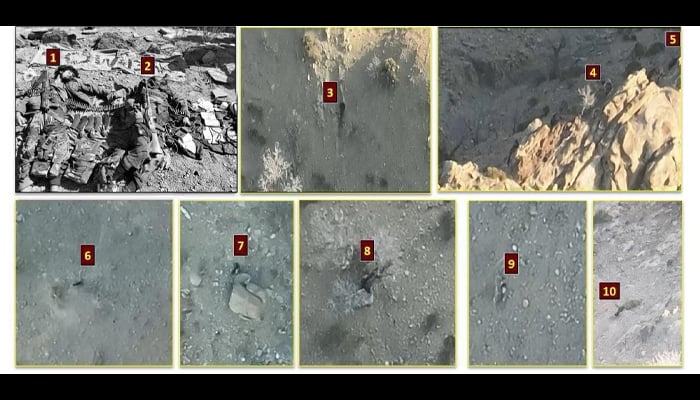




ISLAMABAD: Security forces conducted successful operations in Balochistan’s Zhob district, eliminating 18 Indian-sponsored khwarij in two separate actions on February 24 and 25, according to the Inter-Services Public Relations (ISPR).
The operations form part of Pakistan’s ongoing counter-terrorism campaign under the Azm-e-Istehkam vision, targeting externally backed elements disrupting peace in the region.
On February 24, security forces launched an intelligence-based operation (IBO) in Zhob district, acting on precise information about terrorist hideouts.
During the engagement, troops effectively neutralized eight Indian-sponsored khwarij, described by the military as proxies supported from across the border.
The action disrupted potential terrorist activities planned in the area, preventing threats to civilian and military targets.
Weapons, ammunition and other materials were recovered from the site, highlighting the armed nature of the group.
The following day, on February 25, forces initiated a comprehensive sanitization and clearance operation in the same district.
This follow-up aimed to hunt down remaining hiding elements of the Indian proxy group Fitna al Khwarij.
Troops tracked militant movements across multiple routes, leading to intense firefights with concealed positions.
In the ensuing exchanges, security personnel successfully eliminated ten more Indian-sponsored khwarij.
The military emphasized the precision and boldness displayed by the troops in engaging these targets.
A substantial cache of arms, ammunition and explosives was recovered from the neutralized individuals.
ISPR stated that the slain khwarij had been actively involved in multiple terrorist incidents across the region.
Their elimination weakens the network of externally sponsored militancy in Balochistan.
Zhob district, located near the Pakistan-Afghanistan border, has seen persistent security challenges due to cross-border infiltration attempts.
Such operations underscore the military’s resolve to dismantle hideouts and prevent terrorist regrouping.
The broader context includes repeated claims by Pakistani authorities of foreign sponsorship, particularly from India, fueling proxy terrorism.
Officials assert that these elements aim to destabilize Pakistan through sponsored violence and sabotage.
Recent months have witnessed intensified counter-terror efforts in Balochistan and Khyber Pakhtunkhwa.
Similar actions have resulted in significant militant casualties, with recoveries of sophisticated weaponry.
The Azm-e-Istehkam initiative focuses on comprehensive measures against terrorism, combining kinetic operations with socio-economic development.
Security forces remain committed to eradicating all forms of externally backed militancy.
Operations continue in the area to ensure no remnants pose future threats.
The military reaffirmed its determination to protect national sovereignty and civilian lives from such elements.
Public confidence in these efforts grows as successful outcomes are reported regularly.
Zhob’s strategic location demands vigilant border management and internal security coordination.
These back-to-back successes demonstrate effective intelligence gathering and rapid response capabilities.
Pakistan continues to highlight the role of foreign proxies in perpetuating instability.
The operations serve as a clear message against those sponsoring terrorism from abroad.
Security forces pledge sustained actions until the complete elimination of such threats.
Balochistan’s peace remains a priority amid ongoing development projects in the province.
The military’s media wing stressed that sanitization efforts persist to clear any lingering presence.
Citizens in the region benefit from reduced terrorist risks following these engagements.
Pakistan’s counter-terrorism strategy evolves to address emerging challenges effectively.
The neutralization of 18 khwarij marks a significant blow to sponsored networks in Zhob.
ISPR reiterated the unyielding commitment to rooting out Indian proxy terrorism.
Ongoing vigilance ensures long-term stability in vulnerable border districts.