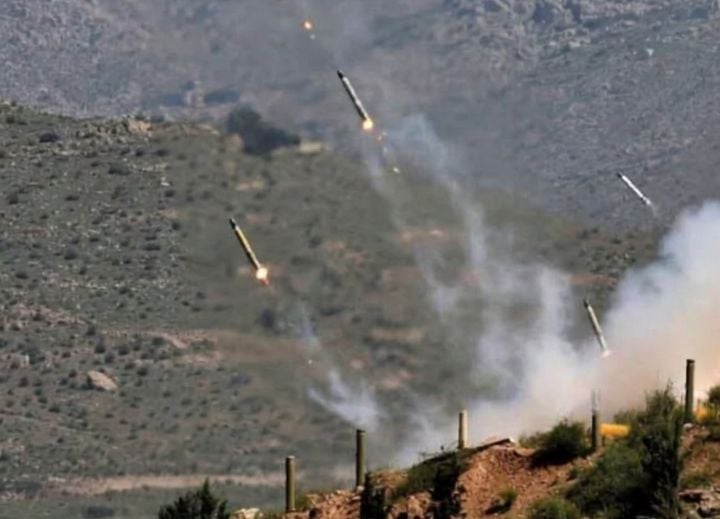




ISLAMABAD: Security sources confirmed that a mortar shell and rocket landed on Pakistani soil from Afghanistan in the Jarobi Kandao area of Zakhakhel, within Khyber district of Khyber Pakhtunkhwa province.
The incident marks yet another violation of the porous border, heightening concerns over persistent militant activity originating from Afghan territory.
Pakistani troops immediately responded with proportionate force to neutralise the threat and deter further incursions, according to reliable military sources familiar with the matter.
No immediate casualties were reported from the incoming projectiles, though the attack disrupted normalcy in the frontier region already strained by recurring cross-border incidents.
This development occurs amid a sharp surge in militant violence across Pakistan, particularly in Khyber Pakhtunkhwa, where security forces face frequent assaults attributed to groups operating from sanctuaries in Afghanistan.
The Tehreek-e-Taliban Pakistan, commonly known as TTP, has been repeatedly identified by Islamabad as the primary perpetrator of such attacks, with leadership and fighters allegedly using Afghan soil for planning and execution.
Recent weeks have witnessed a series of high-profile incidents, including suicide bombings in Islamabad, Bajaur, and Bannu districts, which claimed dozens of lives, including security personnel and civilians.
Pakistani authorities have presented evidence linking these operations to Afghanistan-based handlers, prompting defensive measures along the Durand Line.
In response to escalating threats, Pakistan conducted targeted airstrikes earlier this month on militant hideouts in Afghan provinces such as Nangarhar, Paktika, and Khost.
Those operations reportedly eliminated over 70 militants affiliated with TTP and associated groups, according to official statements from the Ministry of Information and Broadcasting.
The strikes were described as intelligence-based and selective, aimed at disrupting terrorist infrastructure responsible for attacks on Pakistani soil.
Afghan officials condemned the actions as violations of sovereignty, vowing an appropriate response while denying that their territory harbours anti-Pakistan militants.
The exchange underscores longstanding bilateral friction, with Pakistan insisting that the Afghan interim administration has failed to curb TTP activities despite repeated diplomatic engagements.
Border skirmishes, including mortar exchanges and small-arms fire, have become more frequent since the Taliban’s return to power in Kabul, complicating regional stability.
Khyber district, part of the former Federally Administered Tribal Areas now integrated into Khyber Pakhtunkhwa, remains a hotspot due to its proximity to Afghanistan and historical militant presence.
Local communities in Zakhakhel and surrounding areas endure the brunt of such violations, facing displacement risks and economic disruptions from intermittent clashes.
Security analysts note that unprovoked firings like the Jarobi Kandao incident often serve as probes or retaliatory gestures amid broader militant campaigns.
Pakistan’s military maintains a robust posture along the border, with enhanced surveillance and rapid response capabilities to counter such threats.
The incident highlights the urgent need for effective border management mechanisms, including fencing completion and joint monitoring, though progress remains stalled due to mutual distrust.
Diplomatic channels have been activated in the past to address similar violations, with Pakistan summoning Afghan representatives to convey strong protests.
Experts emphasise that sustained dialogue is essential to prevent escalation into larger confrontations, given the shared interest in countering terrorism.
The latest episode reinforces Pakistan’s position that cross-border militancy must be addressed at its source to restore peace in the region.
As investigations continue into the Jarobi Kandao firing, military sources affirmed readiness to defend territorial integrity against any aggression.
This pattern of incidents reflects deeper security challenges, requiring coordinated regional efforts beyond unilateral actions.