



ISLAMABAD: China’s Ministry of State Security has supplied Iran with sophisticated technology aimed at countering infiltration by United States and Israeli intelligence agencies, while strengthening defenses against potential aerial attacks from advanced Western warplanes.
Recent reports indicate that Beijing’s support intensified in early 2026, following heightened concerns over foreign intelligence operations inside Iran.
The assistance focuses on replacing vulnerable Western software with secure, encrypted Chinese alternatives that resist penetration and manipulation.
This shift seeks to enhance Iran’s digital sovereignty and protect critical systems from cyber threats or espionage.
A key component involves advanced sensor systems and radars provided by China to detect stealth aircraft.
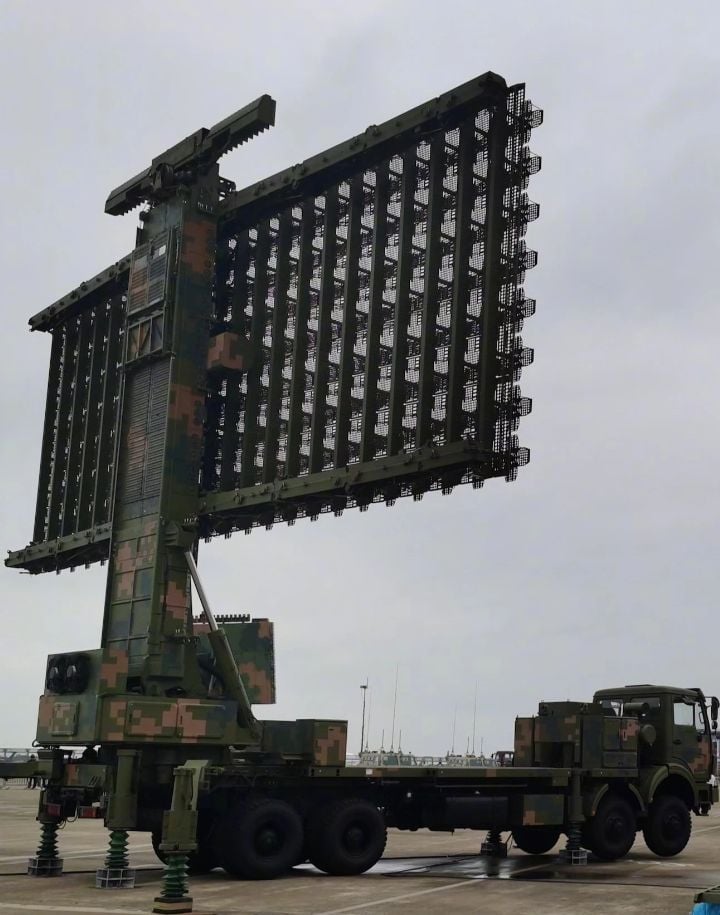
Among these, the YLC-8B radar stands out as a long-range surveillance tool developed by the Nanjing Research Institute of Electronics Technology.
Operating in the UHF band, the system exploits low-frequency waves to undermine radar-absorbent materials and shaping techniques employed by fifth-generation fighters.
Analysts describe the YLC-8B as one of the few radars capable of continuously detecting and tracking Western stealth platforms at extended ranges.
It reportedly identifies conventional aircraft beyond 500 kilometers and stealth targets at approximately 350 kilometers.
This capability could significantly challenge the operational advantage of aircraft such as the F-35, operated by the Israeli Air Force in substantial numbers.
The radar also supports electronic surveillance and early warning against ballistic missile threats, extending detection ranges up to 700 kilometers in certain configurations.
Such transfers align with broader Chinese efforts to fortify allied defenses in the face of regional military buildups.
Beijing has simultaneously urged Tehran to adopt the BeiDou satellite navigation system as a full replacement for the US-controlled Global Positioning System.
Iran completed this transition in mid-2025, deactivating nationwide GPS reception to eliminate risks of signal spoofing or denial.
BeiDou provides encrypted, high-precision signals, ensuring resilience for missile guidance, drone operations, and military navigation.
This move reduces dependence on Western infrastructure vulnerable to interference during conflicts.
The strategic partnership builds on earlier agreements, including a 25-year comprehensive framework signed in 2021.
Chinese officials have publicly confirmed Iran’s integration into the BeiDou ecosystem, framing it as a step toward technological independence.
These developments occur against a backdrop of escalated US naval and air deployments in West Asia.
Recent American force concentrations have raised fears of imminent large-scale operations targeting Iran.
In response, China has deepened intelligence and technical cooperation with Tehran through its Ninth Bureau within the Ministry of State Security.
This includes joint assessments of infiltration vulnerabilities and countermeasures against Mossad and CIA activities.
Reports highlight increased surveillance satellite sharing and monitoring of foreign military movements.
Beijing’s actions reflect an active balancing strategy to protect its interests, including Belt and Road projects, while countering perceived threats to allies.
The provision of such systems may alter regional air defense dynamics, complicating surprise attacks reliant on stealth and precision navigation.
Observers note that these technologies, while defensive in nature, contribute to a multipolar security environment in the Middle East.
Iran’s enhanced capabilities could raise the threshold for military escalation by increasing costs and risks for adversaries.
The cooperation underscores growing Sino-Iranian alignment in defense and technology amid global geopolitical shifts.