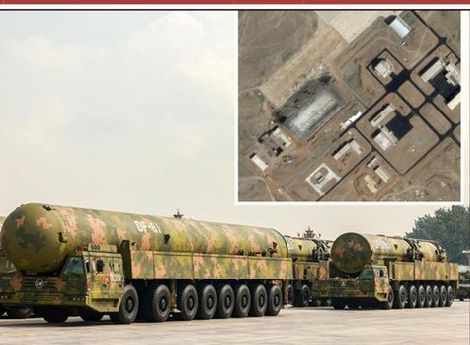




US intelligence agencies have linked recent developments to Beijing’s long-term goal of building the world’s most advanced nuclear force, drawing on evidence from past activities and ongoing modernization efforts.
The New York Post reported on February 21, 2026, that China is developing a “new generation” of nuclear weapons and has carried out at least one top-secret test in February.
This assertion builds on earlier US disclosures about an alleged underground explosive event at the Lop Nur test site in June 2020.
Multiple sources familiar with US intelligence indicate that the 2020 test, detected by a remote seismic station in Kazakhstan with a magnitude of 2.75, was part of efforts to refine next-generation designs.
Assistant Secretary of State Christopher Yeaw detailed in mid-February that seismic data pointed to a singular explosion near Lop Nur, inconsistent with natural earthquakes or mining blasts.
US officials argue the event involved decoupling techniques to evade international monitoring, violating the spirit of China’s self-imposed moratorium since 1996.
China has consistently denied conducting any nuclear explosive tests post-1996 and rejected the 2020 allegations as unfounded.
The Comprehensive Nuclear-Test-Ban Treaty Organization has stated that available data remains insufficient to confirm such claims definitively.
Recent US statements tie the alleged 2020 activity to broader ambitions, including miniaturized warheads and multiple independently targetable reentry vehicles on missiles.
Pentagon assessments project China’s operational nuclear warheads surpassing 600 as of mid-2024, with a trajectory toward over 1,000 by 2030.
This rapid expansion includes filling new missile silos and diversifying delivery systems such as land-based intercontinental ballistic missiles, submarine-launched variants, and air platforms.
The drive for technological superiority appears motivated by perceived threats from US missile defenses and strategic postures in the Indo-Pacific region.
Beijing maintains a no-first-use policy and describes its arsenal as the minimum required for national security, rejecting any nuclear arms race.
Critics in Washington highlight the lack of transparency, with China’s stockpile unconstrained by treaties like the former New START agreement between the US and Russia.
The timing of renewed claims coincides with efforts to revive broader arms control discussions, potentially including China in future frameworks.
Experts express concern that eroding norms against testing could destabilize global strategic balance.
The alleged recent test, if verified, would mark a significant escalation in China’s nuclear program amid heightened US-China tensions.
Satellite imagery has shown expansions at Lop Nur, including new tunnels and infrastructure, supporting suspicions of ongoing experimental work.
US intelligence continues to monitor these sites closely, though independent verification remains challenging due to China’s secrecy.
The developments underscore the shifting dynamics in nuclear deterrence, as China transitions from a minimal deterrent to a more robust triad.
Observers note that while China’s arsenal remains smaller than those of the US and Russia, its growth rate is the fastest among nuclear powers.
This trajectory raises questions about future stability in Asia and the potential for miscalculation in crises.
Arms control advocates urge renewed diplomacy to prevent an uncontrolled buildup.
For now, the claims rest primarily on US intelligence, with Beijing dismissing them as fabrications aimed at justifying American policy shifts.