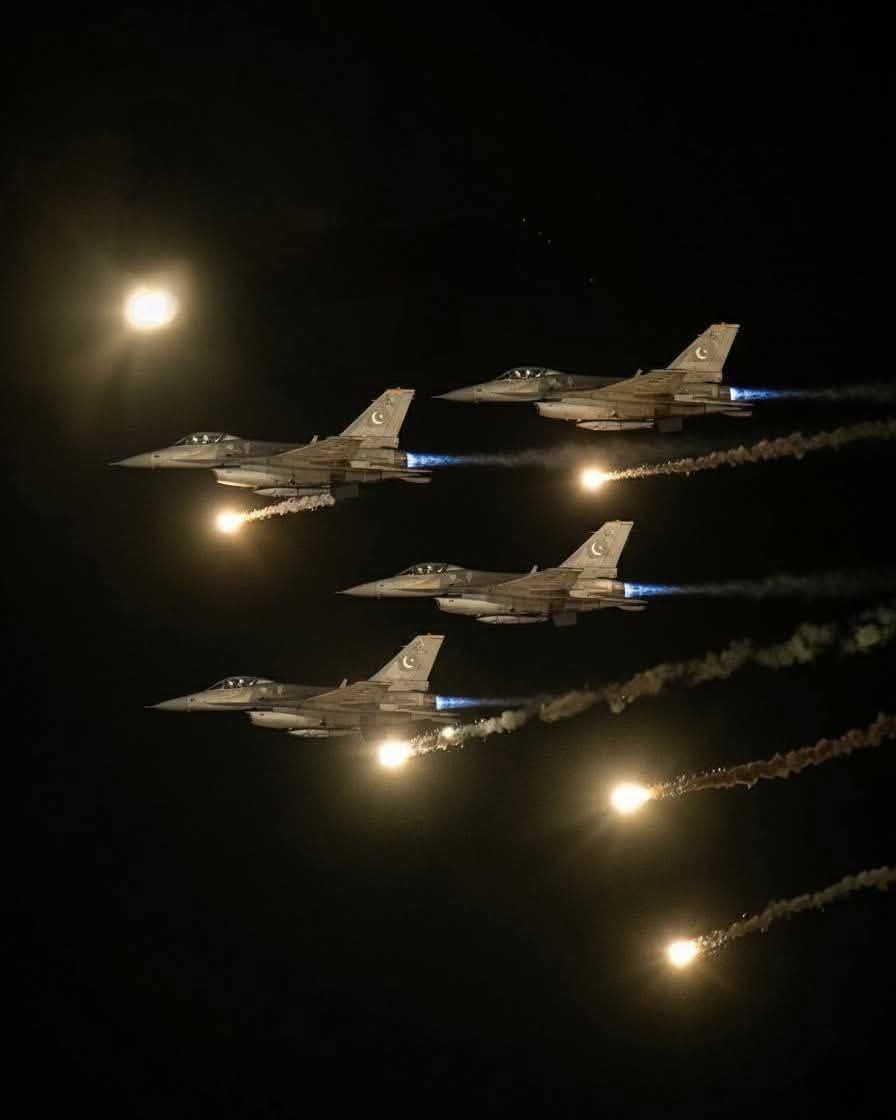




ISLAMABAD: Pakistan’s armed forces have carried out intelligence-based cross-border strikes inside Afghanistan, eliminating 77 terrorists affiliated with the banned Tehreek-e-Taliban Pakistan (TTP), according to security sources.
The operation specifically targeted TTP infrastructure and leadership elements operating from Afghan soil, amid a surge in militant attacks inside Pakistan, including deadly suicide bombings in Islamabad, Bajaur and Bannu.
Security sources detailed that the strikes hit multiple TTP camps across provinces such as Paktika, Khost and Nangarhar, focusing on locations under militant control, including areas reportedly influenced by the Haqqani network.
In Paktika province’s Barmal district, the Al-Jihad camp was among the primary targets, where several high-value TTP commanders and fighters were neutralised.
The list of terrorists killed in the Al-Jihad camp strike includes Ahmad Khan son of Muhammad from Bala Hisar, Khyber Pakhtunkhwa; Muhammad Yousaf son of Ismail from Sher Khan, Khyber Pakhtunkhwa; Abdullah son of Wali from Kili Halim, Balochistan; Samiullah son of Hamid from Dasht-e-Archi, Khyber Pakhtunkhwa; Noor Ahmad son of Nasir from Barmal; Hamidullah son of Saeed from Jaghori, Balochistan; Jameel Ahmad son of Fareed from Khan Abad, Khyber Pakhtunkhwa; Nasir Ahmad son of Abdul Haq from Chamkari, Ghazni, Afghanistan; Suleman Khan son of Muhammad from Dasht Lar, Balochistan; Faiz Ahmad son of Gul Muhammad from Kharani, Panjshir, Afghanistan; Shihabuddin son of Hikmat from Shinwar, Khyber Pakhtunkhwa; Karimullah son of Hamid from Shahrak, Balochistan; Habibullah son of Nader from Chargh, Swat; Raza Khan son of Ahmad from Pusht Rod, Balochistan; Qais Ahmad son of Nemat from Mehtarlam, Dir Upper; Yousaf Jan son of Syed from Badaber, Khyber Pakhtunkhwa; Fazlullah son of Abdullah from Sheikh Abad, Balochistan; Nader Ahmad son of Rehmat from Sang Toot, North Waziristan; Nematullah son of Hamid from Najrab, Khyber Pakhtunkhwa; Rafiqullah son of Yousaf from Berlai, Khyber Pakhtunkhwa; Rehmatullah son of Fareed from Qala Naw, Balochistan; and Bashir Ahmad son of Ismail from Dasht Shor, Balochistan.
These individuals hailed predominantly from Khyber Pakhtunkhwa and Balochistan regions, reflecting the cross-border recruitment and operational patterns of the TTP.
Border areas in Khost province, described as under Haqqani network influence, also faced strikes, resulting in the elimination of terrorists including Bilal Khan son of Muhammad Khan from Shiran, Swat; Asadullah son of Karimullah from Garmiyan, District Khyber; Tahir Hussain son of Qadir Hussain from Pashmak, Mianwali; Shoaib Ahmad son of Rehmat Ahmad from Noor Abad, North Waziristan; Faiz Khan son of Jan Muhammad from Bedar, Dir Upper; Nauman Ahmad son of Saleem Ahmad from Sabzwar, Khyber; Rehmatullah son of Ghulamullah from Khushwal, Paktika; Arif Khan son of Syed Khan from Barmal, Nangarhar; and Farooq Ahmad son of Bashir Ahmad from Kapisa.
Further casualties occurred in Nangarhar province’s Khogyani, Ghani Khel and Behsud districts, where strikes killed terrorists such as Nek Muhammad son of Hamid from Panjwai, Kandahar; Ahmad son of Muhammad from Mingora, Swat; Fazal Ahmad son of Rehmat from Kalam, Swat; Nasir son of Karim from Barmal, Khyber; Habib son of Wali from Miranshah, North Waziristan; Shafiq son of Nemat from Daklan, Bahawalpur; Sami son of Nader from Sangla, Dera Ghazi Khan; Karim son of Hamid from Bannu, Khyber; Rafiq son of Abdullah from Kala, Swat; Nemat son of Fareed from Dhaki, North Waziristan; and Yasir son of Rehmat from Miranshah, North Waziristan.
The strikes come as Pakistan grapples with intensified TTP activities, with the group often claiming responsibility for attacks through Afghanistan-based handlers.
Security officials emphasise that the operations were precise and selective, aimed at dismantling terrorist sanctuaries rather than targeting civilians.
Pakistan has repeatedly urged the Afghan interim administration to prevent its territory from being used against Pakistan, highlighting the need for coordinated efforts against shared threats.
The detailed release of names and origins underscores the domestic impact of TTP operations, many of whose members originate from Pakistan’s tribal and border districts.
This action follows a pattern of retaliatory measures in response to escalating violence, including recent incidents during Ramzan that claimed numerous civilian and security lives.
By targeting leadership and infrastructure, the strikes seek to disrupt TTP’s operational capabilities and deter future cross-border terrorism.
The operation highlights ongoing challenges in Pakistan-Afghanistan relations, with both sides accusing each other of harbouring militants.
Pakistan maintains that such measures are essential to safeguard national security and protect citizens from terrorism.