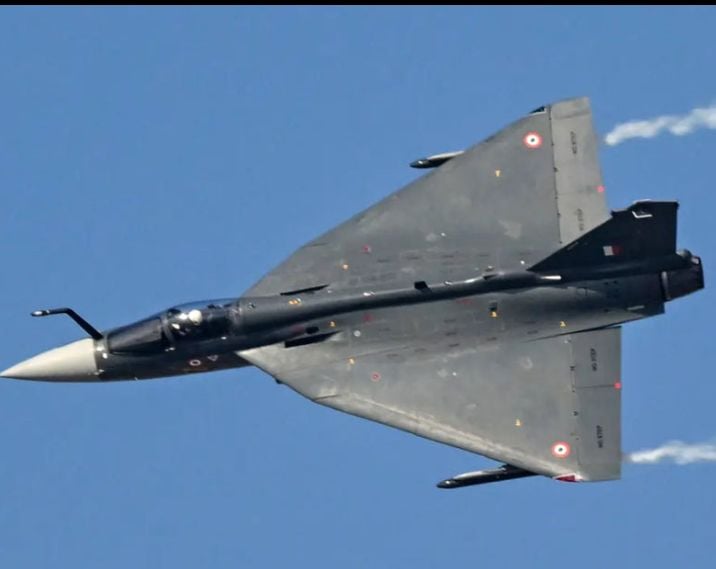




ISLAMABAD: The Indian Air Force has suffered another setback with the crash of a Tejas Light Combat Aircraft during a routine training mission, marking the third significant loss for the indigenous fighter jet in recent years.
The incident occurred at a key airbase when the single-seat Tejas Mk-1 was attempting to land following a standard training sortie.
According to multiple reports from credible Indian media outlets, the pilot activated the ejection seat and escaped without serious injuries.
The aircraft, however, sustained severe structural damage and has been declared unserviceable, effectively written off from the fleet.
This latest mishap has prompted the Indian Air Force to ground the entire Tejas fleet as a precautionary step.
A high-level Court of Inquiry has been ordered to determine the exact cause, while comprehensive technical inspections are underway across all operational aircraft.
Sources familiar with the matter have pointed to a possible malfunction in the flight control system, though official confirmation remains pending.
No detailed statement has been issued by the Indian Air Force so far, but the swift grounding reflects heightened caution amid recurring incidents.
The Tejas programme, developed by Hindustan Aeronautics Limited, represents a cornerstone of India’s push for self-reliance in defence manufacturing.
The Light Combat Aircraft was conceived in the 1980s to replace ageing MiG-21 squadrons and has been inducted in limited numbers since 2016.
Currently, the Indian Air Force operates around 32 single-seat Tejas Mk-1 variants, with plans for upgraded Mk-1A models to address identified shortcomings.
This crash follows two previous major incidents that have already tested the platform’s reliability.
In March 2024, a Tejas Mk-1 crashed near Jaisalmer during a firepower demonstration exercise, with the pilot ejecting safely.
The second occurred in November 2025 at the Dubai Airshow, where the aircraft was lost during an aerobatic display, resulting in the tragic death of the pilot.
These events have collectively reduced the effective strength of the Tejas fleet and drawn scrutiny to production and quality control processes at HAL.
Experts note that fighter aircraft development worldwide often involves teething problems, particularly in early operational phases.
However, the frequency of these incidents within a short span has amplified concerns over systemic issues.
The grounding comes at a sensitive time for the programme, as deliveries of the more advanced Tejas Mk-1A remain delayed.
The Mk-1A incorporates improvements such as enhanced avionics, better electronic warfare capabilities, and an upgraded engine.
Defence analysts suggest that repeated accidents could further postpone induction timelines and affect operational readiness.
The Indian Air Force has long emphasised the need for a larger squadron strength to counter regional threats.
With indigenous platforms like Tejas forming a key part of that strategy, any prolonged grounding risks widening the capability gap.
Broader context reveals that the Indian Air Force has faced a challenging decade in terms of aircraft losses.
Reports indicate over 100 aircraft lost and numerous pilot fatalities in peacetime incidents across various types.
The Tejas crashes add to this tally, though the programme’s survival rate for pilots through ejection systems has been a positive aspect in non-fatal cases.
Observers point out that such incidents, while unfortunate, provide valuable data for iterative improvements in design and maintenance.
Hindustan Aeronautics Limited continues to ramp up production lines, with expectations that resolved technical issues will bolster confidence in the platform.
For now, the focus remains on the ongoing investigation and fleet-wide checks to ensure no underlying defects persist.
The outcome of the Court of Inquiry will likely influence future decisions on Tejas deployments and upgrades.
This development underscores the complexities of building and sustaining a modern fighter aircraft ecosystem indigenously.
As India pursues greater strategic autonomy in defence, incidents like this highlight both the ambitions and the challenges involved.
The Indian Air Force’s response demonstrates a commitment to safety protocols, even as questions linger about long-term programme stability.
Defence circles await further details as inspections progress and the fleet remains grounded pending clearance.