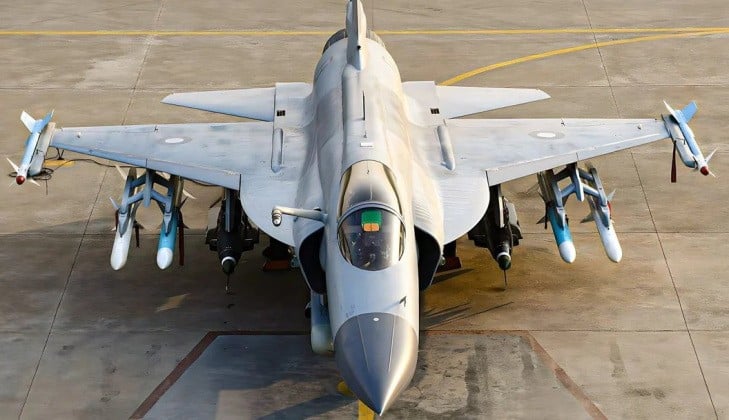




ISLAMABAD: Somalia is engaged in advanced high-level negotiations with Pakistan to acquire up to 24 JF-17 Thunder Block III fighter jets in a deal estimated at approximately $900 million, marking one of the most significant defence procurements for Mogadishu since the collapse of central authority in 1991.
The proposed agreement, first reported by Somalia Today and echoed across regional defence outlets, extends beyond the aircraft themselves to include comprehensive pilot training, weapons integration, and long-term maintenance support.
This package aims to ensure operational sustainability for a Somali Air Force that has lacked modern fixed-wing combat capability for over three decades.
The JF-17 Thunder, a lightweight multi-role fighter jointly developed by Pakistan Aeronautical Complex and China’s Chengdu Aircraft Corporation, represents a cost-effective solution for nations seeking advanced performance without prohibitive expenses.
The Block III variant incorporates upgraded avionics, an active electronically scanned array radar, enhanced electronic warfare systems, and compatibility with modern precision-guided munitions.
These features enable air-to-air and air-to-ground missions, with a top speed of Mach 1.6 and a combat radius exceeding 1,350 kilometres, making it suitable for patrolling Somalia’s vast 3,300-kilometre coastline and expansive airspace.
Reports indicate that the talks gained momentum following a February 2026 visit to Islamabad by a Somali delegation led by Air Force Commander Mohamud Sheikh Ali.
Such engagements signal progression from preliminary discussions to structured state-to-state defence cooperation.
Analysts note that the deal’s structure may involve phased deliveries, with initial transfers potentially starting with a smaller batch of six aircraft before scaling to the full 24 units.
This approach allows Somalia to build infrastructure, train personnel, and integrate systems gradually.
Somalia’s pursuit of the JF-17 reflects broader efforts to restore sovereign control over national airspace amid persistent security challenges.
Key areas of concern include contested zones from Berbera and Hargeisa in the north to Kismayo, Ras Caseyr, and Ras Kamboni in the south.
The acquisition would reduce reliance on foreign air support and enhance deterrence against threats ranging from insurgent activities to unauthorised overflights.
Multiple sources highlight external backing as a critical enabler for the transaction.
Gulf states, particularly Saudi Arabia, along with Turkey, are reportedly providing financial and logistical assistance to bridge Somalia’s budgetary constraints.
Somalia’s national defence spending remains limited, with the overall economy still recovering from prolonged instability.
The $900 million valuation positions the package as the largest single defence investment in recent Somali history, underscoring the strategic priority attached to air power modernisation.
The JF-17’s affordability, with unit costs estimated between $30 million and $40 million, contrasts sharply with Western alternatives that often exceed three times that figure.
This economic advantage has driven interest from various developing nations, positioning the platform as a viable option for air forces seeking modernisation on constrained budgets.
If finalised, the deal would expand the JF-17’s export footprint in Africa, joining operators such as Nigeria and Myanmar.
It would also strengthen bilateral ties between Pakistan and Somalia, building on existing defence cooperation frameworks.
Pakistan has actively marketed the JF-17 globally, with ongoing discussions involving multiple countries.
The aircraft’s combat-proven record in various theatres adds to its appeal for nations prioritising reliability and maintainability.
For Somalia, the initiative forms part of a wider push to rebuild national institutions following decades of fragmentation.
Restoring a capable air force would support counter-terrorism operations, maritime security along the Horn of Africa, and overall territorial integrity.
Observers point to regional dynamics, including tensions involving Somaliland and external actors, as additional motivators for Mogadishu’s defence enhancements.
The negotiations remain at an advanced but non-final stage, with no official confirmation from either government yet.
Defence deals of this scale often involve extended timelines for financing, technical evaluations, and diplomatic clearances.
Should the agreement proceed, it could reshape air power balances in the Horn of Africa and signal growing multipolar defence partnerships in the region.
The development underscores Somalia’s determination to reclaim strategic autonomy through targeted investments in modern military capabilities.