



ISLAMABAD: Pakistani cricketers are poised to face exclusion from four franchises in England’s The Hundred cricket league due to ownership links with Indian Premier League (IPL) teams, according to multiple reports from leading international media outlets including BBC Sport and The Telegraph.
This development highlights a persistent pattern in T20 franchise cricket where geopolitical tensions between India and Pakistan continue to influence player selections beyond the IPL itself.
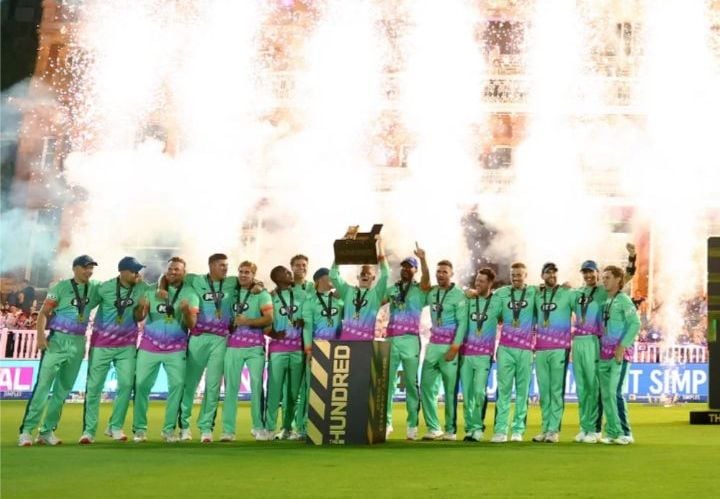
The Hundred, a flagship tournament run by the England and Wales Cricket Board (ECB), features eight city-based teams competing in a 100-ball format.
Recent private investment has seen four of these teams acquire stakes from entities controlling IPL franchises.
Manchester Super Giants is linked to the RPSG Group, owners of Lucknow Super Giants in the IPL.
MI London falls under Reliance Industries, which owns Mumbai Indians.
Southern Brave is associated with the GMR Group, connected to Delhi Capitals.
Sunrisers Leeds ties to the Sun Group, which controls Sunrisers Hyderabad.
These ownership changes took effect from October 1, 2025, marking a significant shift toward Indian investment in the league.
Sources cited in BBC Sport reports indicate that these four franchises are unlikely to bid for Pakistani players in the upcoming auction scheduled for March.
Communications from a senior ECB official to player agents reportedly suggested that interest in Pakistani talent would be limited to the remaining four teams without IPL connections.
These include London Spirit, Trent Rockets, Welsh Fire, and Birmingham Phoenix.
The ECB maintains no formal nationality-based ban exists, with chief executive Richard Gould previously stating expectations for players from all nations to be selected and emphasizing anti-discrimination policies.
Despite such assurances, an “unwritten rule” appears to operate across T20 leagues involving Indian investment.
This informal practice stems from diplomatic strains between India and Pakistan, exacerbated since the 2008 Mumbai attacks.
No Pakistani player has featured in the IPL since its inaugural 2008 season.
Similar exclusions occur in other IPL-linked leagues.
South Africa’s SA20, launched in 2023, has seen no Pakistani participation across its six teams, all owned by IPL franchise groups.
The UAE’s ILT20 follows a comparable trend, with limited or no involvement from Pakistani cricketers in IPL-affiliated setups.
In The Hundred’s prior editions, Pakistani players have participated, albeit in modest numbers.
Notable inclusions include Shaheen Shah Afridi and Haris Rauf with Welsh Fire, along with others like Imad Wasim.
However, recent seasons showed declining numbers, with only nine Pakistani players featuring across the first five editions in some accounts.
The upcoming 2026 season, running from July 21 to August 16, promises increased player pay due to private investment.
Yet Pakistani cricketers stand to miss out on these financial opportunities from half the league’s teams.
Player agents have described the situation as an “unwritten rule” prevalent in such competitions.
One agent noted that franchises avoid potential political backlash amid ongoing India-Pakistan tensions.
The ECB has pushed back against claims of a shadow ban, but reports from BBC, Telegraph, and others suggest the pattern persists.
This exclusion affects opportunities for prominent Pakistani talents registered for the auction.
It underscores broader challenges for Pakistani players in global T20 leagues dominated by Indian capital.
While the remaining four non-IPL-linked franchises may still pursue Pakistani signings, overall prospects appear diminished.
The development raises questions about inclusivity in privatized cricket competitions.
It reflects how geopolitical factors continue to shape player mobility in modern franchise cricket.
The auction outcomes next month will clarify the extent of this impact on Pakistani representation in The Hundred.
Pakistan Cricket Board officials have yet to issue a formal response to these reports.
The situation draws parallels to previous instances where availability issues or NOC restrictions played roles, though current indications point primarily to ownership influences.
Cricket administrators face ongoing scrutiny to balance commercial interests with principles of fair selection.
The Hundred’s evolution under new ownership tests the league’s commitment to global participation.
Pakistani fans and players alike watch closely for signs of broader implications in international T20 ecosystems.
This episode reinforces the enduring shadow of bilateral relations on the sport.
The Hundred auction will serve as a key indicator of whether these ownership dynamics truly limit diversity in team compositions.